

We announced the Plexus Metaverse Experience Center, our biggest project of 2024, with Dr Amit Raj of Plexus Med Care. We shared the plan, which we called Vision 2024, in a LinkedIn Live session, and invited XR companies working on medical VR content to collaborate on it.
The challenges in patient care and medical training
Patients recovering from surgery often deal with stress and anxiety as well as pain. Specialists cannot always be physically present when a difficult diagnosis or surgery needs their input. And medical students need realistic, hands-on practice that is hard to provide safely with real patients.
The idea: an experience centre inside a hospital
The Plexus Metaverse Experience Centre addresses these challenges in one place. The plan is to use VR for therapy, guided meditation and post-surgery stress-relief programmes that support patients' mental health and well-being, and to use immersive training to improve the skills of medical practitioners. The aim is a more empathetic, supportive environment and better healthcare outcomes.
Remote expert consultation with AR glasses
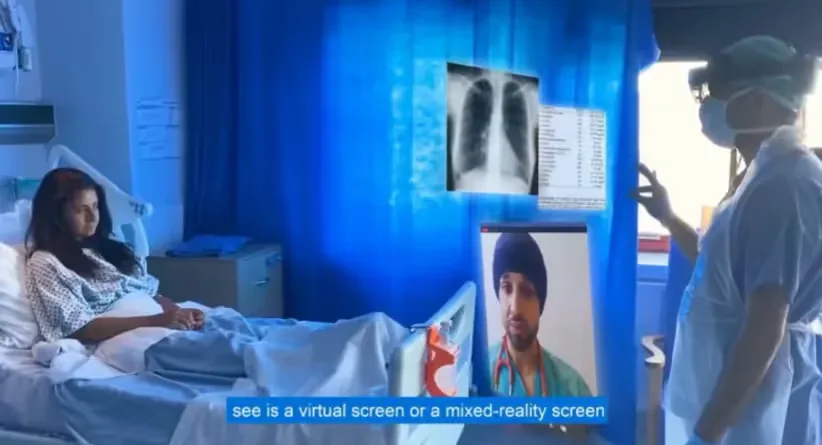
AR glasses overlay digital information and virtual objects on the real world. Doctors in different places can share the same view and guide each other in real time, as if they were in the same room. That allows remote experts to give live surgical assistance and support critical diagnoses for seriously ill patients.
Medical training
Medical students get VR modules based on real-life simulations, so they can build key skills in an immersive environment. IoT and AI add to the training by giving trainees a hands-on understanding of medical scenarios.
Patient care
VR supports patient care and therapy in several ways: distraction from pain, more engaging physical therapy, mental health support, patient education, cognitive rehabilitation and easier critical procedures. Dr James Clarkson, who has worked with VR since 2006, emphasises its effectiveness in reducing anxiety.
Building on Plexus's existing work
The centre builds on two existing Plexus initiatives. Its Digital Rural Health Programme uses IoT and AI to extend healthcare to remote areas. Its Clinical Validation Centers test and integrate medical technologies to make sure they work, improving the quality and reach of care.
Where similar ideas have worked
- Dr Ryan Austin, a Canadian plastic surgeon, uses VR headsets during minor surgery under local anaesthetic as a drug-free way to manage anxiety and pain. Patients feel disconnected from their surroundings, and anxiety is reduced by 30%. Study results vary, but he sees potential to shorten waiting lists, reduce discomfort and avoid expensive sedation.
- Howard Physical Therapy in Western New York uses VR for physical therapy with patients who have orthopaedic and neurological conditions, including multiple sclerosis. Beach and forest scenes and interactive games distract patients from pain and make repetitive exercises more engaging, which improves compliance.
- Dr David Axelrod, a paediatric cardiologist at Stanford, worked with David Sarno, founder of Lighthouse, Inc., on the Stanford Virtual Heart. The 3D visualisation lets students explore inside a beating heart to understand congenital heart defects, which affect nearly 1 in 100 babies, and to practise surgeries repeatedly.
How to apply it
The Plexus model shows the value of one dedicated space where staff, patients and partners can use immersive technology regularly, rather than a single pilot that is soon forgotten. Hospitals can start with one use, such as pre-surgery anxiety relief or a training module, and add others as they prove themselves. The same approach suits companies that want a permanent immersive training room inside their own facility.
Next step
If you are planning an immersive experience centre, VR training or AR remote assistance for a hospital or facility, talk to our team.
First published on the Metaverse911 blog.
Frequently asked questions
What is the Plexus Metaverse Experience Center?
The Plexus Metaverse Experience Center is a project by Metaverse911 with Dr Amit Raj of Plexus Med Care, announced as the company's biggest project of 2024. It brings AR, VR and AI into one hospital to support patient care, remote expert consultation and immersive medical training, aiming for a more supportive environment and better healthcare outcomes.
How are AR glasses used for remote expert consultation in a hospital?
AR glasses overlay digital information and virtual objects on the real world, so doctors in different places can share the same view and guide each other in real time. At the Plexus Metaverse Experience Center, this allows remote experts to give live surgical assistance and support critical diagnoses for seriously ill patients, as if they were in the same room.
How does VR support patient care and therapy?
VR supports patient care in several ways: distraction from pain, more engaging physical therapy, mental health support, patient education, cognitive rehabilitation and easier critical procedures. The Plexus Metaverse Experience Center plans to use VR for therapy, guided meditation and post-surgery stress-relief programmes that support patients' mental health and well-being.
How will medical students train at the Plexus Metaverse Experience Center?
Medical students at the Plexus Metaverse Experience Center get VR modules based on real-life simulations, so they can build key skills in an immersive environment rather than practising on real patients. IoT and AI add to the training by giving trainees a hands-on understanding of medical scenarios, improving the skills of medical practitioners.
Where has VR already been used successfully in healthcare?
VR has been used in healthcare elsewhere. Canadian plastic surgeon Dr Ryan Austin uses VR headsets during minor surgery to manage anxiety and pain, reducing anxiety by 30%. Howard Physical Therapy in Western New York uses VR for physical therapy. Stanford's Virtual Heart lets students explore inside a beating heart to understand congenital heart defects.
More from the blog
 Blog · Healthcare & pharma
How VR, AR and holograms are already changing healthcare
How hospitals use VR, AR and holograms for consultations, remote collaboration and nurse training, with examples from Apollo, Narayana Health and Fortis.
Read the post Blog · Healthcare & pharma
Launching Gujarat's first virtual reality experience for patient care
We launched a VR patient care experience at the Plexus Metaverse Experience Center with Dr Amit Raj: virtual hospital tours, medical training and calm VR.
Read the post Blog · Healthcare & pharma
Pharma XR Day Chapter 2: how pharma leaders are using VR and AR
At Pharma XR Day Chapter 2, 20+ leaders from firms such as Roche, Alkem and Medtronic tried 18+ XR solutions for pharma training, sales and science content.
Read the post