

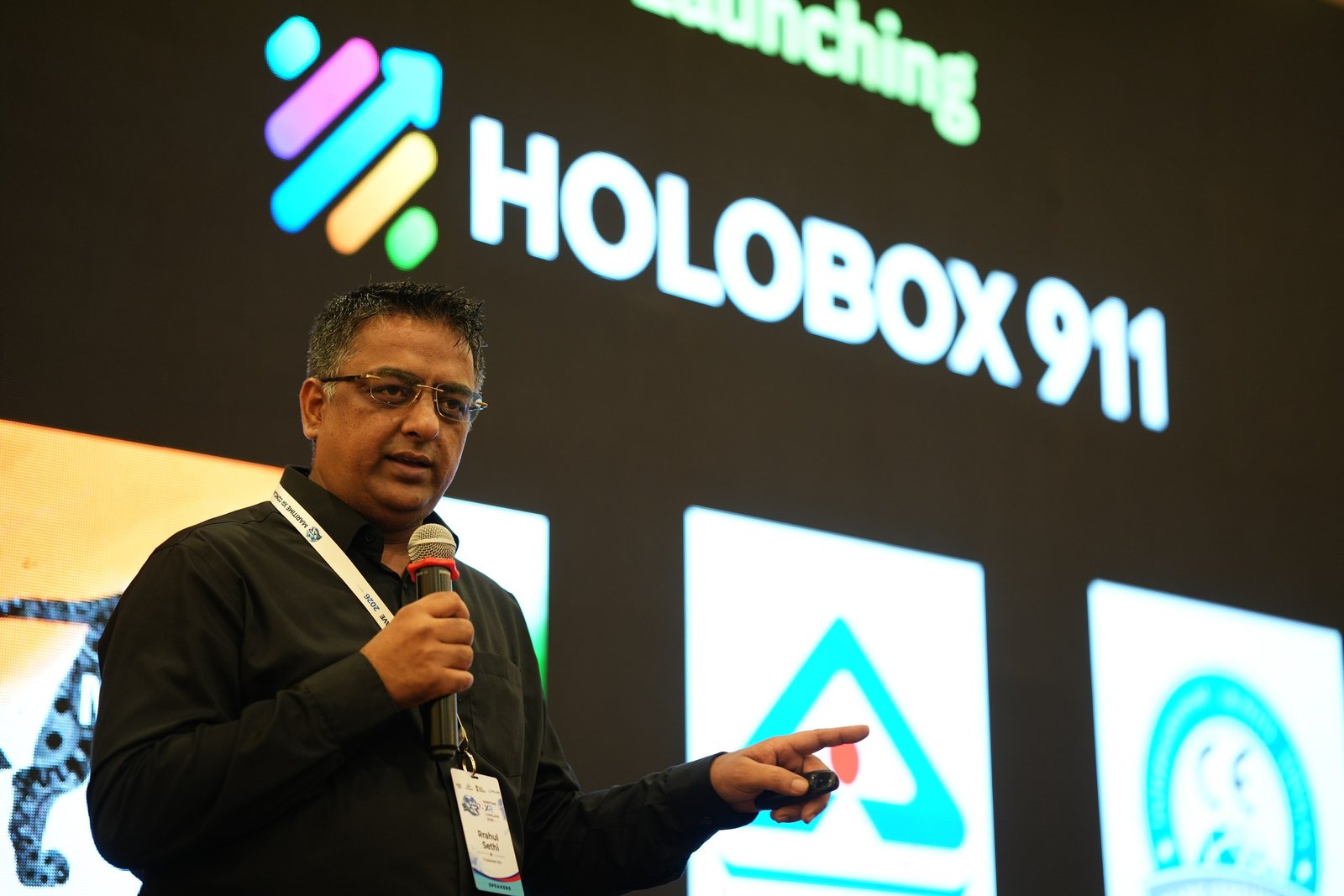
Rrahul Sethi is the founder of Metaverse911. He works across consulting, training and keynote speaking, helping organisations adopt immersive technology and Web 3.0. In this interview he sets out how immersive technology is changing work, where organisations go wrong, and what they can do to make it last.
The problem: adoption is harder than the technology
Rrahul has mentored more than 3,500 C-level executives from global companies and Big 5 corporations, and has seen the same challenges come up repeatedly. Through our research and advisory work, CIOs and CTOs regularly ask for help with their immersive and Web3 projects. The technology itself is rarely the obstacle. The difficulties are knowing where to start, choosing the right platform, bringing people along, and making sure the investment still makes sense in a few years.
How AR, VR and MR are changing work
In his masterclasses, Rrahul explains the three technologies by what each does best.
AR: real-time information and guidance
Augmented reality overlays digital information on the real world. Royal Enfield, for example, uses AR glasses to connect field technicians with remote experts. The expert sees exactly what the technician sees and gives real-time guidance, with instructions or diagrams in the technician's field of view. Repairs are faster, travel costs fall and downtime is reduced.
VR: safe practice and clear explanation
Virtual reality places users in a fully virtual environment. Simulations prepare employees for complex tasks, from medical procedures to equipment operation, in a safe setting, which speeds up learning and improves retention. In pharma, VR is used to show how a molecule becomes a medicine, helping doctors and stakeholders understand a drug's benefits and how it works.
MR: interactive design and collaboration
Mixed reality combines AR and VR so that digital and real objects interact. It is especially useful in manufacturing. Engineers can use headsets such as Microsoft HoloLens to view and adjust 3D models of products during design. Skytron, a manufacturer of surgical equipment, used MR to configure medical equipment and design floor plans, giving customers an engaging way to experience the designs. Engineers can make immediate changes and work with remote colleagues.
Adding generative AI
Combining generative AI with AR and VR allows highly personalised experiences. AI-based sales-training avatars can run adaptive programmes in VR that respond to each trainee's performance in real time. One example Rrahul cites is Maruti's AI sales-training avatar built with Dave AI. AI-driven analytics inside immersive environments can also give real-time insight into workflows, raising productivity and cutting operating costs.
Examples from leading organisations
A study of 1,500 employees and 1,500 employers in the US by ExpressVPN found that "nearly 3 in 5 employees and 4 in 5 employers are interested in an immersive workforce", and that "66% of employers are excited about the metaverse, and 46% of employees share the same excitement". Accenture bought 60,000 Oculus headsets for VR training, Fidelity Investments held an event in the metaverse, and KPMG built an innovation hub in VR for its partners.
Rrahul picks out five case studies.
Kotak Mahindra Bank
Kotak engaged more than 35,000 employees through Learning-a-fair, a virtual learning experience that won a Brandon Hall award and was built to encourage collaboration, engagement and new ideas.
Zydus Wellness
Zydus Wellness onboards employees through gamified environments, built with constant feedback from teams and new hires. Zylo, the company mascot, guides new hires through the brand and products; each module is a game in which employees earn coins; and leaderboards and perks create friendly competition. Employees reported feeling more engaged and motivated, and retained information more effectively.
Siemens
Siemens built a virtual tour of one of its industrial facilities, showing the different workplaces and adding information on EHS concepts. Users explore the training environment on their own. Over time the project grew into a virtual escape game: a timed challenge in which users must apply what they have learned to escape a fire emergency. Siemens uses it for:
- Onboarding in lifelike workplace surroundings
- Workplace instructions
- EHS and QSHE training with built-in quizzes
- Visitor centre training
- Remote workplace inspections
- Quality assurance
Users engage more actively with the material and can test their knowledge straight away.
PayPal
PayPal built a virtual space for employee engagement with five areas:
- The Pavilion: resources and activities to learn about the company and connect with colleagues.
- The House of Innovation: a hub for learning and sharing ideas, opened by a welcome message from the CEO on innovation, one of the company's four main values.
- The Innovation Hub: demo spaces showing the company's products, with videos, demonstrations and hands-on activities.
- The Dome: live conference sessions with guest speakers and industry experts, and content on inclusion and diversity.
- The Gaming Terrace: game arcades where employees can relax.
Bosch
Bosch rebuilt its onboarding around "A Day in their Lives", a virtual world showing how Bosch is present throughout an ordinary day. New employees try the latest products and technology hands-on in a realistic setting. The benefits Bosch saw:
- Higher engagement and retention through interactive learning.
- Better application of knowledge thanks to hands-on simulations.
- More teamwork and idea-sharing.
- A cost-effective training environment that can be reached from anywhere.
- Training that can be scaled quickly.
How to apply it: Rrahul's advice
Getting started
- Try it yourself first. Spend time in virtual worlds, attend events and play games, so you understand what your people will experience. Research what the technology can do and keep up with developments.
- Set clear objectives. Decide whether you want to build community, teach specific skills or create an immersive learning experience.
- Choose your platform. Compare platforms and pick the one that fits your needs.
- Build your presence. Create avatars, a virtual office or workspace and a company space.
- Plan how people will learn it. Choose between live virtual training, a user guide or self-guided exploration, and make sure everyone has the resources to feel comfortable.
- Make it interactive. Team-building activities, icebreakers and games help people retain information and feel connected.
- Ask for feedback. Find out what works and what does not, and adjust.
Making it last
- Do not abandon existing channels too quickly. Some customers will be ready for immersive experiences, but most are not yet. Meeting customer expectations comes first, so keep conventional ways for people to deal with your business.
- Stay adaptable. The technology is still taking shape. Use virtual spaces to test products with users and learn about their needs, and be ready to change course.
Going global while staying local
Attitudes to technology, privacy and virtual interaction differ between cultures. Content, interfaces and marketing should match local expectations. Organisations must also comply with local rules on data privacy, content moderation and virtual property, often with help from local legal experts.
Language is a major factor. Multilingual support and localised content, including translated interfaces and instructions, are essential. Working with local artists, content creators and cultural institutions, and doing proper market research, helps make experiences relevant in each region.
Supporting sustainable growth
Immersive experiences help businesses engage customers, employees and stakeholders, and build stronger customer relationships. Virtual collaboration lets remote teams share ideas and decide in real time. Realistic simulations improve workforce performance and safety training. Remote work and virtual meetings can also reduce a company's environmental impact.
Next step
To arrange a masterclass for your leadership team or an advisory session on your immersive technology plans, talk to our team.
First published on the Metaverse911 blog.
Frequently asked questions
What does Rrahul Sethi say is the main obstacle to adopting immersive technology?
Rrahul Sethi, founder of Metaverse911, says the technology itself is rarely the obstacle. The real difficulties are knowing where to start, choosing the right platform, bringing people along and making sure the investment still makes sense in a few years. He has seen these challenges repeatedly while mentoring more than 3,500 C-level executives from global companies and Big 5 corporations.
How does Rrahul Sethi explain the difference between AR, VR and MR?
Rrahul Sethi explains the three technologies by what each does best. AR overlays digital information on the real world for real-time guidance, such as remote experts helping field technicians. VR places users in a fully virtual environment for safe practice and clear explanation. MR combines both so digital and real objects interact, which is useful for design and collaboration in manufacturing.
How did Siemens use a virtual facility tour for training?
Siemens built a virtual tour of one of its industrial facilities showing different workplaces and information on EHS concepts. It later grew into a timed virtual escape game in which users apply what they learned to escape a fire emergency. Siemens uses it for onboarding, workplace instructions, EHS and QSHE training with quizzes, visitor centre training, remote inspections and quality assurance.
What steps does Rrahul Sethi recommend for getting started with immersive technology?
Rrahul Sethi recommends trying virtual worlds yourself first, setting clear objectives, choosing the platform that fits your needs and building your presence with avatars and a virtual workspace. He also advises planning how people will learn it, making the experience interactive with games and icebreakers, and asking for feedback so you can adjust.
How can organisations make immersive technology adoption last, according to Rrahul Sethi?
To make immersive technology adoption last, Rrahul Sethi advises organisations not to abandon existing channels too quickly, because most customers are not yet ready for immersive experiences. He also recommends staying adaptable while the technology takes shape and using virtual spaces to test products with users. When going global, content, language and compliance should match local expectations and rules.