

Industry insight: this article describes how the technology is used in the industry. It is not a Metaverse911 client project. See our case studies for our own work.
The situation: the match alone is no longer enough
For decades, the match was the product. Today's fans arrive used to screens everywhere and expect the venue to offer something their phone cannot. Franchise owners and stadium operators face a commercial question: how to turn footfall into dwell time, dwell time into spending, and a match day into shareable moments that justify a premium ticket.
What they did: UFC 306 at the Sphere
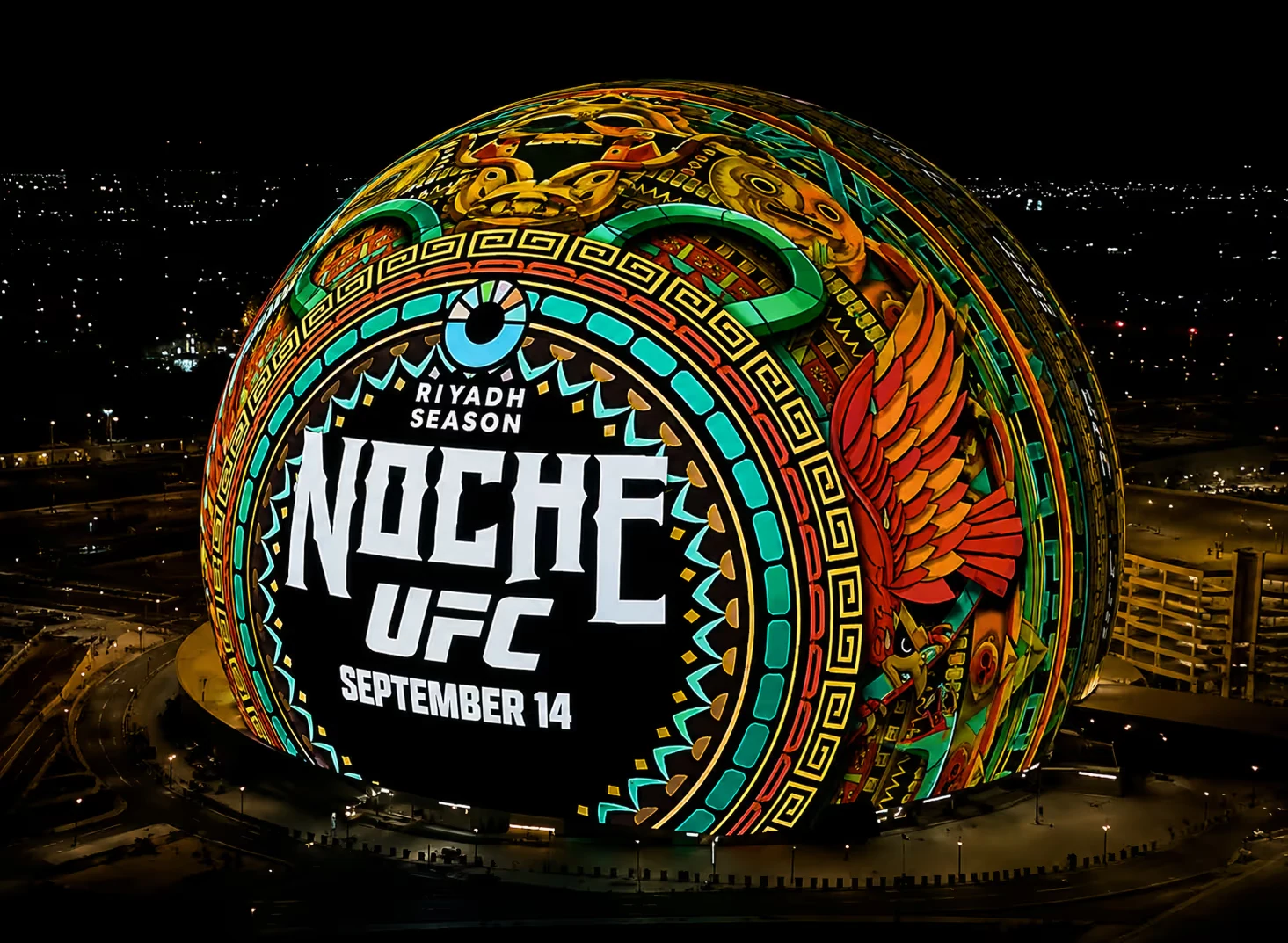
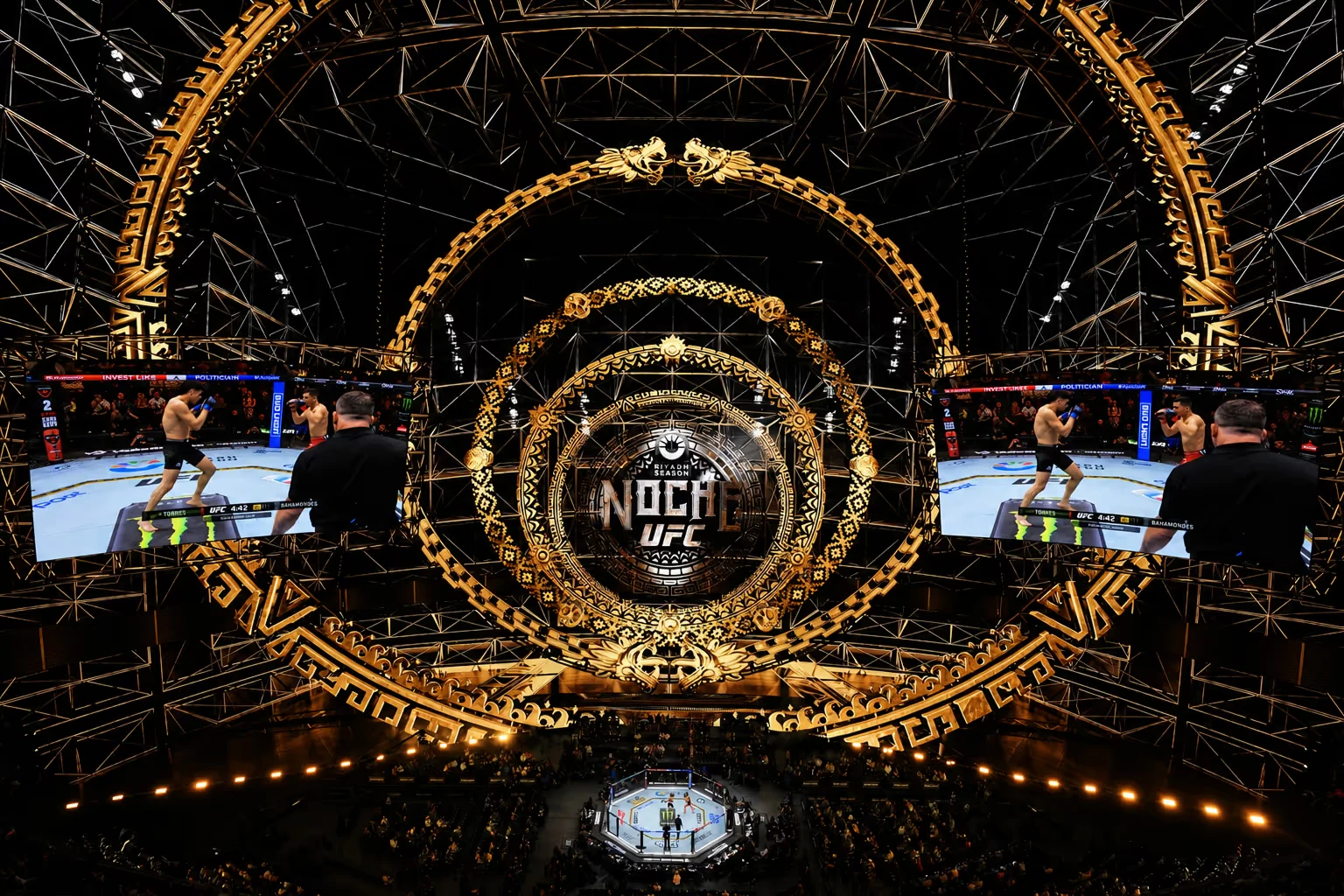
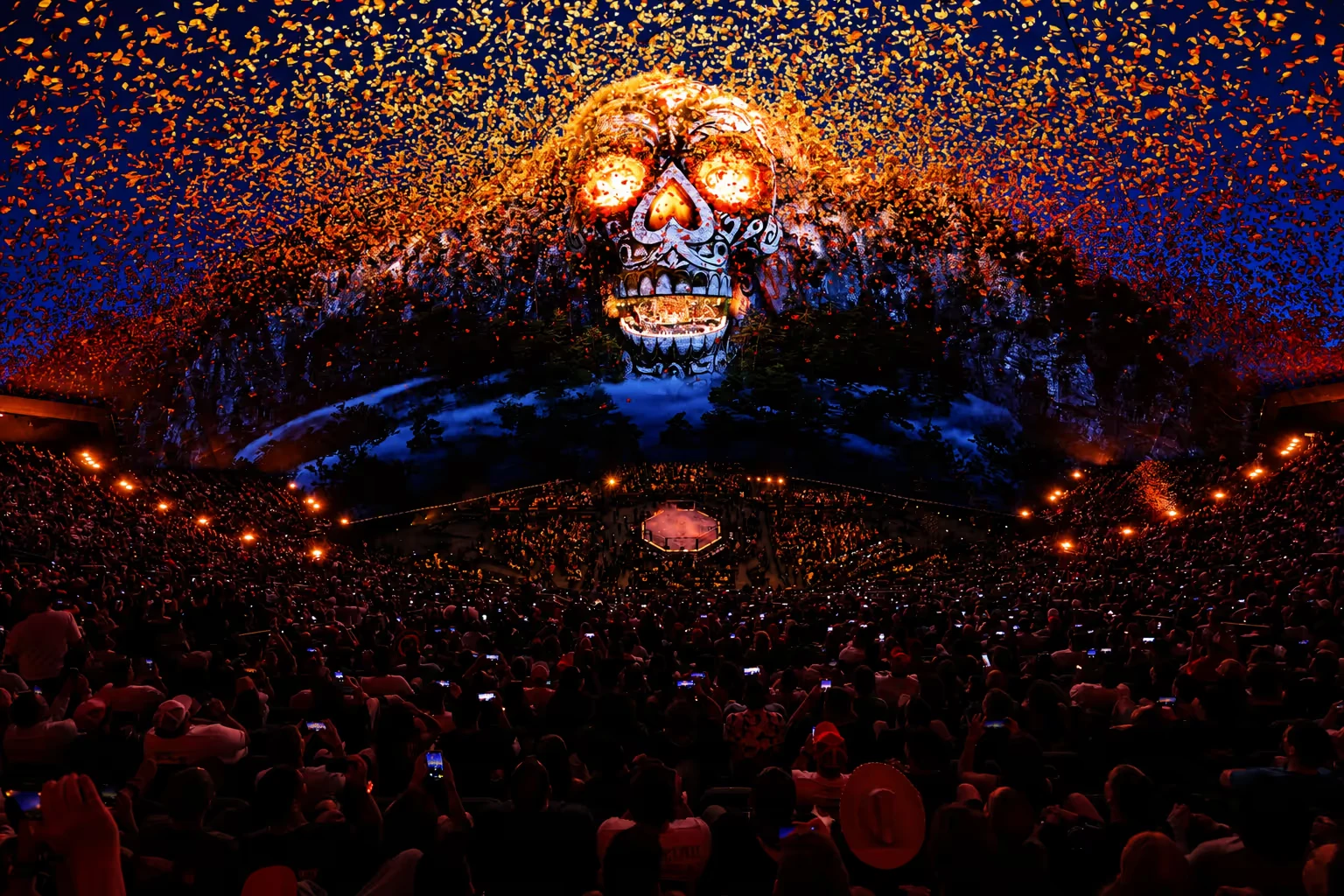
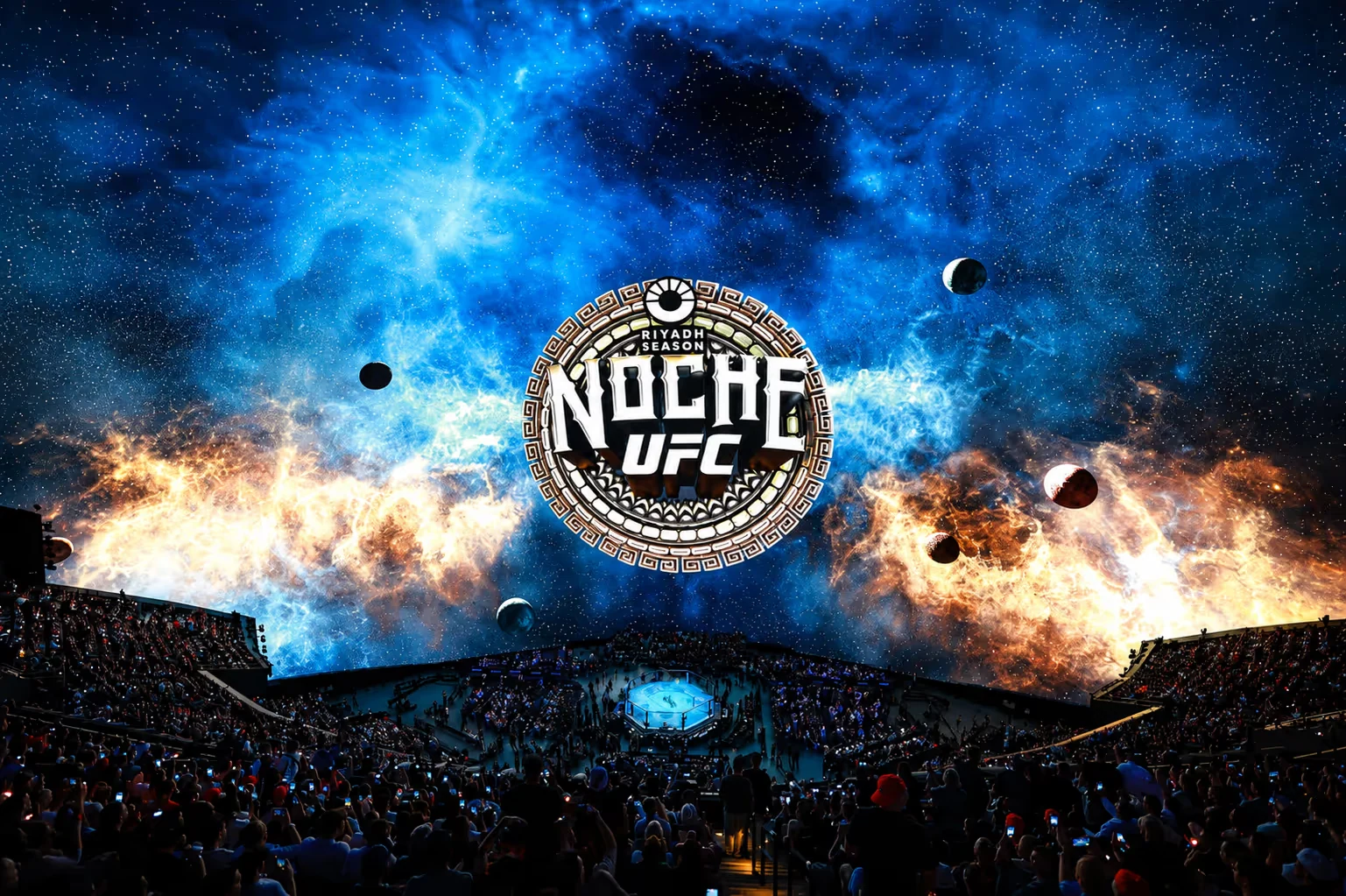
UFC 306 was held on 14 September 2024 at the Sphere in Las Vegas as Riyadh Season Noche UFC. The fights were staged inside immersive animated "worlds", and six 90-second films celebrating Mexican heritage filled the Sphere's 16K interior media plane, the world's highest-resolution LED display.
The event's published results:
- The highest-grossing event in UFC history, with a $22 million gate.
- A sold-out crowd of 16,024.
- Records for merchandise, sponsorship and VIP package sales.
- 89% of ticket buyers travelling from outside Nevada.
The lesson for the industry was not to build a dome. It was that immersive spectacle drives gate, merchandise, sponsorship and tourism when fans feel inside the story. The opportunity is to bring a similar floating-3D effect to regular stadiums, club lounges and brand activations, without the Sphere's budget or 160,000 sq. ft. footprint.
How it works: HoloFan displays
A HoloFan uses persistence of vision. Slim blades fitted with LEDs spin at high speed; at full speed the blades seem to disappear, and the image appears to float in mid-air with no visible screen or frame. No glasses are needed.
Typical specifications for a single unit:
- 65–100 cm across
- 1024×1024 resolution
- 170° viewing angle
- Around 96W power draw
- Controlled over WiFi through an app
Its small size and low power mean it can sit on a concourse counter, a lounge plinth or a shop shelf. For bigger visuals, several fans are synchronised into a holographic wall in 2-, 4-, 6- or 8-plus-fan layouts. Each unit shows part of the image, and together they form one life-size picture, large enough for a stadium entrance. Holographic wall packages typically include the frame, alignment, content creation, installation and training.
Content that works
The most effective loops run 30–90 seconds and use three formats:
- Spin: a 360° rotation of a product or player, with zoom on detail.
- Explode: kit, gear or a vehicle breaking apart to show what is inside.
- Transform: a jersey reveal, a before-and-after or a morph. High-contrast loops on dark backgrounds look sharpest.
Content is updated remotely through the app, so a sponsor's creative can change between fixtures. Each unit needs only standard power and a network connection, so it is live within hours and can be moved between concourses, lounges, partner stores and roadshows.
Results to expect
Beyond UFC 306 itself, the source gives industry benchmark ranges for floating-3D activations. It presents them as illustrative, not confirmed by any client:
- Dwell time in fan zones and concourses up 3x–5x, which links to higher food, drink and merchandise spend.
- Engagement and brand recall 40–50% higher than standard 2D video or static signage.
- 3x–5x more organic social impressions and press pick-up than conventional match-day experiences.
- Setup time cut from days to hours compared with older stage-illusion rigs.
For operations teams, there is no concourse closure or truss build, and small units fit club lounges, members' bars, ticket foyers and merchandise stores. For sponsors, a floating-3D centrepiece runs without the athlete present and refreshes between fixtures. For merchandising, a hologram of a star player in the new jersey stops fans, and a QR code or purchase prompt next to it turns attention into sales.
What it means for manufacturers
The same lesson applies on a trade show floor: visitors stop for something they cannot see on a phone. A HoloFan spinning a product, or exploding it to show the parts inside, draws people to a stand at low cost and low power.
Because units are small, quick to set up and updated remotely, they also suit dealer showrooms, plant receptions and roadshows. A synchronised wall of fans can provide a larger centrepiece for a product launch.
Frequently asked questions
Is holographic fan engagement only for huge stadiums?
No. A single HoloFan is 65–100 cm across and draws around 96W, so it fits lounges, bars, ticket foyers, shops and fan zones as well as stadium entrances.
How long does deployment take?
A unit needs only standard power and a network connection and can be live within hours rather than days.
How is a HoloFan different from VR, AR or a video wall?
It shows a 3D image that appears to float in open air, visible to the naked eye, with no headset, phone or visible screen.
What content works best?
Loops of 30–90 seconds using spins, exploded views or transformations. High-contrast content on dark backgrounds looks sharpest.
Can it make a life-size display for a stadium entrance?
Yes. Several fans can be synchronised into a holographic wall, in 2-, 4-, 6- or 8-plus-fan layouts, to form one life-size image.
Can sponsorship and merchandise sales be built in?
Yes. Sponsor creative can be changed remotely between fixtures, and a QR code or purchase prompt next to the display turns attention into sales.