


Industry insight: this article describes how the technology is used in the industry. It is not a Metaverse911 client project. See our case studies for our own work.
The situation: company history that nobody stops to read
For decades, telling a company's story meant artefacts in glass cases, timeline brochures and documentary videos for anniversaries. Today's stakeholders, including employees, investors and premium clients, expect something more immersive that links the company's past to its plans.
Communications directors and brand heritage managers are under pressure to make company history relevant and to create moments people share, so that spending on museums and anniversary events is justified. Static displays rarely achieve that personal connection.
What they did: from one bank's pioneering project to standard practice
One bank, drawing on its long financial history, was an early, public example. It used large-scale, interactive 3D holograms to show its heritage, letting visitors engage with life-size representations of historical figures, key artefacts and important moments in the bank's past. It was a planned communication tool rather than a social media stunt, and it showed that holographic storytelling could work at scale.
Since then the technology has moved from one-off museum installations into the regular plans of large groups. Instead of fragile stage illusions, corporate centres now use standalone volumetric displays in lobbies, heritage centres and anniversary galas. These units offer sharper images, much shorter setup and a more personal, interactive experience.

How it works
The old way: Pepper's Ghost
Early museum holograms used a scaled-up version of the "Pepper's Ghost" illusion. A high-definition projector beamed a recorded video onto a hidden reflective surface, which bounced it onto a tensioned, transparent Mylar foil set at exactly 45 degrees. The effect was strong, but it needed tight lighting control, heavy steel trusses and days of setup and calibration. Only the largest permanent installations could justify it.
The current way: standalone volumetric units
Today's standalone, plug-and-play units use light-field technology and dense, high-brightness LED arrays behind a clear, glass-like front. The process is:
- Capture the subject, such as an actor playing a founder or a high-resolution 3D scan of a rare artefact, in a volumetric studio with a 4K camera array, clean backdrop and professional lighting.
- Process the footage and load it onto the display unit.
- Deploy the same story to dozens of units across regional offices or venues at once.
The units have high-quality audio and audience-facing sensors. Visitors use touchless gestures or touchscreens to choose chapters of the company's history, rotate 3D artefacts or ask pre-programmed questions of historical figures. That interactivity makes the hologram a two-way experience rather than a broadcast.

Results
The source gives no specific figures. It describes the benefits for each team:
- Communications and PR: there is no need to close a lobby for a week to build a foil stage. Units are wheeled in, plugged into standard power and a wired internet connection, and tested within hours. That lowers cost and risk and opens up smaller venues.
- Heritage and archives: rare artefacts and historical figures can appear at several locations at once without leaving the secure archive, with the same story told everywhere.
- HR and onboarding: a life-size, interactive hologram holds attention where onboarding videos do not, and can include quizzes or deeper history modules.
The measures companies typically track are dwell time in heritage zones, engagement and brand innovation scores compared with events using static displays, savings on transport, insurance and security for fragile artefacts, and earned media and social reach.

What it means for manufacturers
Many manufacturers have long histories: founders, first machines, landmark plants and products. That history is often kept in a lobby display case or a brochure. A hologram can put the founder, or a 3D model of the first machine, in front of visitors, new joiners and customers in a way they will remember.
Because the same content can run on several units, one heritage story can appear at headquarters, at each plant and at anniversary events without moving original artefacts. Interactive chapters let visitors explore the parts of the story that interest them.
Frequently asked questions
Is holographic storytelling suitable for smaller lobbies or regional offices?
Yes. Standalone units need only standard power and a wired internet connection, so they fit smaller, non-traditional spaces that older foil-based systems could not.
What is the difference between Pepper's Ghost and a volumetric display?
Pepper's Ghost reflects a projected video onto an angled foil and needs controlled lighting, trusses and days of calibration. A volumetric display is a self-contained unit with LED arrays and light-field technology that can be set up within hours.
How is the content created?
The subject is captured in a volumetric studio with a 4K camera array, a clean backdrop and professional lighting. The footage or 3D scan is then processed and loaded onto the unit.
Can visitors interact with the hologram?
Yes. Using gestures or a touchscreen, they can choose chapters of the history, rotate 3D artefacts or ask pre-programmed questions of historical figures.
How can manufacturers use holograms to tell their company heritage?
Manufacturers can use holograms to put a founder, or a 3D model of the first machine, in front of visitors, new joiners and customers. Because the same content can run on several standalone hologram units, one heritage story can appear at headquarters, at each plant and at anniversary events without moving original artefacts.
More on holobox use cases
 Insight · HoloBox
How a global footwear brand uses a hologram display in its flagship store
How a global footwear brand put a permanent hologram display in its Manhattan Beach flagship to show shoe technology in 3D and link shoppers to checkout.
Read the article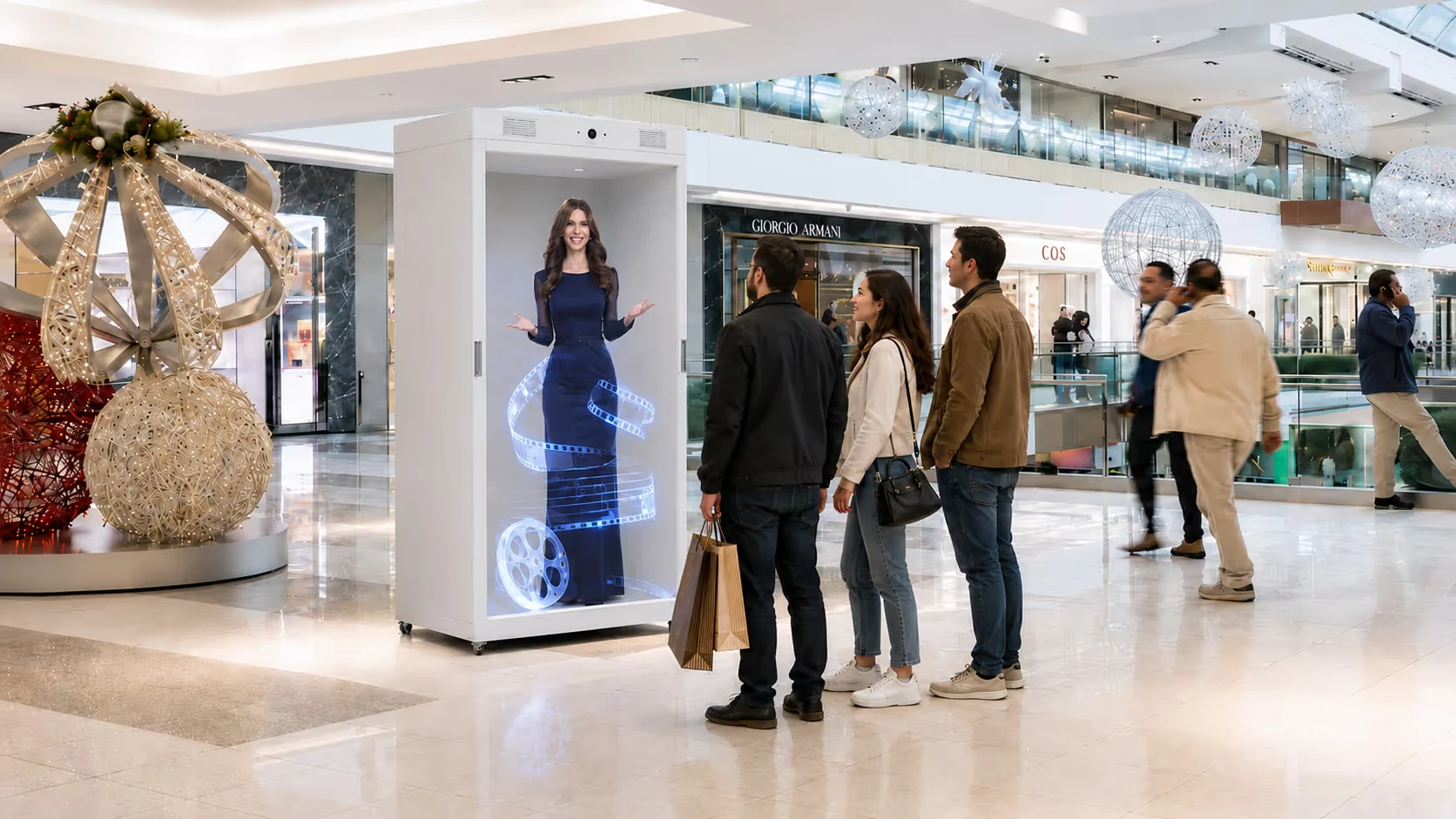 Insight · HoloBox
How a US mall operator built a 30-mall hologram advertising network
How the largest US mall operator built a permanent hologram advertising network across 30 malls, with a cloud CMS, touch screens and QR codes for shoppers.
Read the article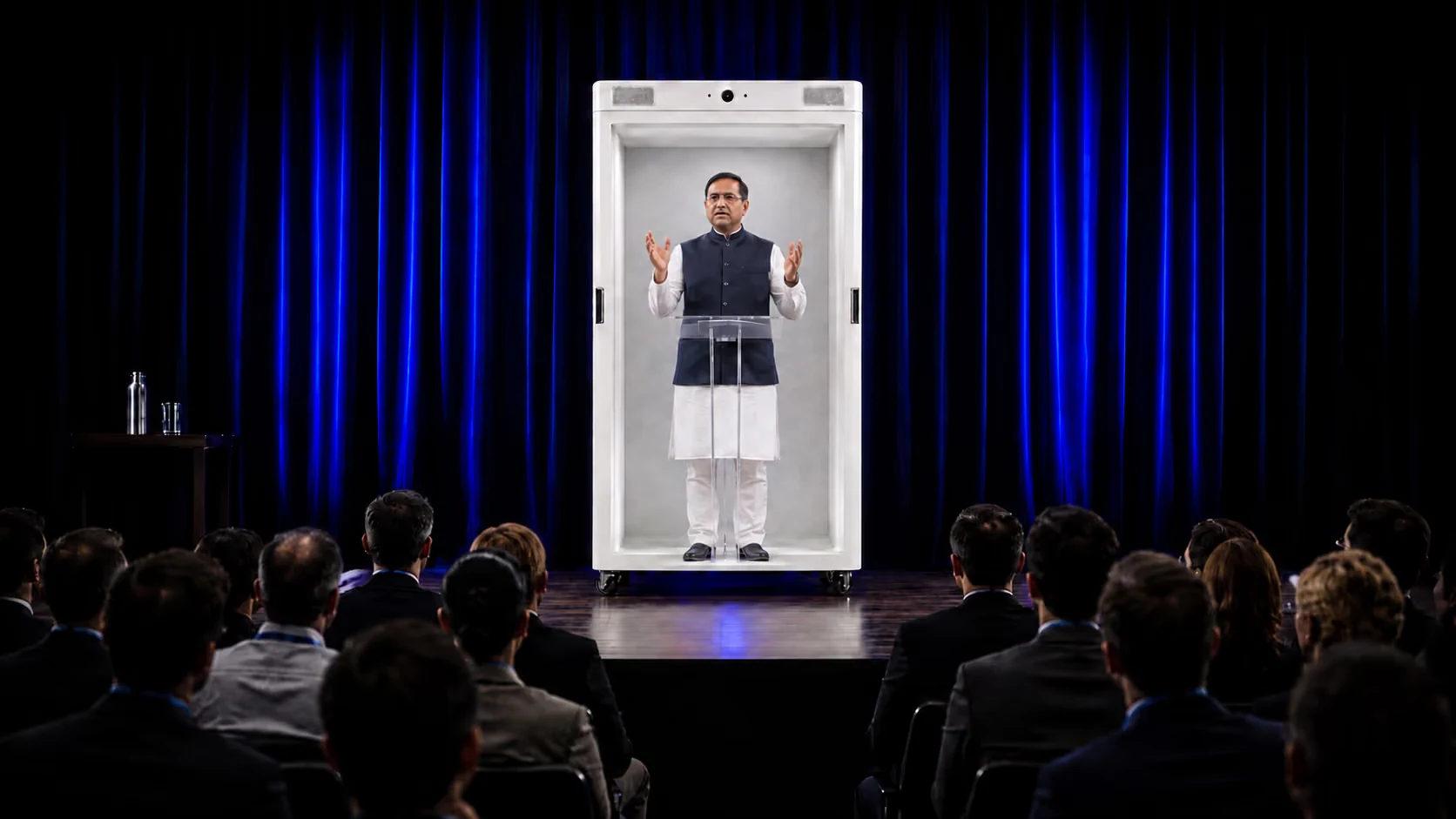 Insight · HoloBox
How holograms are used at live events in India, from 2014 to HoloBox
How hologram presence at Indian events moved from 2014 election stage rigs to plug-and-play HoloBox units, and how they work for conferences and summits today.
Read the article