


Industry insight: this article describes how the technology is used in the industry. It is not a Metaverse911 client project. See our case studies for our own work.
The situation: stores must offer what online cannot
E-commerce has changed what shoppers expect from a store. Static mannequins, printed windows and flat screens no longer stop people, who walk past them the way they scroll past banner ads. A physical store now needs to create a brand moment that cannot be repeated on a phone.
The brand in this example is a global leader in lifestyle and performance footwear. Its range was changing quickly, and much of what makes its shoes different is hidden: memory-foam cushioning, arch support and breathable, lightweight materials. It wanted a store centrepiece that could show that technology clearly, connect the physical and digital, and drive measurable sales.
What they did: a permanent hologram in the flagship
The brand installed a permanent, life-size hologram display at its Manhattan Beach flagship in Los Angeles. It was not a pop-up or a weekend activation, but an always-on part of the store. The aims were to bring in foot traffic, engage customers with interactive 3D content and feed a simple purchase flow.

How it works
The installation combines hardware, cloud software and detailed 3D content.
Hardware: a life-size volumetric unit built for busy retail floors. It uses light-field technology and high-brightness LED arrays to show photorealistic 3D images that appear to float inside the glass. It is bright enough to stay clear under store lighting and sunlight through the window.
Content: the brand invested in detailed 4K 3D models of its main lines. These are rigged, animated assets, not static images, held in a cloud-based content management system (CMS). The head office marketing team can push updates, change featured shoes by season or stock level, and schedule animations remotely across locations.
The shopper journey has four steps:
- Stop: a bright, floating 3D sneaker catches the eye from across the store.
- Explore: the shoe rotates 360° to show its sole and shape, then an "exploded view" reveals the memory foam, breathable mesh and cushioning layers.
- Interact: a touch screen lets shoppers choose models from a digital catalogue, change colourways and check specs, sizing and pricing.
- Buy: a product-specific QR code sends the shoe to the shopper's phone browser or the brand app, to buy straight away or save to cart.

Results
The source reports that shoppers spend around 40% longer in-store when interacting with volumetric displays than with static signage, which gives staff more time to build rapport and suggest other products.
Other benefits are described by team:
- Visual merchandising: instead of shipping and arranging mannequins and props across hundreds of stores, the team launches campaigns from the CMS. Each store can feature different products based on local trends or live stock, for example lightweight running shoes in one city and weather-resistant boots in another.
- Store operations: the hologram works as an always-available digital sales associate, showing how a lacing system works or which materials are waterproof, so staff can focus on fittings and closing sales. It needs minimal daily maintenance.
- Marketing: the unit tracks which products are viewed most, how long people engage with each animation, which colourways draw interest and how many QR scans convert.

The measures the source lists for retail hologram displays are foot traffic near entrances and windows, dwell time, conversion on featured items, and savings on props, shipping and overnight installation for seasonal campaigns.

What it means for manufacturers
Many manufactured products share the footwear brand's problem: the features that matter most are inside. Cushioning layers in a shoe are like the internal parts of a pump, a motor or an appliance. A life-size 3D model with an exploded view shows them in seconds, in a showroom, at a dealer or on an exhibition stand.
The rest of the model carries over too: content updated centrally for every location, a touch screen for variants and specs, and a QR code that turns interest into a measurable lead or sale.

Frequently asked questions
Which industries can use an in-store hologram display?
Any business whose products have features that are hard to see on a shelf. The exploded view, touch catalogue and QR handoff work for footwear, electronics, appliances, vehicles and machinery.
What does the installation include?
A life-size volumetric display unit with high-brightness LED arrays, a touch screen, QR code generation, a cloud CMS and detailed, animated 4K 3D models of the products.
Is it difficult to maintain?
No. The unit is built for permanent use with minimal daily maintenance, and content is updated remotely through the CMS.
How does it connect to online sales?
Each product has a QR code that opens it in the shopper's phone browser or the brand app, where they can buy immediately or save it to their cart.
What results did the footwear brand see from its in-store hologram display?
The source reports that shoppers spend around 40% longer in-store when interacting with volumetric hologram displays than with static signage, which gives staff more time to build rapport and suggest other products. The footwear brand's hologram at its Manhattan Beach flagship in Los Angeles also tracks which products are viewed most, engagement time per animation, colourway interest and QR scan conversions.
More on holobox use cases
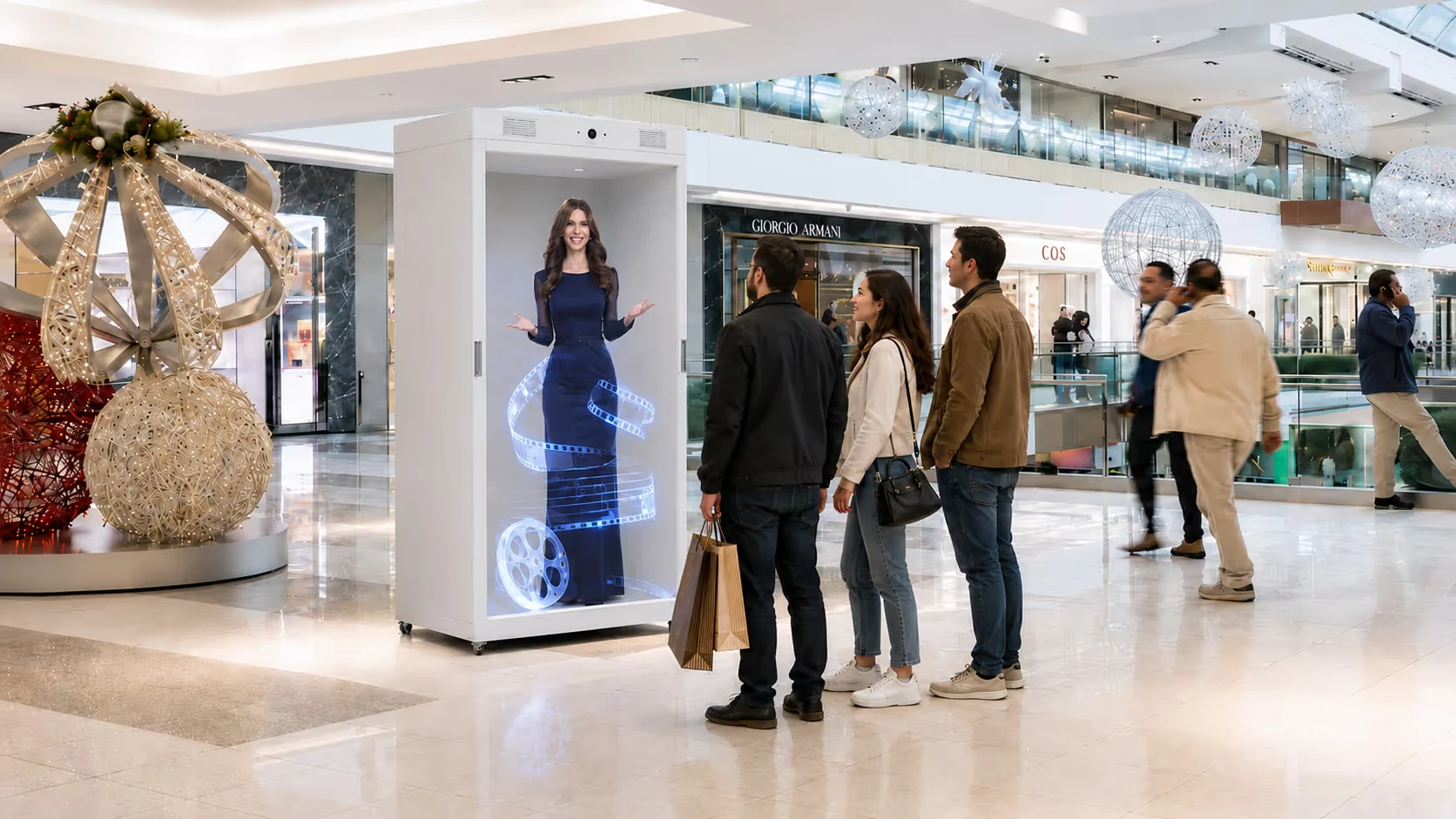 Insight · HoloBox
How a US mall operator built a 30-mall hologram advertising network
How the largest US mall operator built a permanent hologram advertising network across 30 malls, with a cloud CMS, touch screens and QR codes for shoppers.
Read the article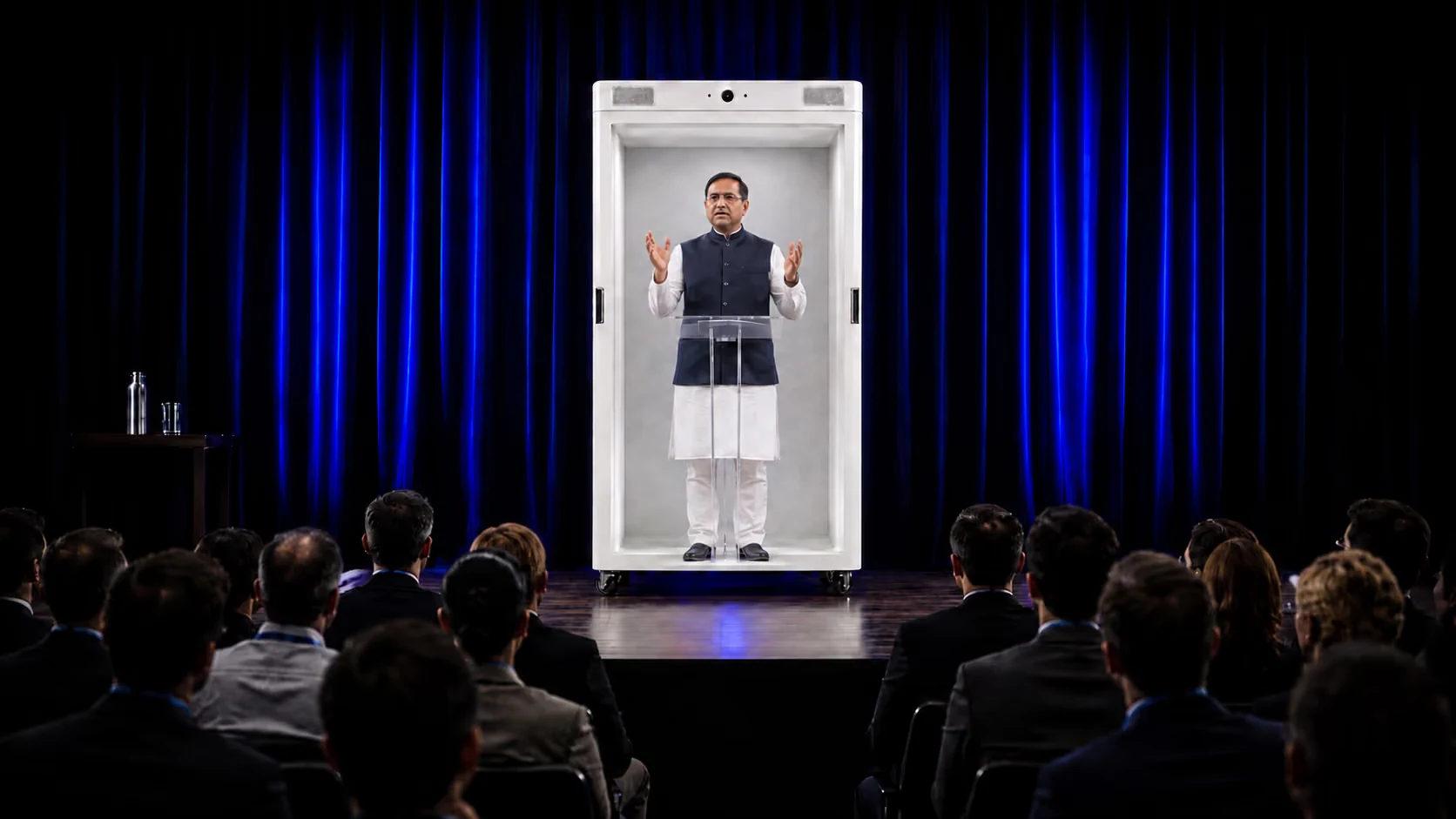 Insight · HoloBox
How holograms are used at live events in India, from 2014 to HoloBox
How hologram presence at Indian events moved from 2014 election stage rigs to plug-and-play HoloBox units, and how they work for conferences and summits today.
Read the article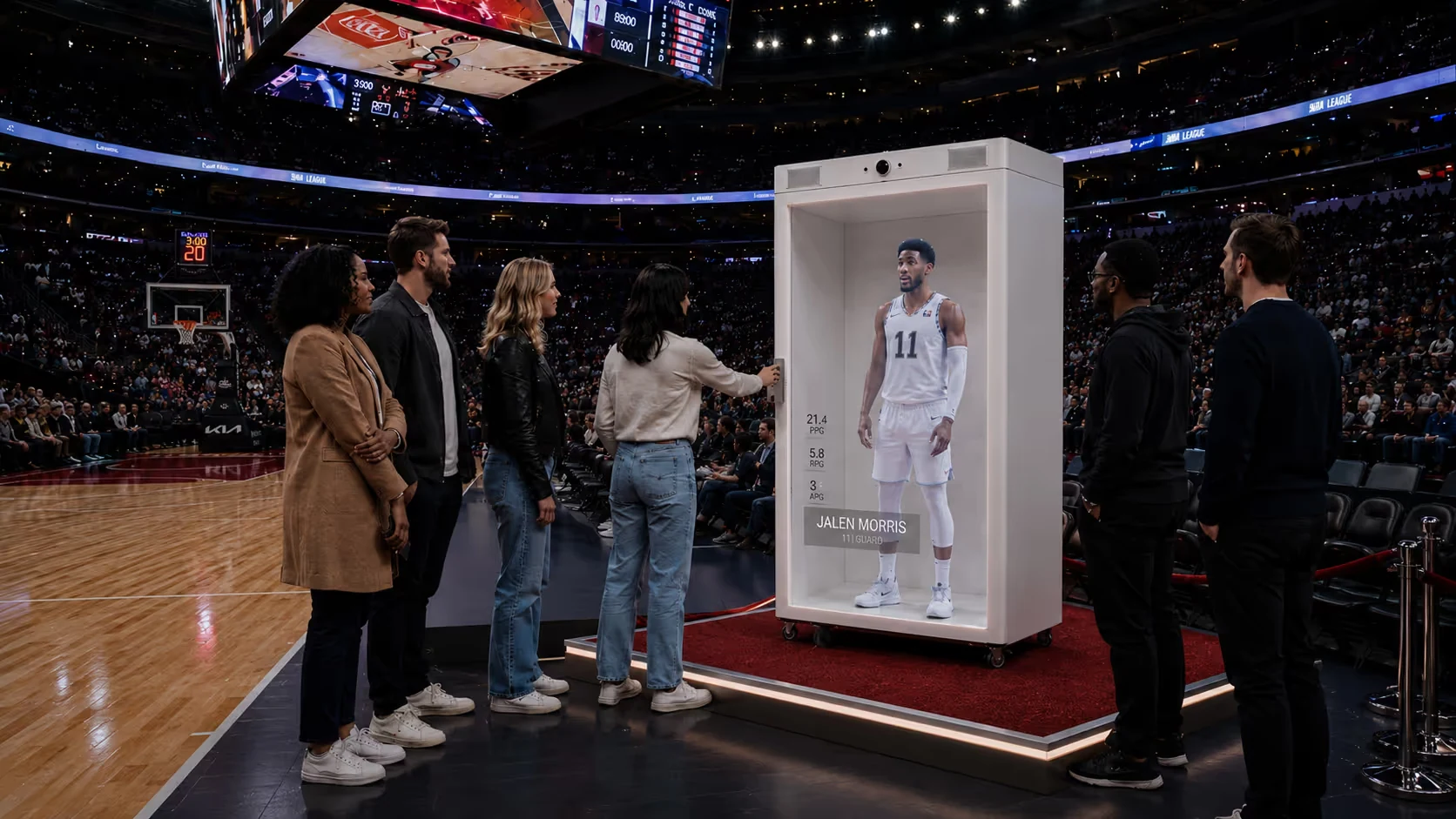 Insight · HoloBox
How a sports broadcaster brings remote athletes to the studio as holograms
How a sports broadcaster put life-size, interactive holograms of remote athletes on its studio desk, and how capture, beaming and two-way audio work.
Read the article