

Industry insight: this article describes how the technology is used in the industry. It is not a Metaverse911 client project. See our case studies for our own work.
The situation: fans want more than a video interview
For decades, the value of a sports broadcast was the game itself, with flat-screen interviews around it. Fans now expect something more immersive that brings them closer to the athletes. Broadcasters are under pressure to stand out, hold attention and create shareable moments that support premium advertising rates.
Video calls with players do not create much of a sense of presence. Getting athletes into the studio in person is hard, because their time is limited and they are often far away.
What they did: live holograms in the studio
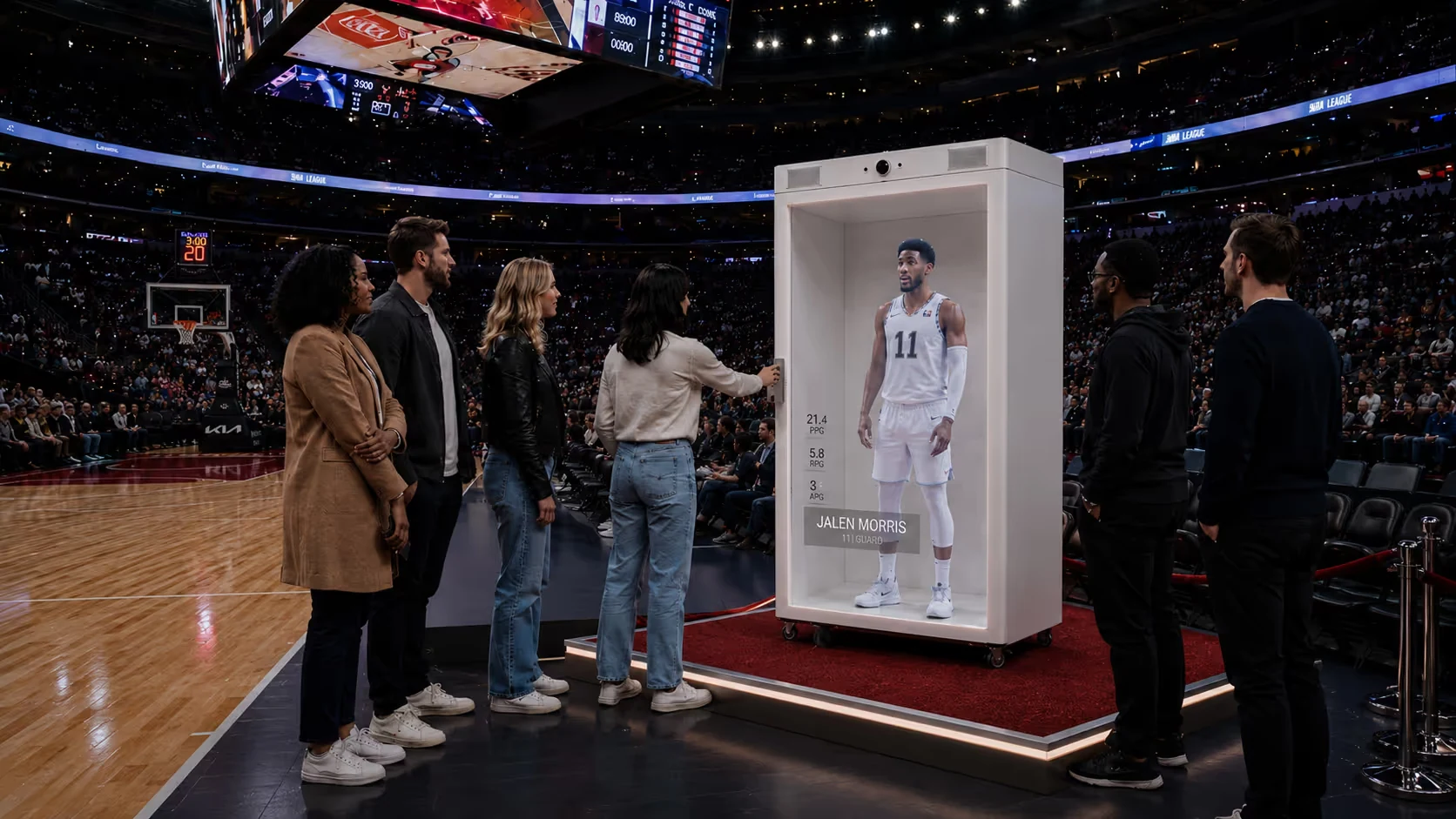
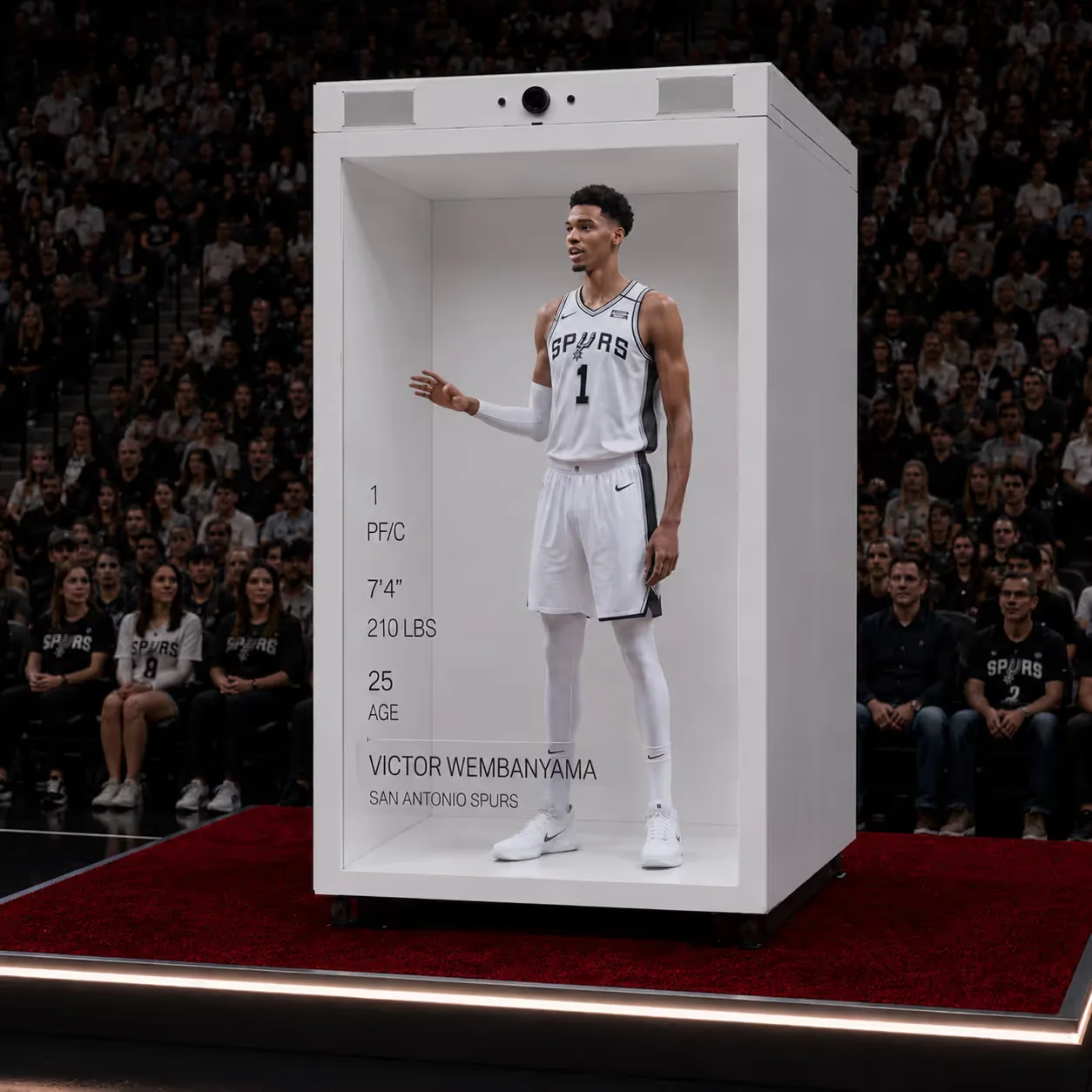
A sports broadcaster known for adopting new broadcast technology used large-scale, interactive 3D holograms in live broadcasts. Studio analysts spoke with life-size holograms of star athletes who were hundreds of miles away. It was used as a regular broadcasting tool rather than a one-off stunt, and it showed that holographic interviews could work at scale and hold a mass TV audience.
Since then, studios have moved from stage illusions to standalone volumetric displays, with sharper images, much shorter setup and real-time interaction. This is the role a life-size HoloBox is built for.
How it works
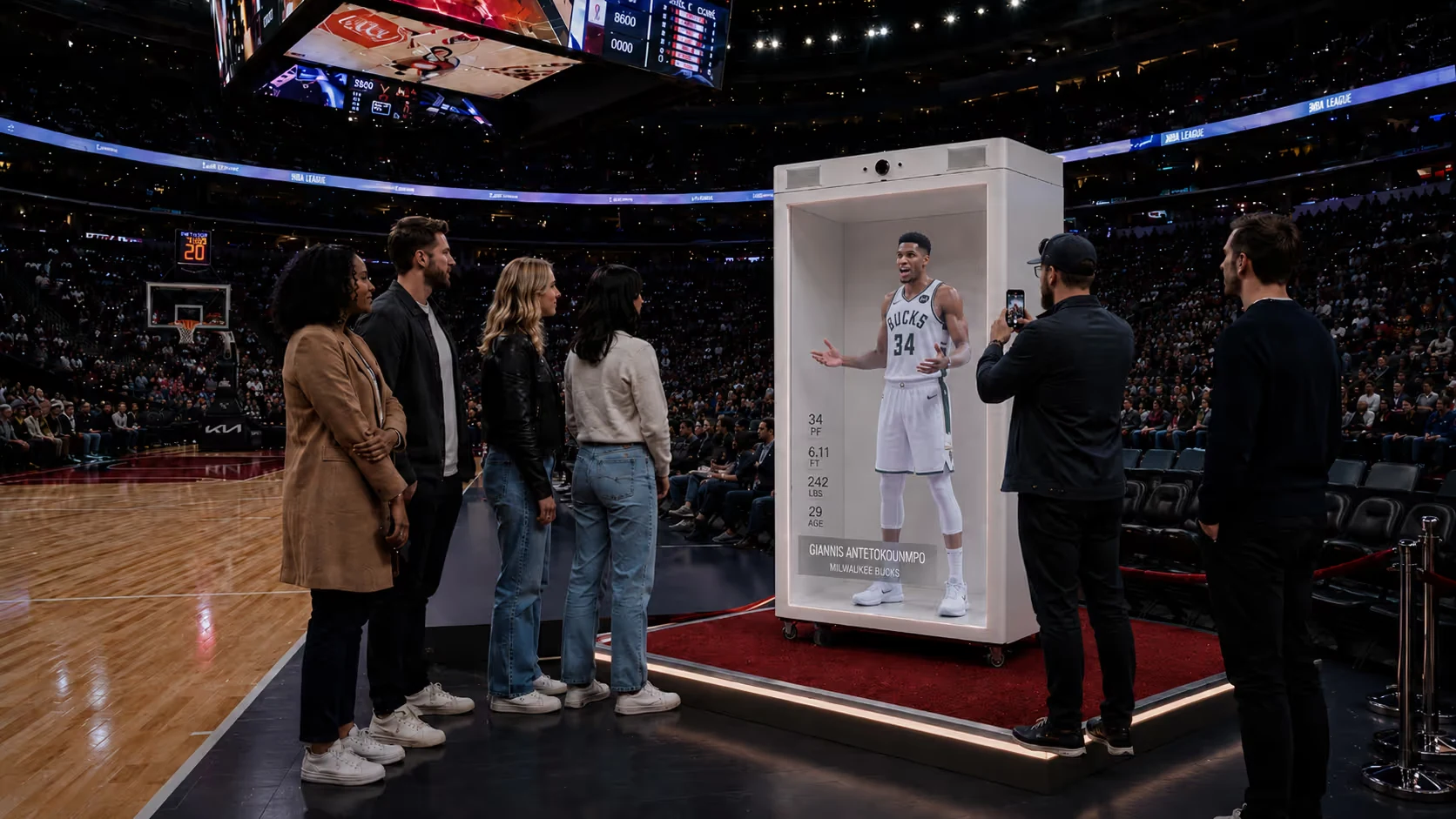
Early sports holograms used a scaled-up "Pepper's Ghost" illusion: a projector bounced an image onto transparent foil stretched across a stage at 45 degrees. It needed exact lighting, heavy steel trusses and several days of setup. Today's standalone units use light-field technology and high-brightness LED arrays inside a transparent enclosure.
The flow has four steps:
- Capture: the athlete is recorded in a compact volumetric studio near their stadium or training ground, with a broadcast-quality 4K camera array, a clean backdrop and professional lighting.
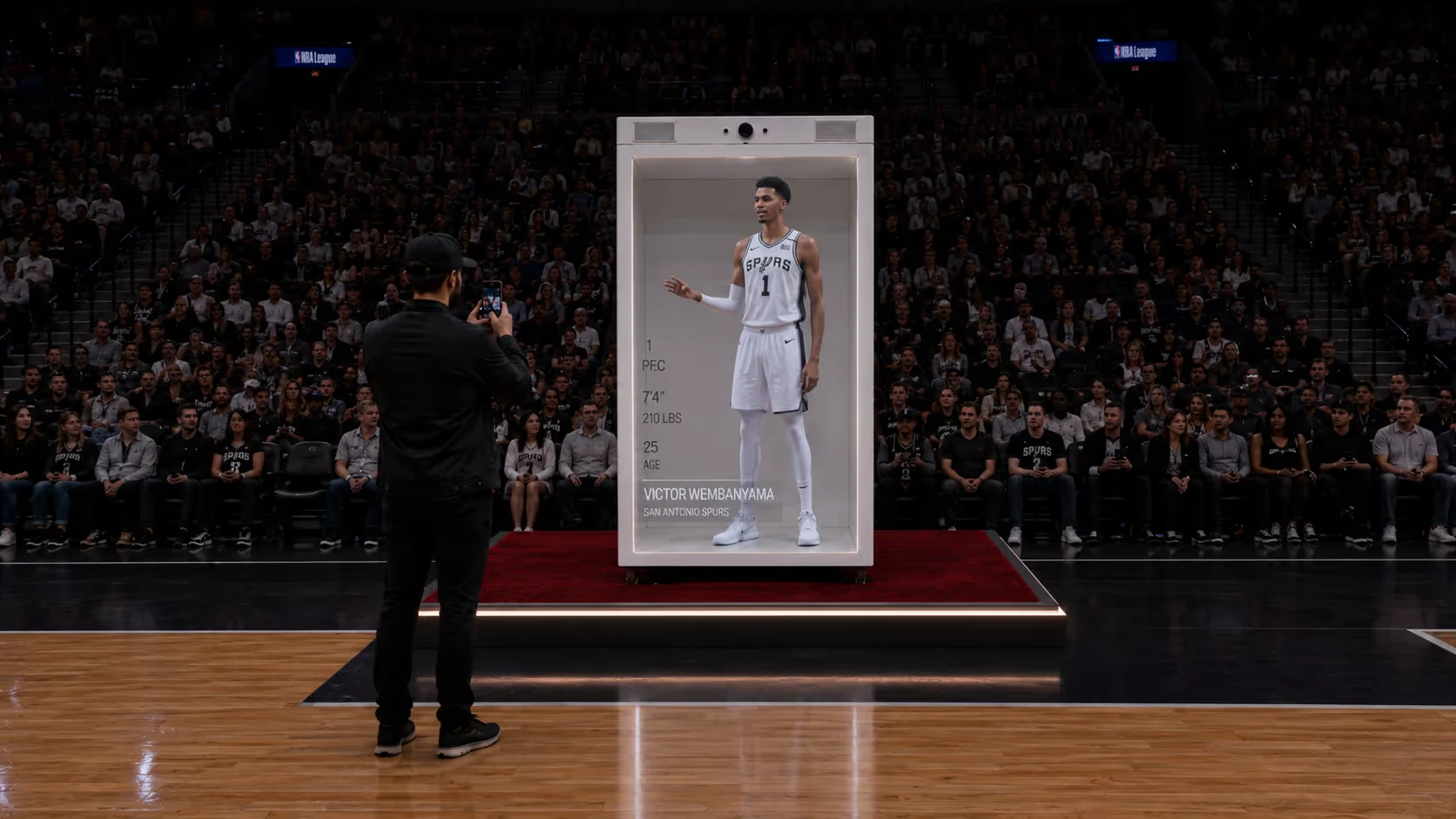
- Beam: the feed travels over an ultra-low-latency network and appears life-size in a standalone display on the studio desk. One athlete can be beamed to several units in different studios or partner locations at once.
- Interact: two-way audio, with discreet microphones and cameras, lets the athlete hear the analysts and answer in real time. It is a live conversation, not a recording.
- Amplify: the life-size presence holds viewers' attention and creates moments fans share on social media.
The units are wheeled onto set, plugged into standard power and a dedicated wired connection, and running within hours. They also fit smaller spaces that could never take a foil stage.
Results
The source describes the benefits by team:
- Production: no week-long studio closures to build and calibrate a foil stage, which cuts setup cost, specialist labour and technical risk.
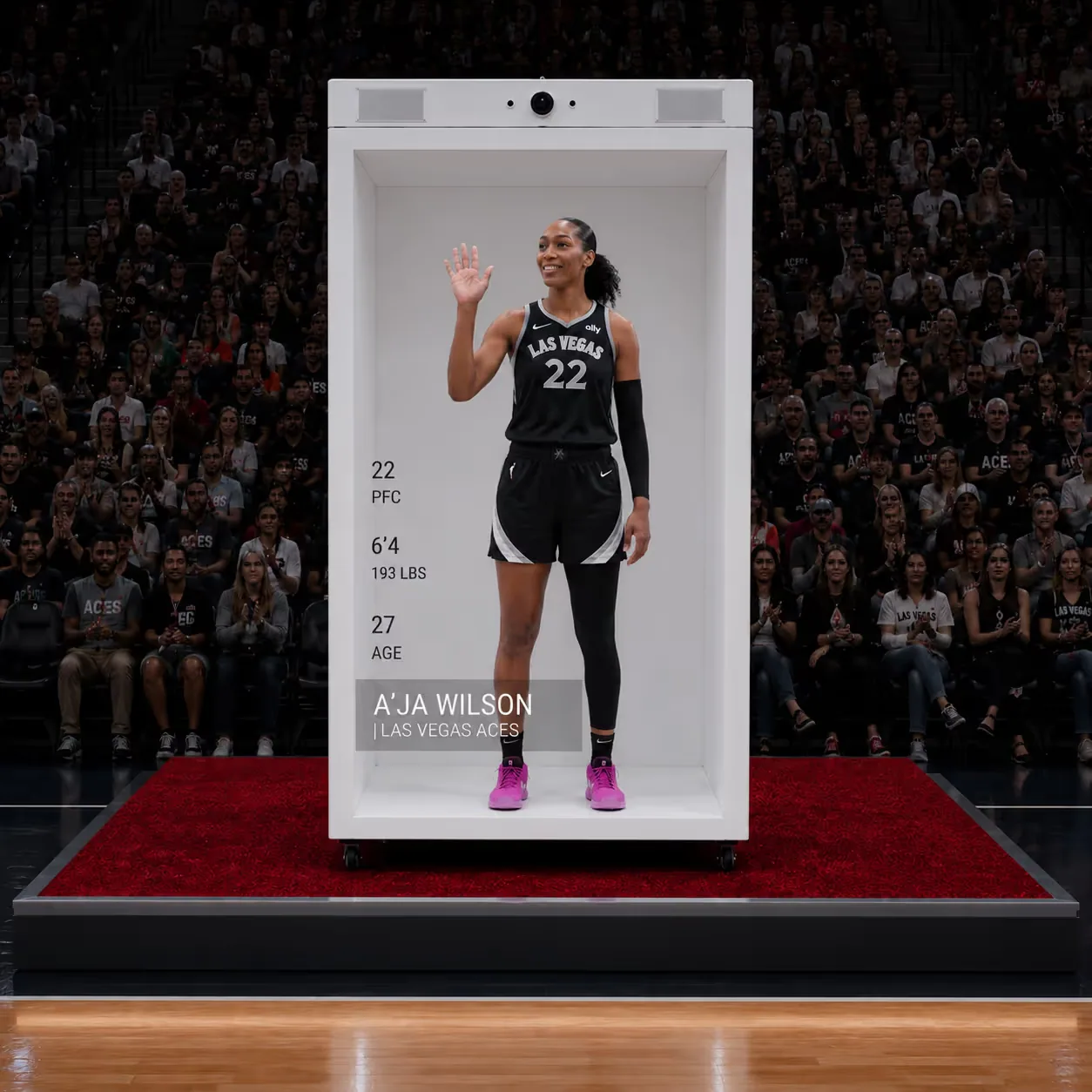
- Marketing and sponsorship: athletes can appear in the studio, in effect, without leaving their home city, which makes their time go further and keeps sponsor messages consistent.
- Audience and ratings: a life-size star player holds attention better than a talking-head segment and creates moments competitors cannot copy.
It also cites industry benchmarks for holographic interviews:
- Viewer retention during interview segments up by 30–50%.
- Viewer engagement and long-term brand recall 40–50% higher for sponsor activations with holographic athletes than for standard 2D video.
- Logistics, security and travel costs reduced by up to 70% per major event series when athletes are beamed in rather than flown.
- Three to five times more earned media coverage than standard-format interviews.
These are general benchmarks from the source, not figures published by the broadcaster.

What it means for manufacturers
The same setup solves a common problem for manufacturers: the right expert is rarely in the right place. A product head, a senior engineer or a managing director can be captured near their own office and appear life-size at a launch, a dealer meet or a trade show stand, answering questions live.
Because one person can be beamed to several units at once, a single expert can appear at several events or regional offices on the same day. The units need only power and a wired connection, so they fit an exhibition stand or a meeting room.
Frequently asked questions
Is holographic broadcasting suitable for smaller studios?
Yes. Standalone units need no foil stage or week-long build, so they fit smaller, non-traditional spaces.
What hardware is needed in the studio?
A standalone volumetric display with light-field technology and high-brightness LED arrays, two-way audio, discreet microphones and cameras, standard power and a dedicated wired network connection.
Where is the athlete recorded?
In a compact volumetric capture studio near their stadium or training ground, with a 4K camera array, a clean backdrop and professional lighting.
Is it a live conversation or a recording?
Live. The feed is sent over an ultra-low-latency network, and two-way audio lets the athlete hear and answer the analysts in real time.
How did early sports holograms differ from today's standalone hologram displays?
Early sports holograms used a scaled-up Pepper's Ghost illusion, where a projector bounced an image onto transparent foil stretched across a stage at 45 degrees, needing exact lighting, heavy steel trusses and several days of setup. Today's standalone units use light-field technology and high-brightness LED arrays in a transparent enclosure, and can be wheeled onto set and running within hours.
More on holobox use cases
 Insight · HoloBox
How a global footwear brand uses a hologram display in its flagship store
How a global footwear brand put a permanent hologram display in its Manhattan Beach flagship to show shoe technology in 3D and link shoppers to checkout.
Read the article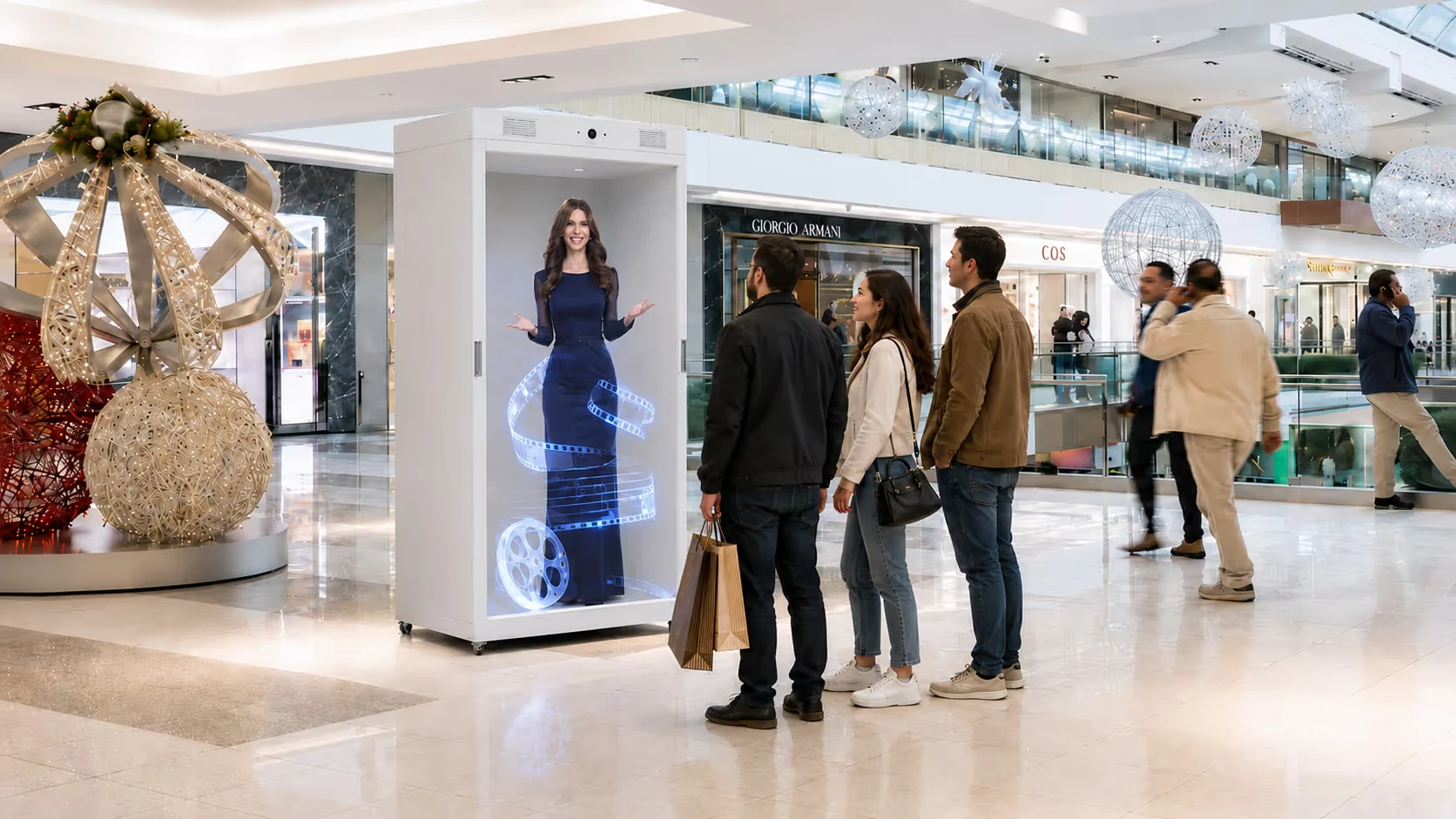 Insight · HoloBox
How a US mall operator built a 30-mall hologram advertising network
How the largest US mall operator built a permanent hologram advertising network across 30 malls, with a cloud CMS, touch screens and QR codes for shoppers.
Read the article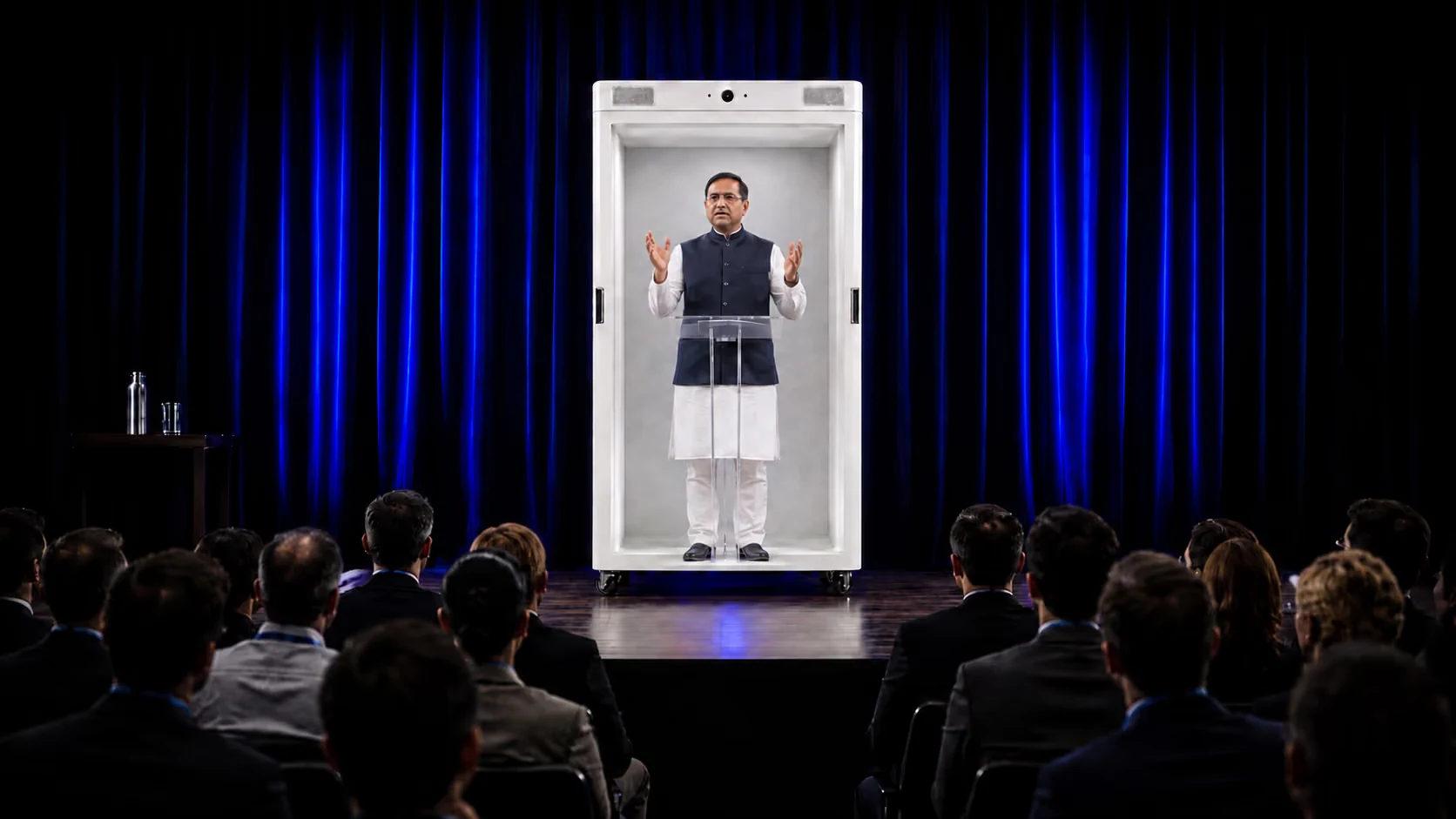 Insight · HoloBox
How holograms are used at live events in India, from 2014 to HoloBox
How hologram presence at Indian events moved from 2014 election stage rigs to plug-and-play HoloBox units, and how they work for conferences and summits today.
Read the article