

Industry insight: this article describes how the technology is used in the industry. It is not a Metaverse911 client project. See our case studies for our own work.
The situation: complex assembly run from paper drawings
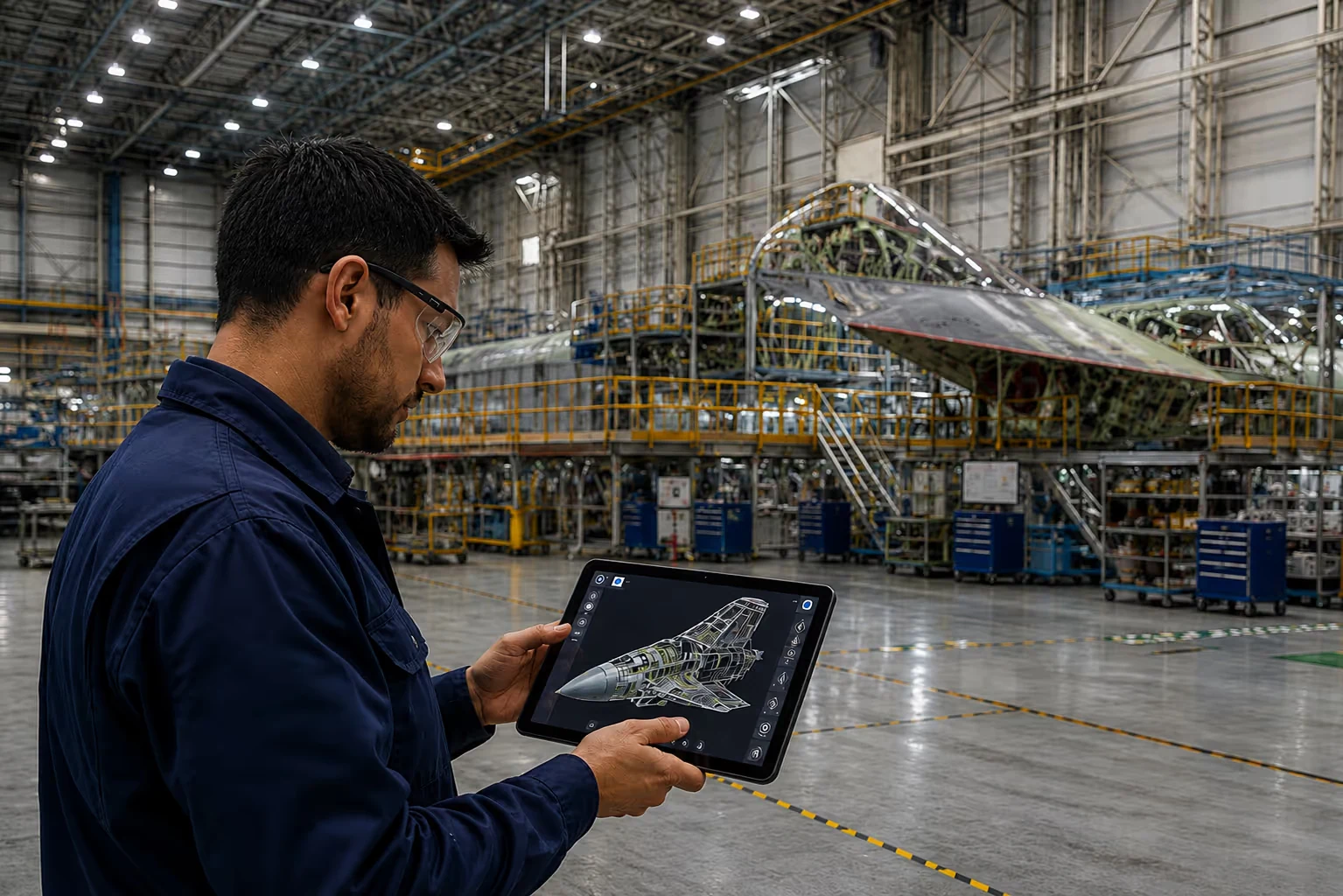
The Eurofighter Typhoon is a multi-role combat aircraft built from thousands of components, from avionics to jet engines. On an aircraft like this, a misaligned bracket, a wrongly torqued bolt or a misplaced wire is a serious defect, so accuracy matters at every step.
At the Warton/Samlesbury facility, skilled technicians were spending more time reading dense 2D engineering drawings and cross-checking paper manuals than building the aircraft. They had to translate layered drawings into 3D in their heads. That is slow, tiring and a common source of human error, and it put quality and the production schedule in constant tension.
Paper also slowed down design changes. Each update meant printing, distributing and checking new drawings, which led to version control problems and production delays. The manufacturer decided the paper-based workflow could not keep up and started a programme to digitise its manufacturing process.
What they did: 3D work instructions on rugged tablets
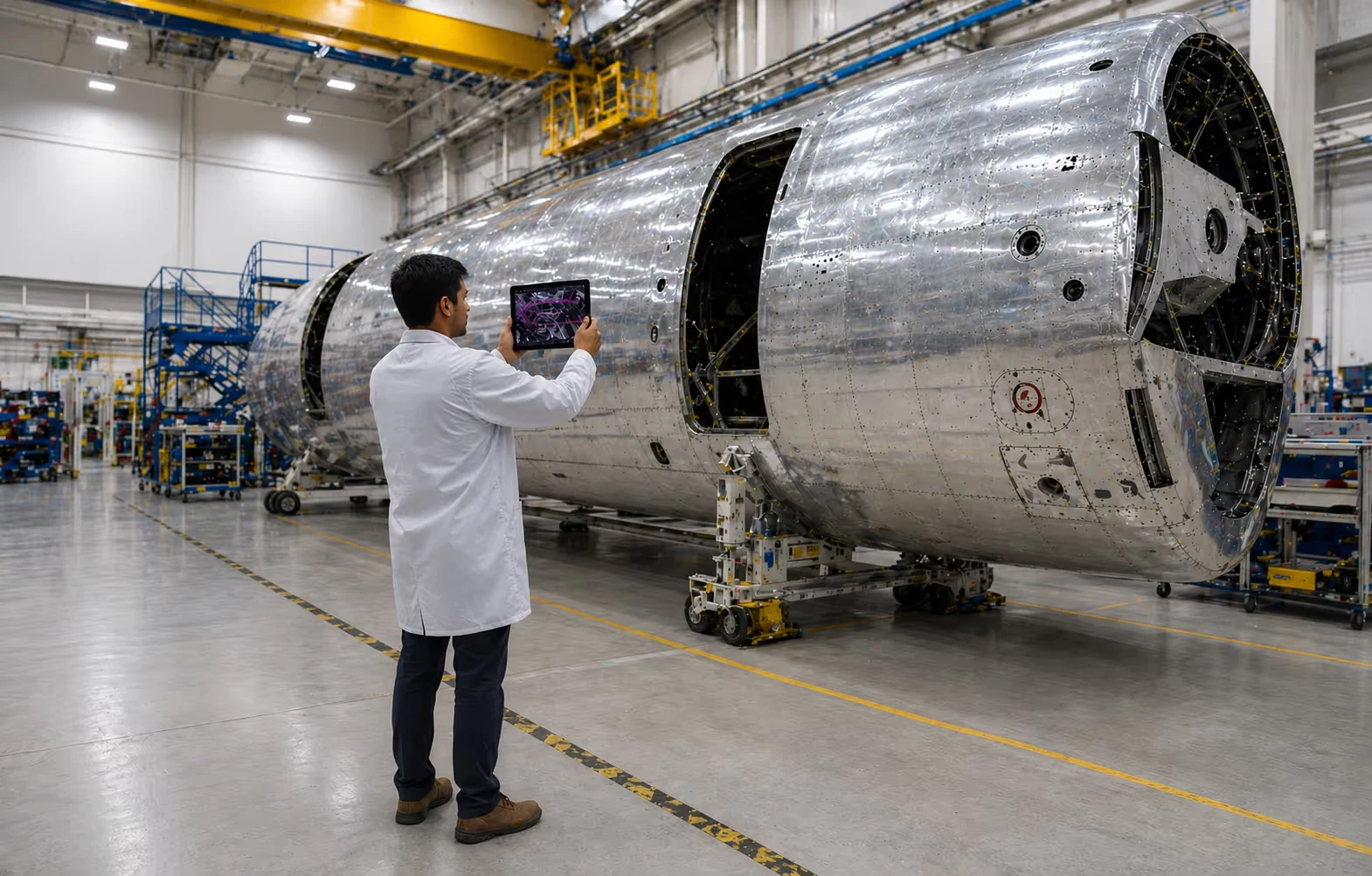
Technicians were given ruggedised industrial tablets in place of paper manuals. When a technician points the tablet camera at a component or assembly area, the app overlays 3D models and instructions on the live view. For example, the route of a wiring harness appears as a 3D path on the aircraft, so there is no guesswork about where it runs.
The rollout was phased. The team began with a pilot in one high-complexity assembly area, collected feedback from the technicians using it, and refined the interface and workflows before expanding. Training took place in the technicians' own work area and focused on their actual tasks rather than generic classroom sessions. The pilot also created internal champions who helped their colleagues adopt the tool.
How it works
The tablet app does more than show pictures. At each step it gives the technician the information needed for that task:
- 3D models and instructions overlaid on the real component
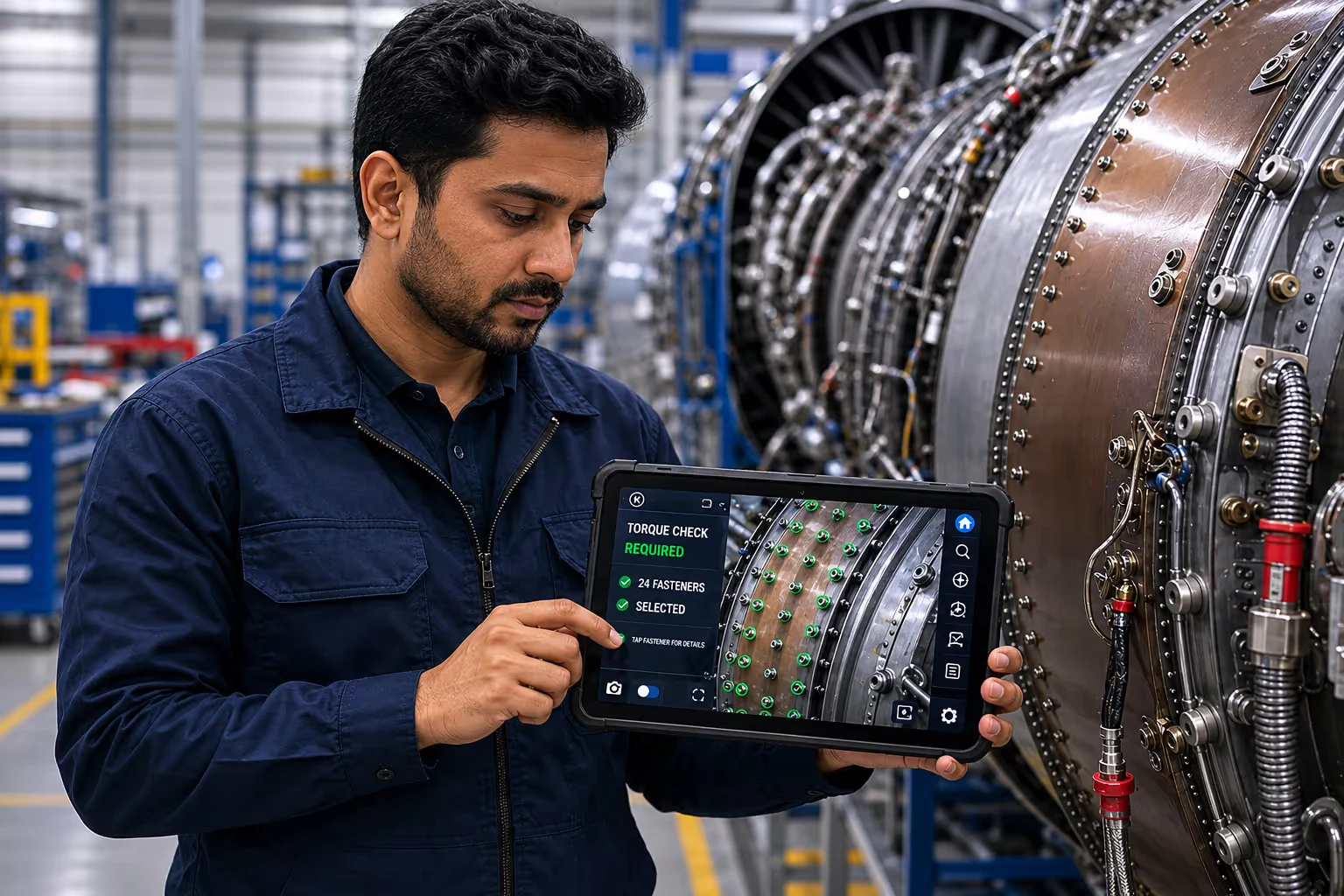
- Torque specifications for each bolt
- Confirmation of correct part numbers
- Access to the relevant quality standards
- Digital sign-off at each critical step
The app is connected to the manufacturer's Product Lifecycle Management (PLM) and Manufacturing Execution Systems (MES). Work instructions are therefore always based on the latest design revision, which removes the risk of building from an outdated drawing.
Every sign-off is recorded, which builds a complete digital record of the assembly, often called a digital thread. Quality teams can trace each component and action, and audits draw on that record instead of paper files. The IT team built the integration with PLM and MES and ran the wireless network needed to serve data to hundreds of tablets across the hangar floor.
Results
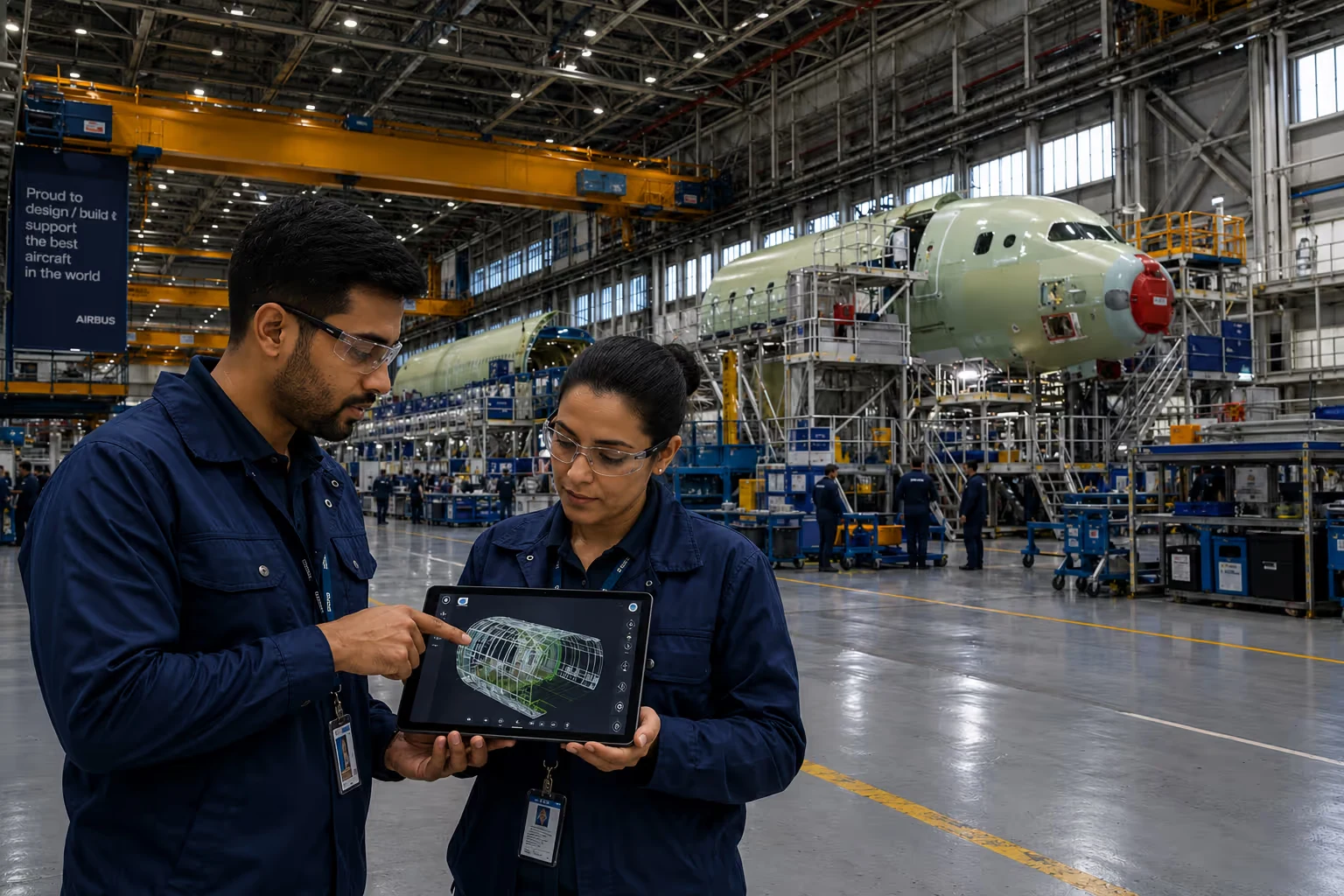
The clearest change was that time spent referring to paper drawings was almost eliminated. Technicians could spend that time on assembly. Clear visual instructions also reduced assembly errors, and with them the rework, scrap and delays that errors cause.
Other departments felt the change too:
- Production: lower mental load, faster assembly and fewer errors.
- Quality assurance: with fewer defects to log, QA staff could spend more time on process improvement and root cause analysis.
- Engineering: data from the line showed which assembly steps caused delays or confusion, so designers could improve them for manufacture.
- Training: new technicians, including those with little aerospace experience, became productive in a fraction of the previous time.
The source reports that the initial proof of concept often paid for itself within the first six months through efficiency gains, with full return on investment typically within 12 to 18 months. It also reports a sustained rise in employee retention in the assembly department, faster production cycle times, easier audit compliance and less paper and rework waste.
What it means for manufacturers
The lesson is not specific to aircraft. Any plant with long, multi-step assembly, frequent design changes and skilled workers reading complex drawings faces the same problem. Tablet AR puts the right instruction on the right part at the right moment, using hardware that technicians already understand.
The way the project was run matters as much as the technology. Starting with one difficult area, listening to the people on the line, training them at their workstation and linking the app to PLM and MES so instructions stay current are steps any manufacturer can copy.
Frequently asked questions
Can tablet AR work for automotive, heavy machinery or specialty vehicle assembly?
Yes. Guided assembly with tablet AR suits any industry with complex, multi-step assembly, from tractors to medical devices to automotive components. The main work is adapting the 3D content and workflows to your own products and processes.
How long does a tablet AR proof of concept take?
A proof of concept typically takes 8–12 weeks, depending on the complexity of the use case. That covers discovery, preparing the 3D models, configuring the workflow and on-site training.
Where does the return on investment come from?
Directly, from less time spent on drawings, fewer assembly errors and less rework. Indirectly, from lower training costs and a more flexible workforce, because new technicians become productive sooner.
Why connect the AR app to PLM and MES?
So that work instructions always reflect the latest design revision. Without that link, the tablet could show an outdated instruction, which is the same problem paper drawings have.
How did tablet AR change Eurofighter Typhoon assembly?
On Eurofighter Typhoon assembly, technicians replaced paper drawings with rugged tablets that overlay 3D models and instructions on the live camera view, along with torque specifications, part number checks and digital sign-off. Time spent referring to paper drawings was almost eliminated, assembly errors fell, and new technicians became productive in a fraction of the previous time.
More on augmented reality on the shop floor
 Insight · Tablet AR
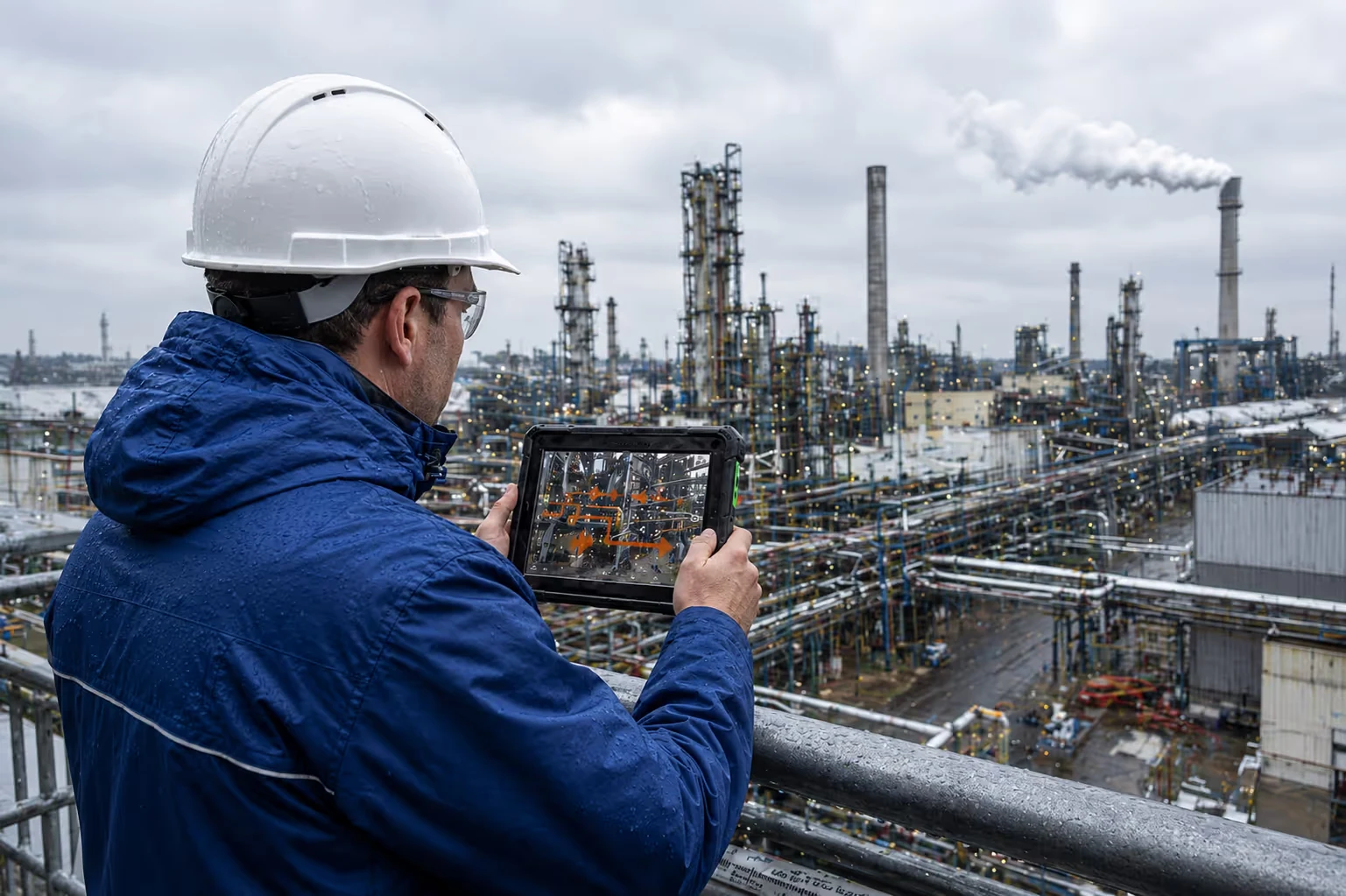
How a chemical producer uses AR tablets in explosion-proof zones
How a chemical producer put intrinsically safe AR tablets in ATEX zones, linked them to DCS and SAP, and cut time-to-information from 15 minutes to under one.
Read the article Insight · Tablet AR
How a premium automaker uses tablet AR for quality checks on the assembly line
How a premium automaker in Leipzig used tablet AR, built with the Fraunhofer Society, to check parts on the line and halve supplier issue resolution time.
Read the article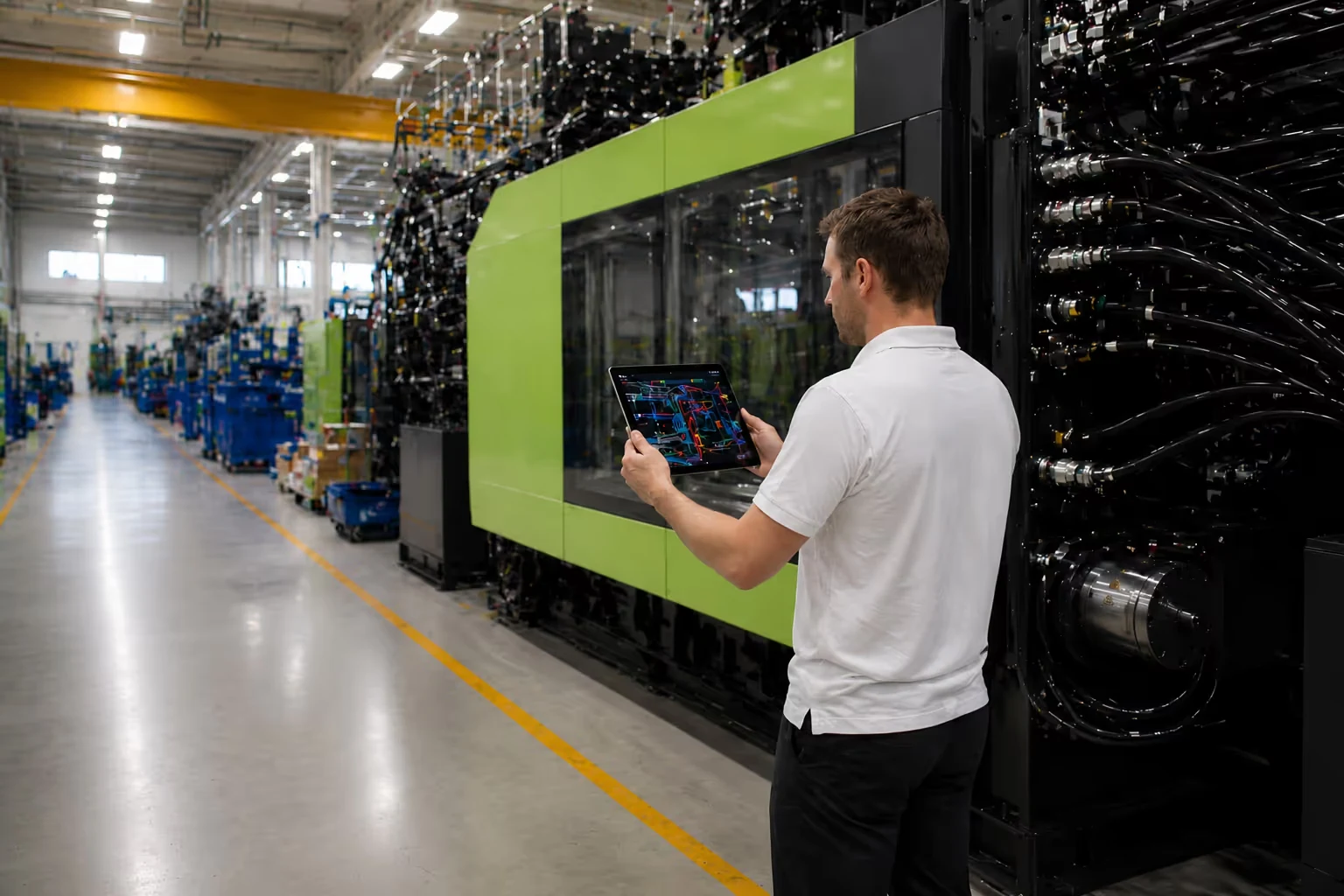 Insight · Tablet AR
How an injection moulding machinery maker uses tablet AR for final quality checks
How an injection moulding machinery maker used tablet AR and digital twins for final inspection, cutting inspection time by 75% and post-shipment errors by 90%.
Read the article