


Industry insight: this article describes how the technology is used in the industry. It is not a Metaverse911 client project. See our case studies for our own work.
The situation: quality checks that stopped the flow
At its plant in Leipzig, Germany, this premium carmaker cannot accept a misaligned panel, a small dimensional deviation or a part that does not fit exactly. Checking this used to mean moving the vehicle or part off the assembly line to a dedicated measurement room, where Coordinate Measuring Machines (CMMs) or physical templates were used to check each dimension.
The process was slow and disrupted production. By the time a deviation was found, the vehicle had often moved several stations on, which made rework harder and more expensive. Inspectors worked under pressure in isolated rooms, and quality acted as a gate rather than part of the process.
The same approach made it hard to audit supplier parts quickly as they arrived. A late finding on a non-conforming part could cause problems further down the line. The company's engineers wanted precise quality inspection that could happen on the line, without slowing it down.
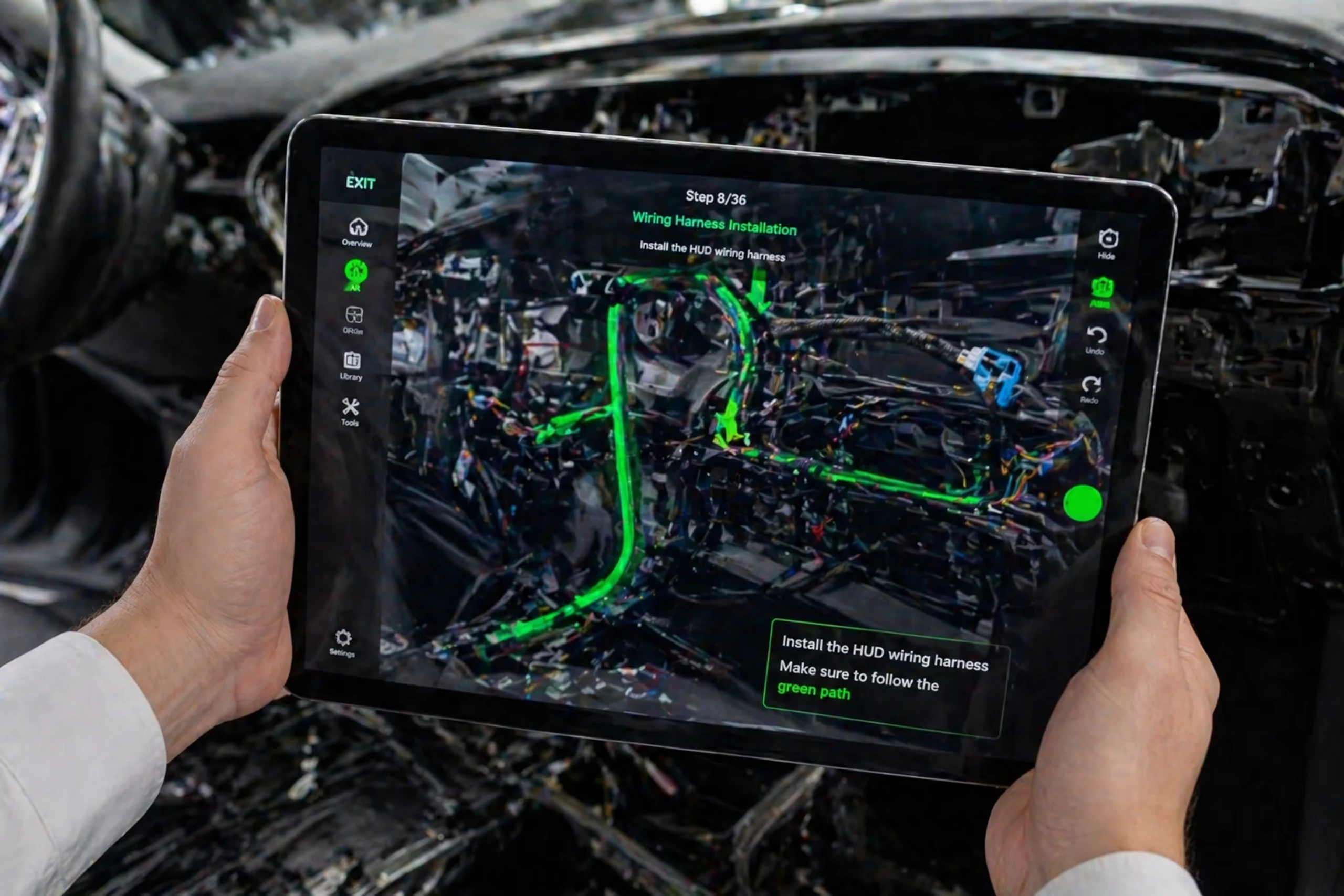
What they did: a tablet AR app built with Fraunhofer
The manufacturer worked with the Fraunhofer Society, Europe's largest application-oriented research organisation, to develop a tablet-based AR app for quality assurance in high-volume, high-precision production.
The training department ran hands-on workshops with on-the-job support, and built a library of digital work instructions on the tablets for new hires. Because the interface is simple, inspectors became proficient quickly.
How it works
- 3D CAD models are stored on a central server and streamed to the tablets on demand, so inspectors always have the latest design.
- The inspector holds the tablet over a vehicle component. Computer vision recognises the part and overlays the matching CAD image on the live camera view.
- Any gap a millimetre too wide, a slightly misaligned bracket, or a missing clip or fastener shows up as a clear mismatch between the part and the overlay.
- The inspector records deviations with photos and notes and shares them with engineering and production for root cause analysis.
- Results are logged in real time in the Manufacturing Execution System (MES).
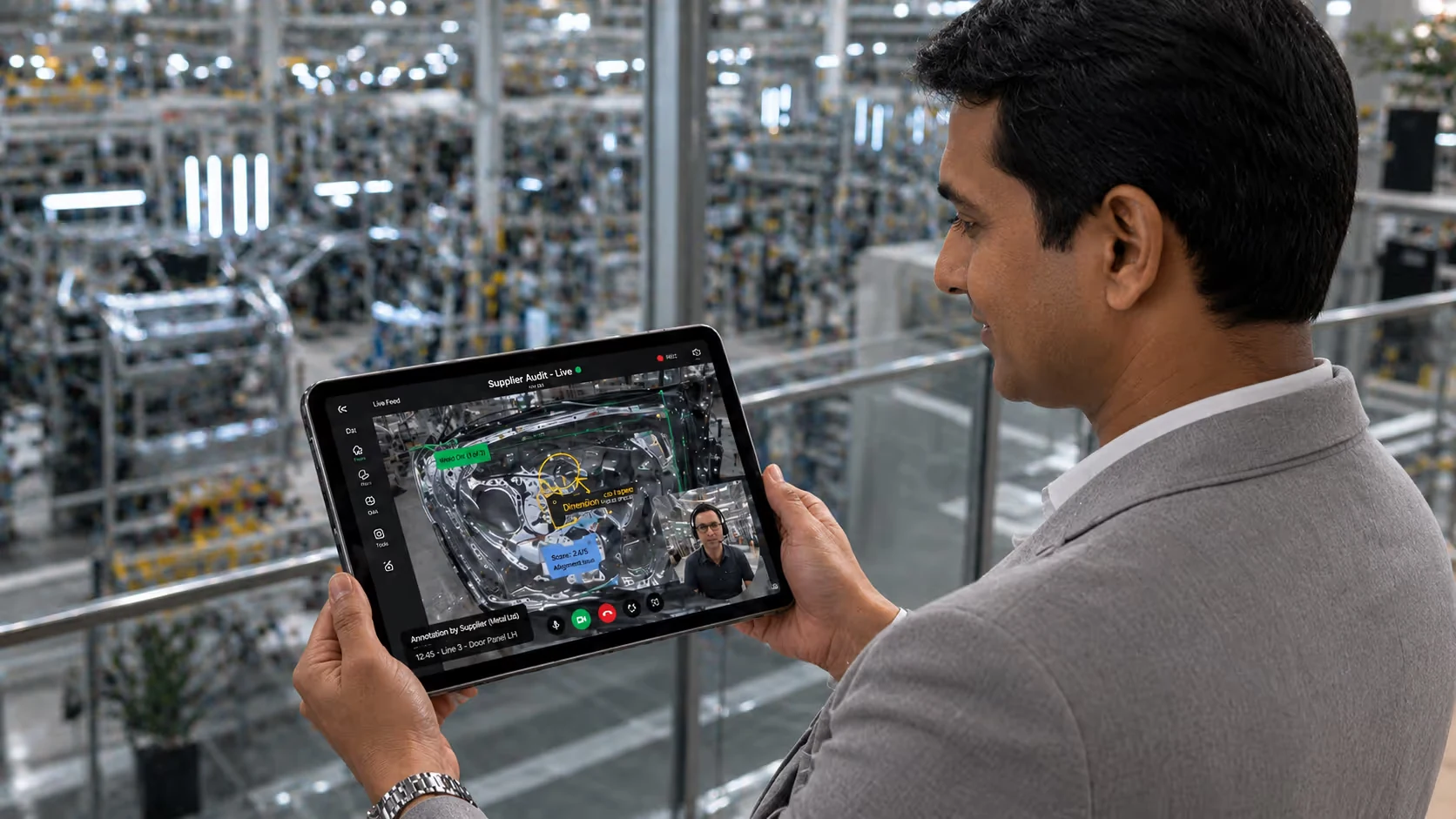
The tablets also support remote collaboration with suppliers. When a batch of parts looks wrong, an inspector can share the live AR view with the supplier's engineers and show exactly where the part differs from the CAD model, instead of shipping parts back and forth. The IT team secured the factory wireless network and connected the app to the MES and PLM systems.
Results
The manufacturer reported:
- A 30% reduction in the time needed for individual inspections, allowing more frequent and thorough checks.
- A 50% reduction in time-to-resolution for supplier quality issues. Disputes that took days or weeks are often settled in hours.
- Physical measurement templates and gauges no longer needed, saving an estimated over €200,000 a year in design, fabrication, storage and maintenance.
- A 15% increase in first-pass yield, with less rework and scrap.
- A 10% reduction in employee turnover in the quality department.
Inspectors now check parts in place on the line, so defects are fixed at the earliest stage. The CMM is no longer needed for a wide range of inspections. Fewer defects and more consistent vehicles support customer satisfaction.
What it means for manufacturers
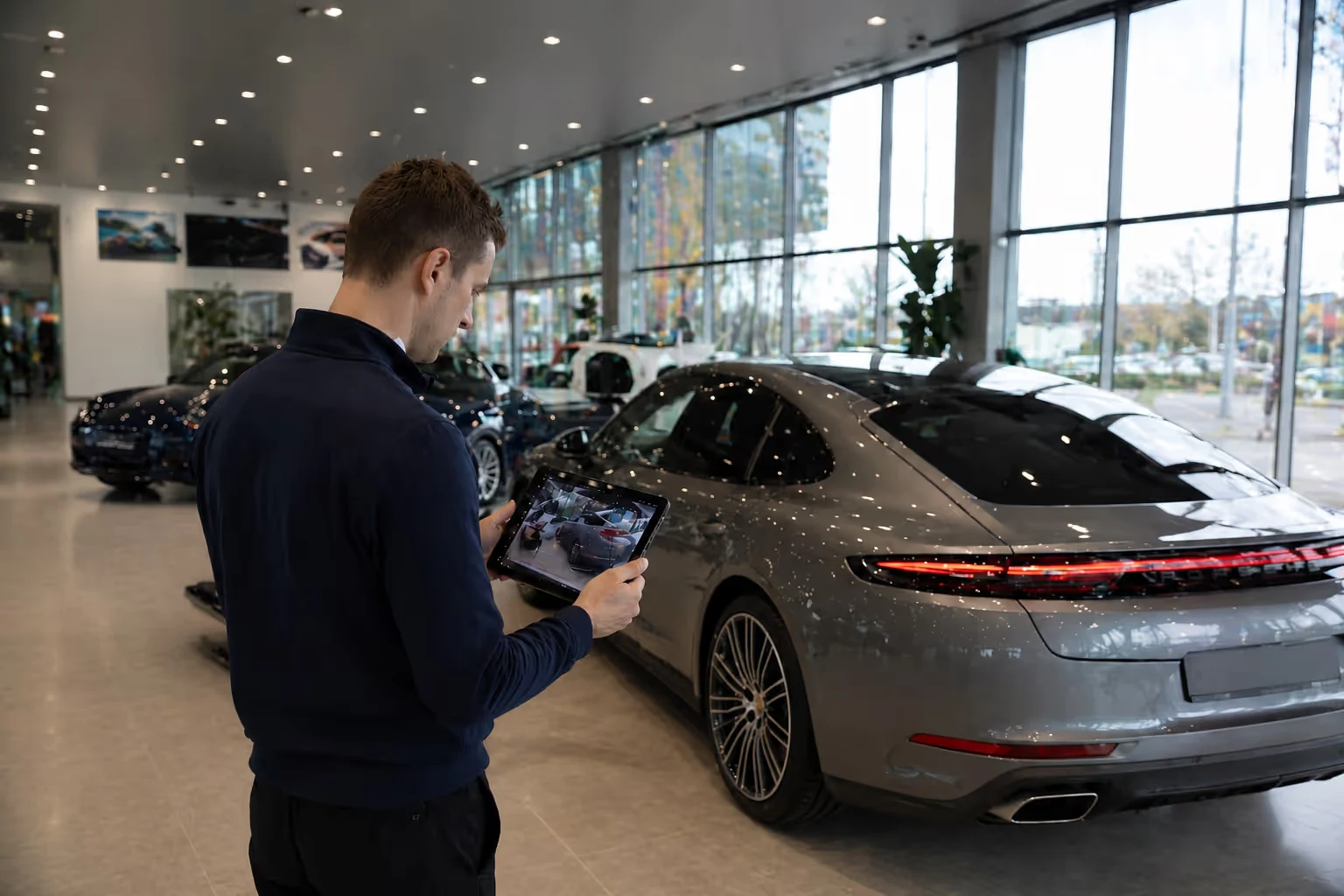
If parts or products must leave the line to be checked, quality becomes a bottleneck. Tablet AR lets inspectors compare the real part with its CAD model where it is, which saves time and catches problems earlier.
The supplier example is especially useful. Sharing a live view of the part against its design gives both sides the same evidence, which settles quality disputes far faster than emails and returned parts.
Frequently asked questions
Can tablet AR quality checks work in aerospace or heavy machinery?
Yes. Overlaying CAD models on physical parts to find defects works in any precision industry, including aerospace, heavy machinery and medical devices.
How long does deployment take?
It depends on the product and existing digital systems, but a pilot can often be launched within weeks.
What does it cost compared with headset-based AR?
Costs are significantly lower than solutions that need specialised AR headsets. The main costs are software licensing and integration with your existing CAD data.
How does remote supplier collaboration work?
The inspector shares the live AR view from the tablet with the supplier's engineers, who see exactly where the part differs from the CAD model.
What results did the Leipzig automaker get from tablet AR quality checks?
The premium automaker's Leipzig plant reported a 30% reduction in individual inspection time and a 50% reduction in time to resolve supplier quality issues after moving to tablet AR. It also reported an estimated saving of over €200,000 a year on physical templates and gauges, a 15% increase in first-pass yield and a 10% drop in quality department staff turnover. The app was developed with the Fraunhofer Society.
More on augmented reality on the shop floor
 Insight · Tablet AR
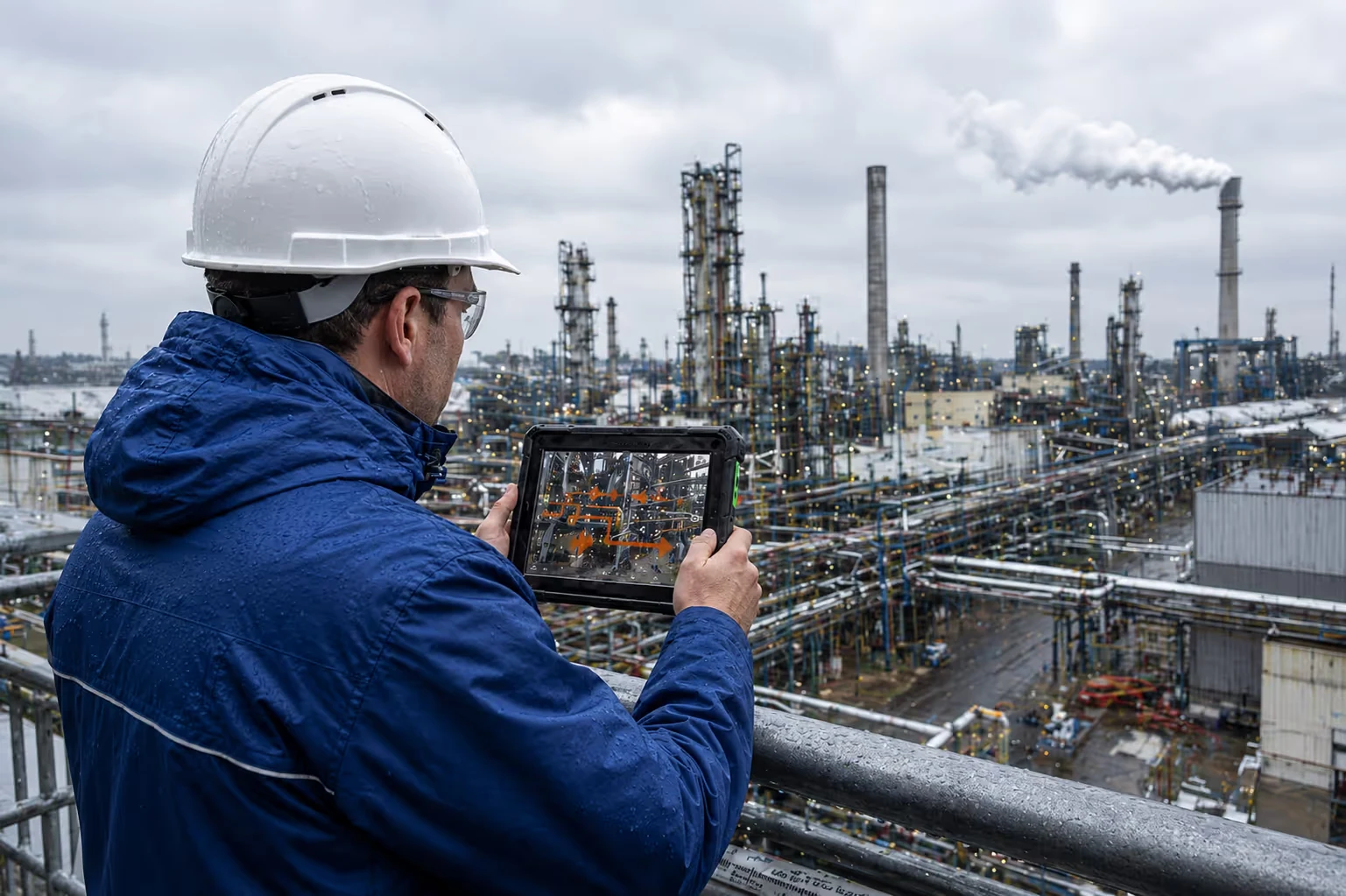
How a chemical producer uses AR tablets in explosion-proof zones
How a chemical producer put intrinsically safe AR tablets in ATEX zones, linked them to DCS and SAP, and cut time-to-information from 15 minutes to under one.
Read the article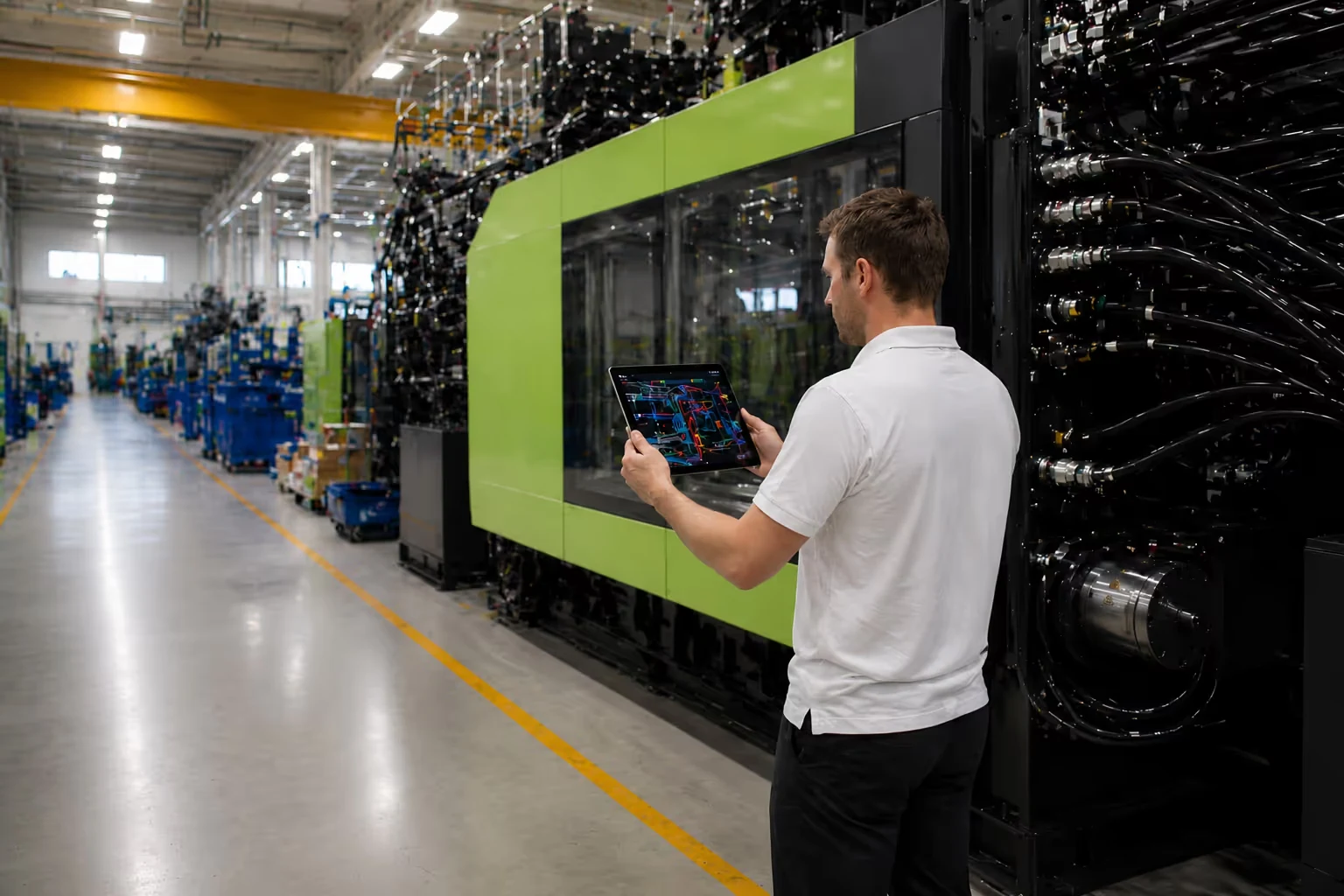 Insight · Tablet AR
How an injection moulding machinery maker uses tablet AR for final quality checks
How an injection moulding machinery maker used tablet AR and digital twins for final inspection, cutting inspection time by 75% and post-shipment errors by 90%.
Read the article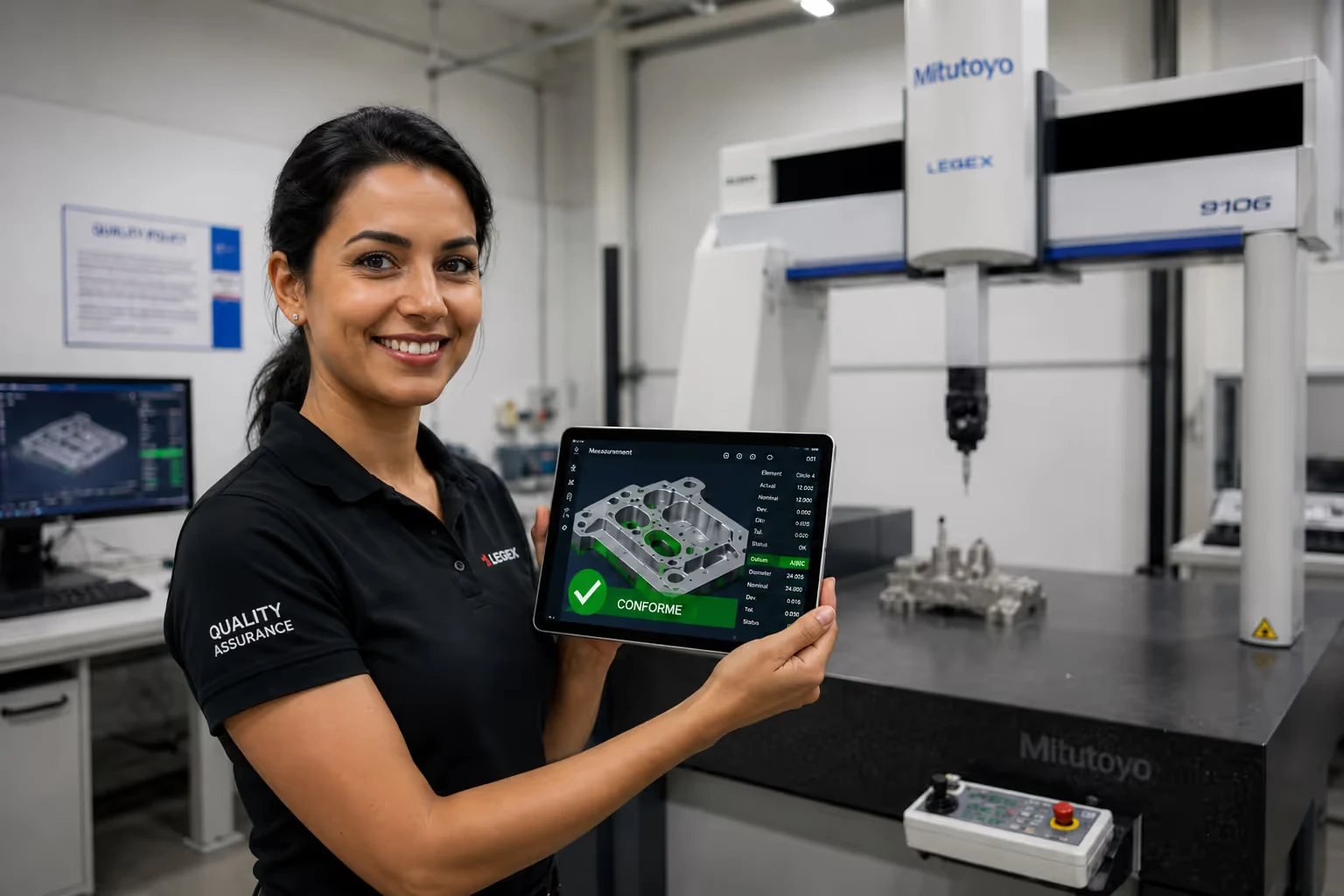 Insight · Tablet AR
How a vacuum technology manufacturer cleared its CMM bottleneck with tablet AR
How a vacuum technology manufacturer used tablet AR to triage incoming vacuum chambers in under five minutes, freeing its CMMs for the checks that need them.
Read the article