

Industry insight: this article describes how the technology is used in the industry. It is not a Metaverse911 client project. See our case studies for our own work.
The situation: measuring AI readiness at scale
As AI becomes a core part of business, large organisations need to know where their people stand. A leading Big-4 consulting firm set out to evaluate the AI readiness of over 10,000 employees across several regional offices, diagnose each person's level and guide them to the right training.
Static online quizzes and long tablet surveys were ruled out. They tend to have low engagement, feel like a compliance exercise and do little to build interest. The firm wanted an assessment that was secure and produced good data, but was also engaging and visible enough to get people talking about AI.
What they did: a phygital quiz in the office
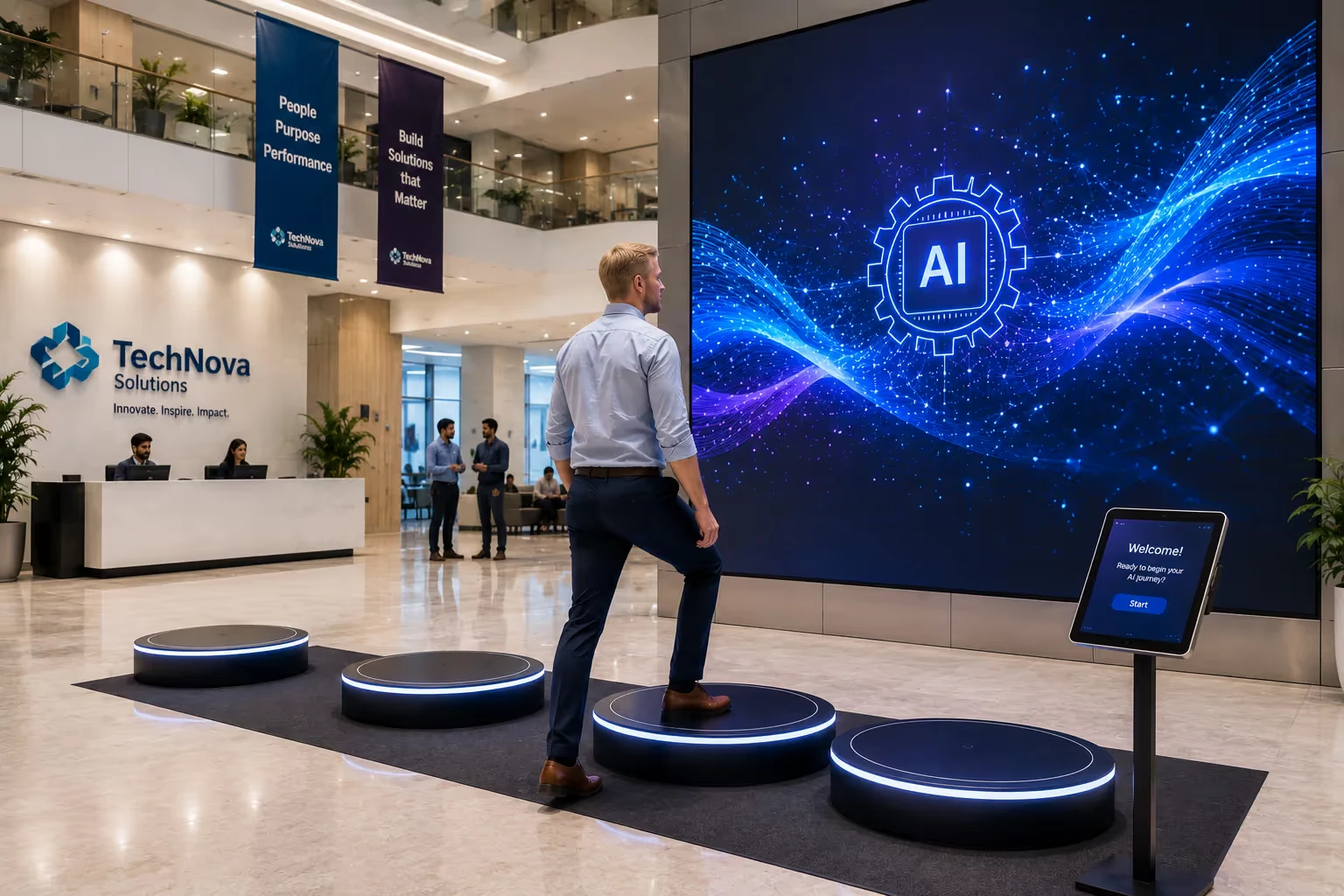
The firm worked with immersive technology specialists to put interactive assessment stations in busy office areas such as lobbies and collaboration spaces. Taking the test away from the desk turned it into a shared event. Colleagues watched, cheered each other on and discussed the questions, which started conversations about AI across the floor.
Each result placed the employee in one of four maturity bands and mapped them to an upskilling persona:
- Maturity bands: Beginner, Emerging, Practitioner and Leader.
- Personas: Generalists who need foundational knowledge, Specialists who need industry-specific applications, and Experts ready to champion AI work.
This replaced one-size-fits-all training with support matched to each person's level.
How it works
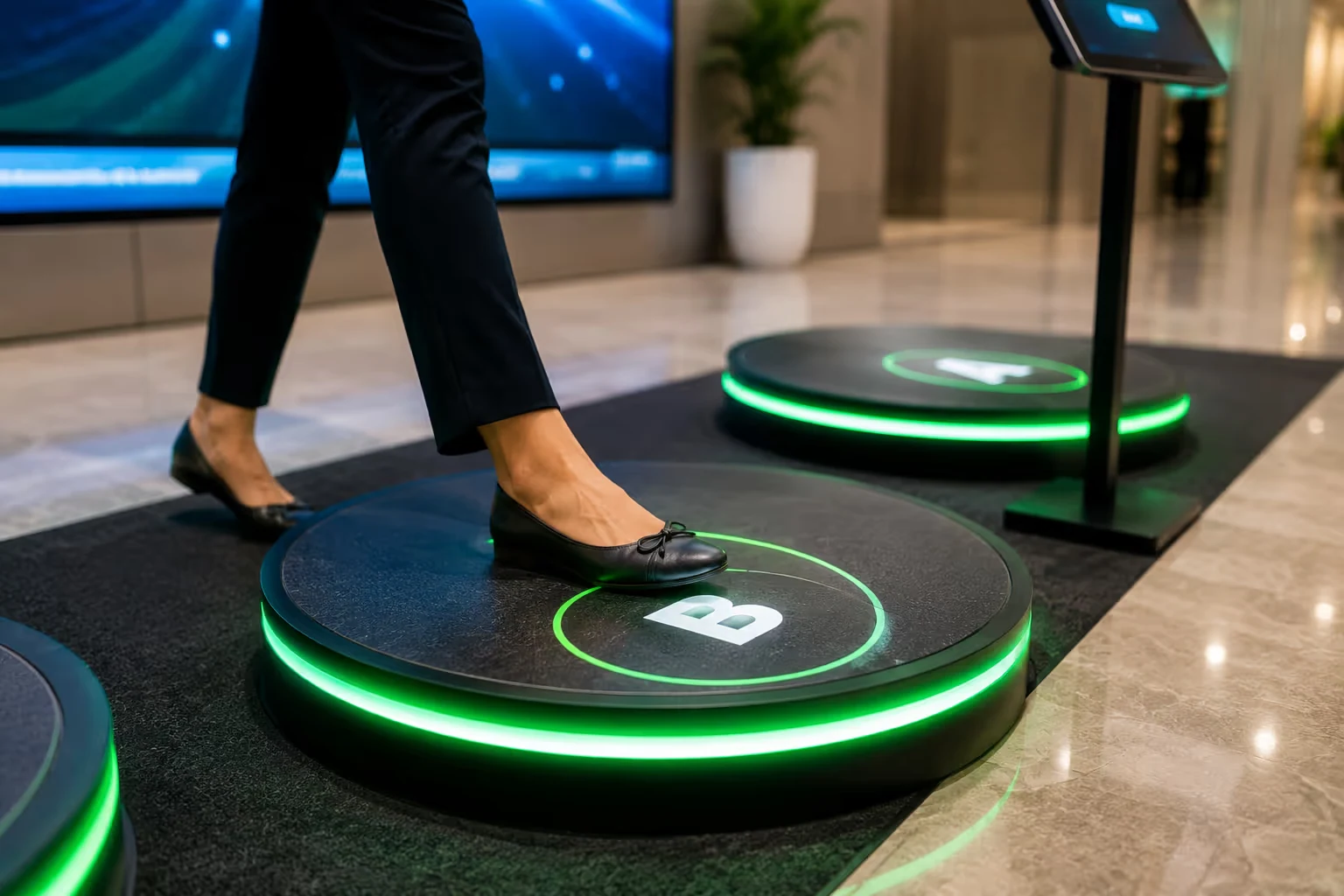
Each station has a large LED screen or projector, a tablet on a stand and four circular floor podiums labelled A, B, C and D. The employee registers with their corporate ID on the tablet, which shows a multiple-choice question on AI concepts, tools or industry uses. The four answers appear on the large screen.
To answer, the employee steps onto the matching podium. Load sensors connected to an Arduino board detect their weight and register the choice. A correct answer lights a green LED under the podium with a chime; a wrong answer flashes red with an error sound. The employee steps back to a neutral spot for the next question. Committing to an answer physically makes the quiz feel like a game show, for the player and for onlookers.
Behind the scenes, the setup includes:
- A high-performance laptop (typically an i7 processor, 32GB RAM and an RTX 4070 GPU) that runs the display and reads the sensors.
- A local router for wireless communication between the laptop and the podiums.
- Returning player recognition: when an employee re-enters their ID, the system recalls their last score, greets them by name and raises the difficulty.
- Location-based leaderboards showing the top 10 scorers of the day in that office.
Data handling was designed for a firm with strict security rules. By default, results are saved on a local drive that only internal teams can access, with no internet dependency. That suited secure regional offices with restricted network access. The system collects only ID, location, date and score, with no sensitive personal information. For offices that needed central reporting, optional UK GDPR/ISO-compliant cloud storage with role-based access and end-to-end encryption was available.
Results
The firm reported these outcomes:
- Over 10,000 employees assessed across multiple regional offices.
- 100% of participants placed in an actionable maturity band, from Beginner to Leader.
- Automatic recommendation of an upskilling track (Generalist, Specialist or Expert) for each person.
- Zero breaches or compliance issues, helped by local storage and minimal personal data.
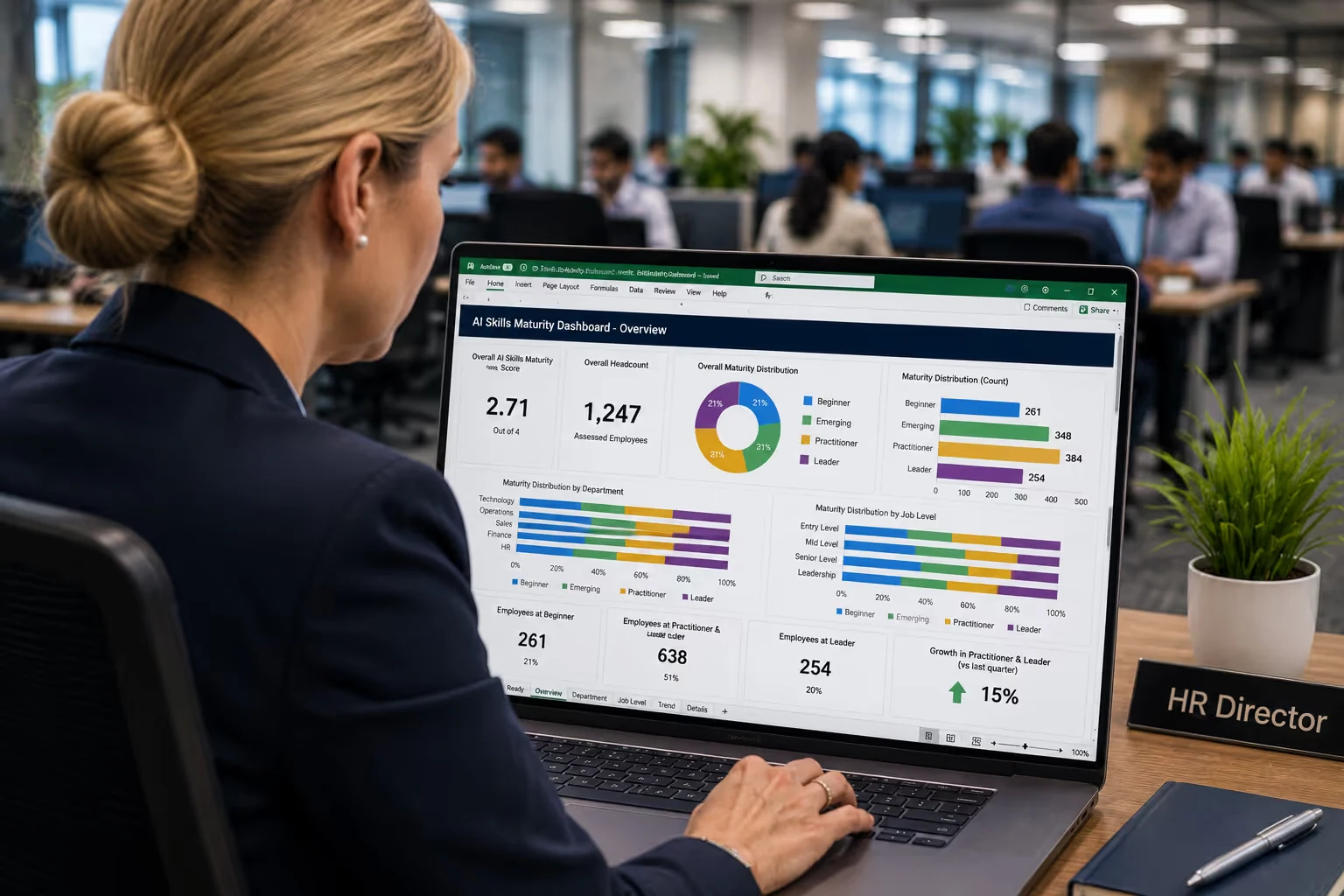
Each assessment took only a few minutes, so thousands of people were assessed in a short period without long breaks from work. Leadership got a live, office-by-office view of AI readiness, with strengths and skills gaps clear. Learning and development (L&D) teams used the bands to send Beginners to foundational AI tool sessions and Practitioners to advanced, industry-specific sessions, so budgets went where they were needed. The results also set a baseline for measuring progress.
For HR, the visible stations and leaderboards raised participation and turned a mandatory evaluation into something people sought out. It also showed staff that the firm was investing in their development.
What it means for manufacturers
Manufacturers face the same question with digital and AI skills, often across several plants and offices. This example shows that a skills assessment can be quick, public and enjoyable without losing data quality or security.
The model also works for other topics, such as safety rules, compliance knowledge or product familiarity. The lessons are to put the assessment where people already gather, keep each session short, link scores to clear training paths, and store only the data you need.
Frequently asked questions
Which industries suit gamified podium assessments?
Any industry that needs to assess a large workforce in an engaging way. They work well in professional services, consulting, BFSI and IT, where measuring technology maturity such as AI readiness or cybersecurity awareness matters.
How long does deployment take across several offices?
A standard deployment follows a 30-working-day plan, covering solution planning, game development, hardware integration and backend data setup. On-site installation and testing take about 3 days per location.
What hardware is needed?
A high-performance laptop (typically an i7 with an RTX 4070 GPU), a large LED screen or projector, a tablet on a stand, four floor podiums with load sensors and Arduino boards, and a local router.
How does it connect to HR and learning platforms?
The system produces reports in Excel (.xlsx) or CSV with employee ID, location, score and recommended maturity band. These can be imported into most HRIS or LMS platforms. Cloud storage with API connectivity can be configured for automatic syncing, subject to security approval.
How is data kept secure?
The system can run entirely on a local server with no internet connection. It stores only non-sensitive performance data (ID, location, score), and no personal identifiable information is held in the assessment modules, in line with UK GDPR requirements.
Why is it better than an online quiz?
Online quizzes often suffer from low completion rates and survey fatigue. The public, game-like format drives much higher participation, and accurate maturity mapping means people are only sent to training they actually need.
More on vr training & events
 Insight · VR training
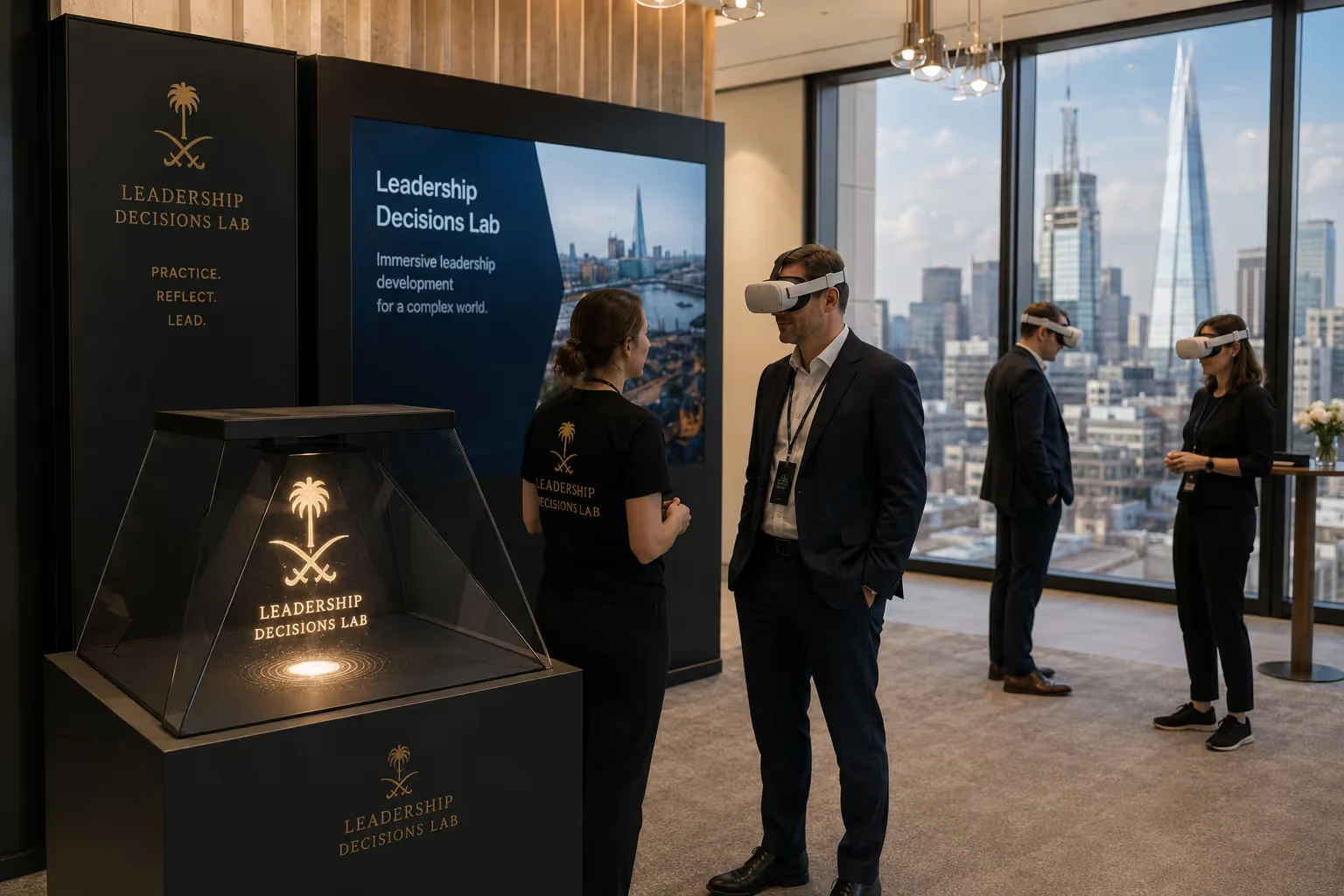
The 3-minute rule: running high-throughput VR and hologram displays at corporate events
How a professional services firm ran VR and hologram fans at an internal summit, using 3-minute experiences to serve about 15 people per headset an hour.
Read the article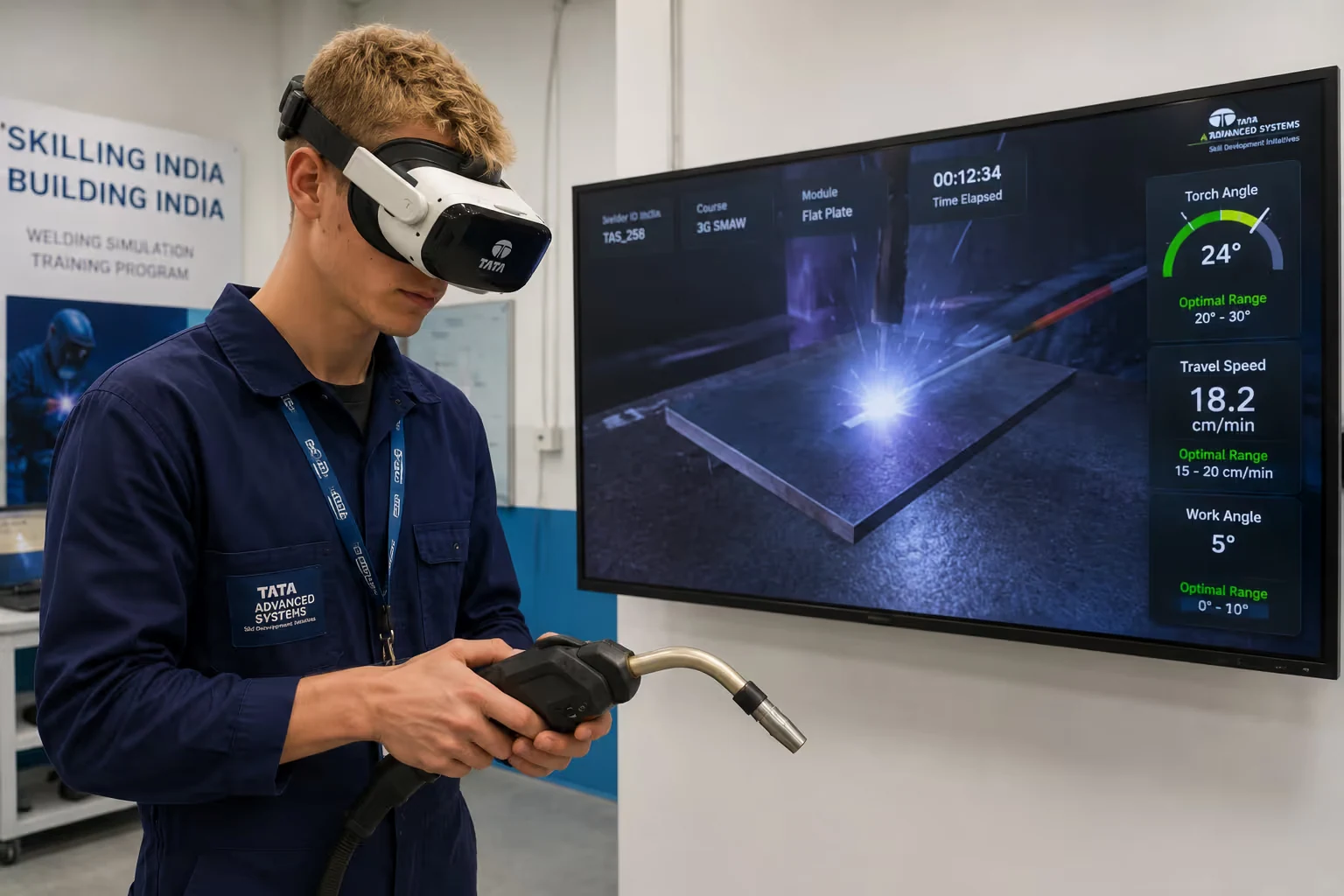 Insight · VR training
How phygital welding and painting simulators train skilled workers in India
How phygital welding and painting simulators, pairing XR headsets with real-feel torches and spray guns, cut training material costs by up to 70% in India.
Read the article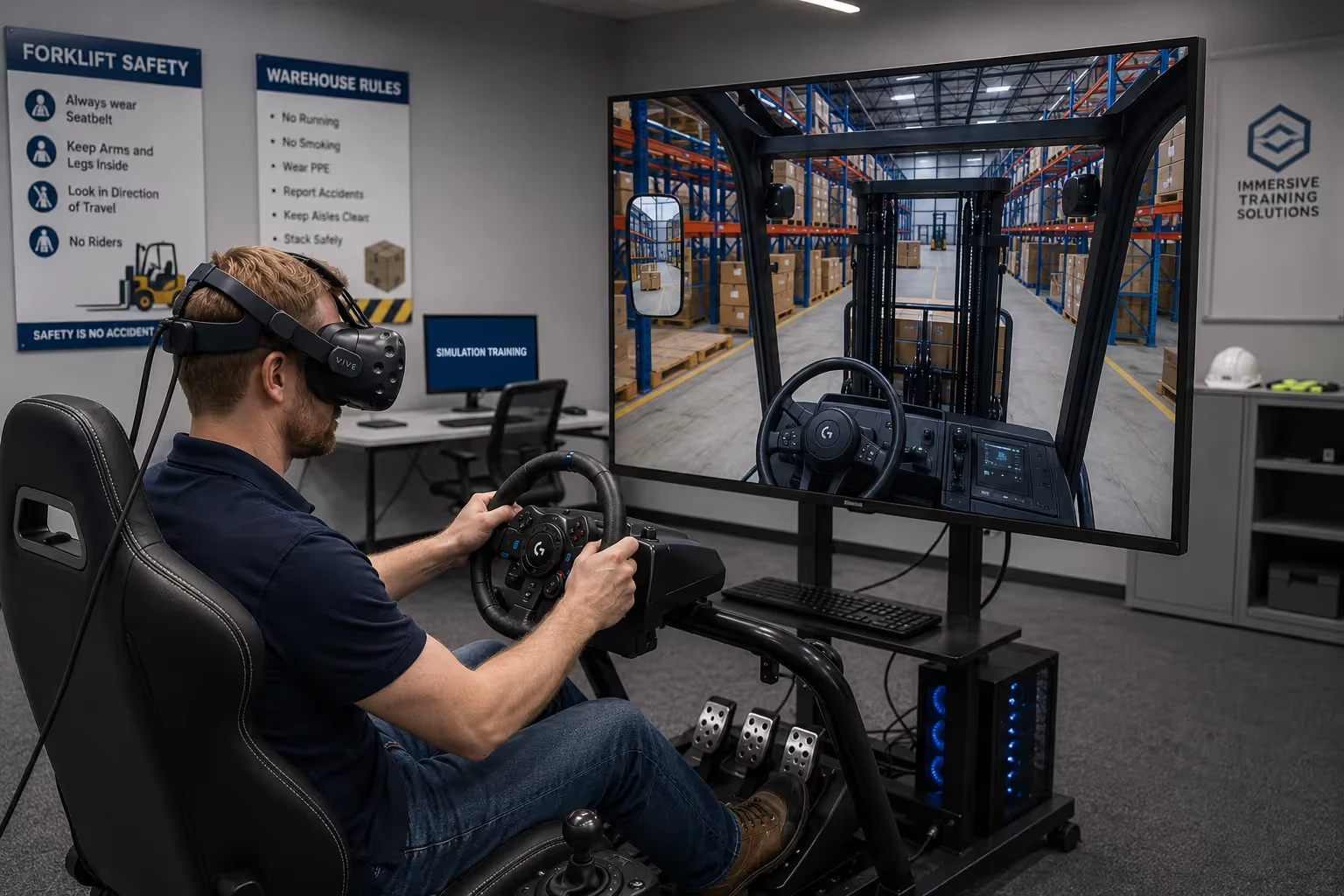 Insight · VR training
How a training institution uses high-fidelity VR for forklift operator training
How an OSHA-certified training institution built a PC-tethered VR forklift simulator with real steering and pedals, an instructor panel and 360-degree replay.
Read the article