

Industry insight: this article describes how the technology is used in the industry. It is not a Metaverse911 client project. See our case studies for our own work.
The situation: VR at a busy event creates queues
Corporate learning and development (L&D) events usually mean keynotes, breakout sessions and networking breaks. A global professional services leader wanted more from its annual internal innovation summit, which focused on how emerging technologies affect different industries. It wanted employees to experience the technology, not just see slides about it.
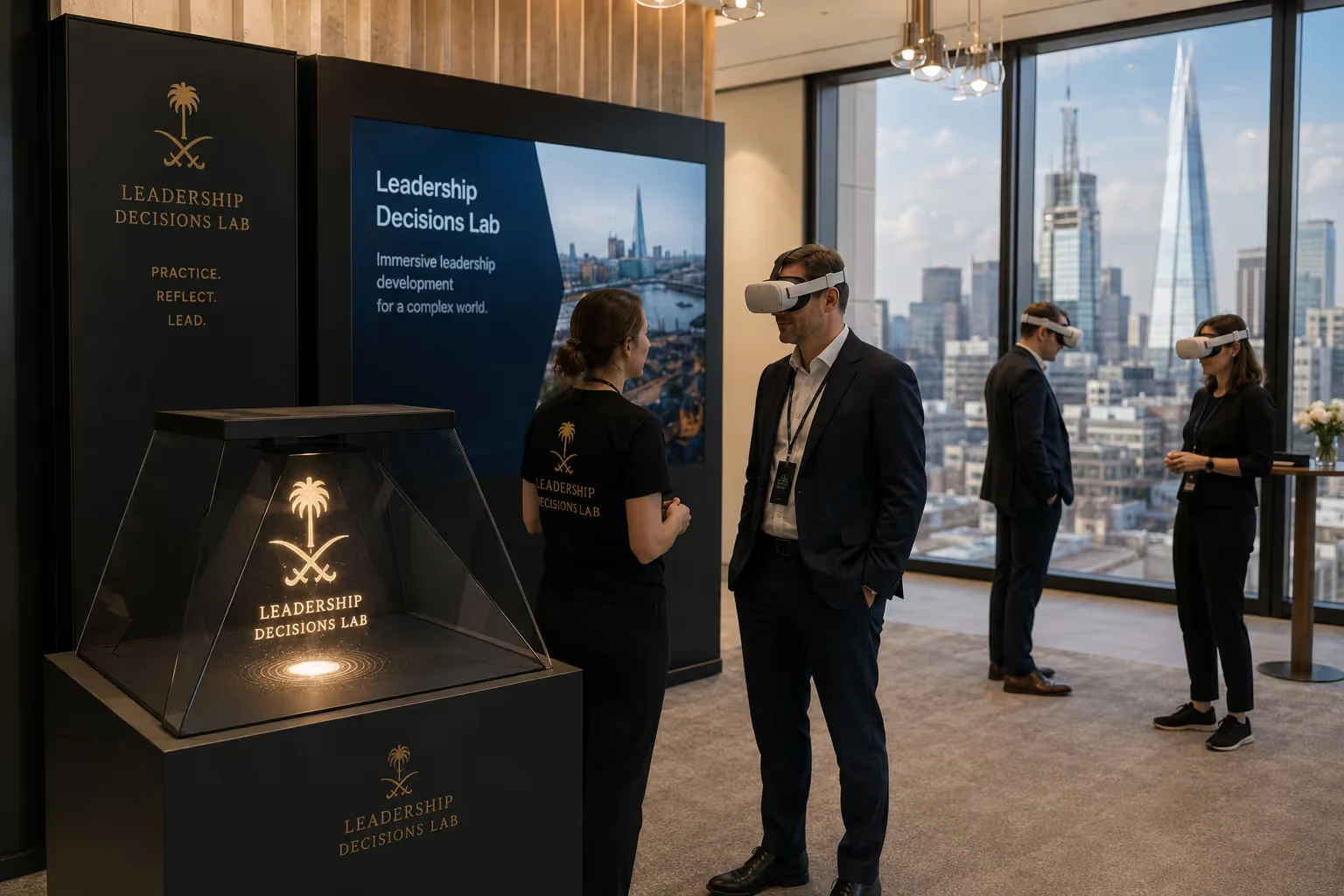
The firm chose VR and 3D holographic displays. But VR at a large event brings practical problems. Attendees only have short gaps between sessions. If each VR experience takes ten minutes, queues build quickly and people give up. The headsets also need to be secure, deliver the same content every time and stay hygienic. The firm knew the activation would be judged as much on the visitor's journey as on the content itself.
What they did: a structured, high-throughput model
Working with immersive technology deployment specialists, the firm built an operating model around the "3-Minute Rule": no single VR experience would last more than three minutes. Alongside the VR stations, it placed passive 3D holographic displays that needed no supervision at all.
The on-site work ran to a fixed three-day schedule:
- Day 1: site readiness, power allocation, unboxing and assembling the hardware.
- Day 2: software integration, dry runs and testing the kiosk mode locks.
- Day 3: the live event, focused on throughput and hygiene.
How it works
Passive hologram displays
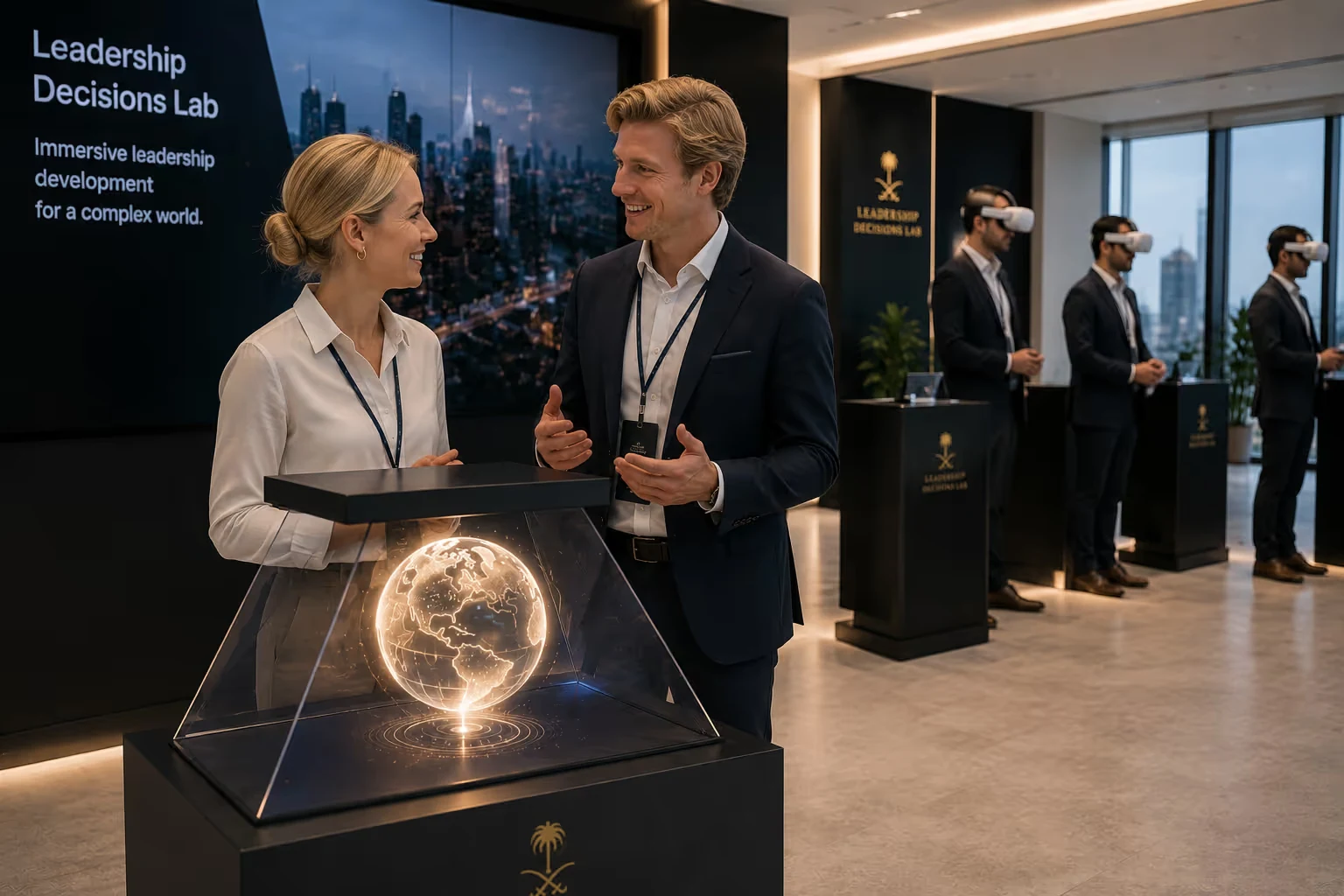
The 3D holographic displays, often called Holofans, are 2ft x 2ft units with fast-spinning LED blades that show 3D animations. Here they showed the event logo and key theme visuals. The content (usually .MP4 or .H265 files) is loaded before dispatch, and the units start playing as soon as they are powered on. Placed at registration desks and catering areas, they acted as eye-catching digital signage, took no attendee time and made waits for the nearby VR stations feel shorter.
VR stations
The firm used Oculus Quest 3 standalone headsets, which need no PC or cables, so the booth was cleaner, safer and easier to lay out. The content rules were strict:
- A maximum of three experiences per headset, for example "5G Impact Across Industries".
- Each experience capped at three minutes.
- No long tutorials: users start straight in the main content.
- Every headset locked in kiosk mode, so users cannot leave the app, open settings or launch other programs. Staff do not have to reset anything between users.
- All content pre-loaded, so nothing depends on the venue Wi-Fi.
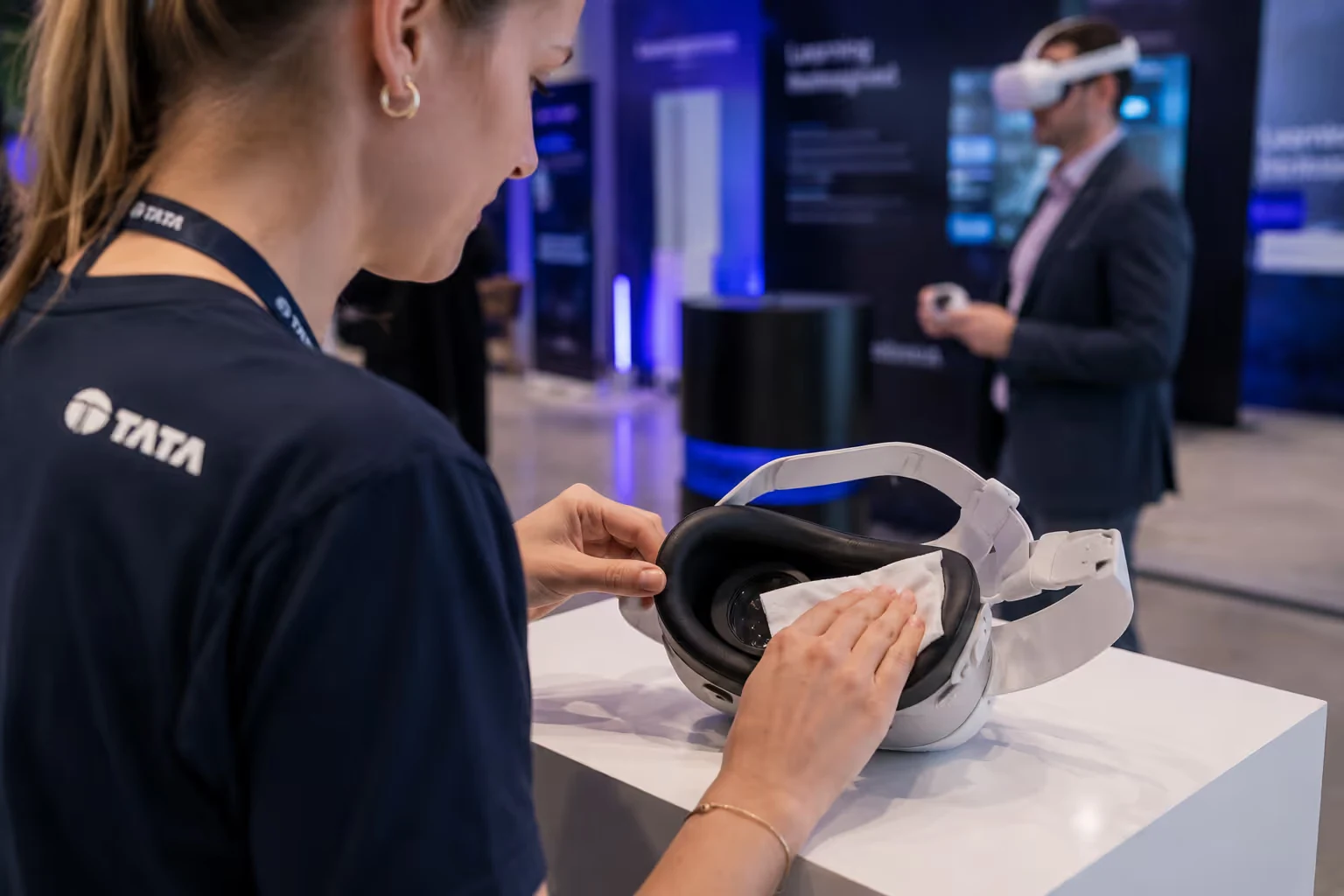
Hygiene was handled by dedicated staff, who wiped the face cushion of every headset after each use. Disposable eye masks were offered to attendees.
Results
With three-minute experiences and about a minute for reset and cleaning, each headset handled around 15 attendees per hour. Across the fleet over a full day, hundreds of employees tried the content. The firm reported:
- About 15 attendees per headset per hour, with no bottlenecks.
- 100% device uptime and no unauthorised access, thanks to kiosk mode.
- No technical downtime during the live event.
- 100% adherence to the hygiene protocol.
Attendee feedback showed people preferred the short format, which got the message across without the fatigue or motion sickness that longer sessions can cause. The event team could forecast queue times and keep people moving between sessions. For L&D, the shared experience sparked conversations in the networking breaks and workshops, and helped people from different departments and regions connect.
What it means for manufacturers
Manufacturers use VR at dealer meets, plant open days, internal summits and trade shows. The same rules apply: visitor time is short, so the experience must be short too. Plan throughput before content, and treat the activation as a logistics exercise.
The practical checklist from this example is simple. Cap each experience at a few minutes, lock headsets in kiosk mode, pre-load everything, build in cleaning time, and allow a full day for setup and dry runs before the doors open. Passive hologram displays are a low-effort way to add visual impact without adding to the queue.
Frequently asked questions
What is the 3-Minute Rule?
It limits any single VR experience at a live event to three minutes. Attendees have little time between sessions, so short experiences let the most people take part without long queues.
How are headsets kept hygienic for hundreds of users?
Staff wipe down the face cushion and controllers of every headset with antibacterial wipes after each use, and disposable eye masks are offered. This cleaning time is built into the turnover between users.
What is kiosk mode?
A setting that locks the headset to specific apps. Users cannot exit the experience, change settings, browse the internet or open other programs, which keeps the experience consistent and protects the devices.
Do the hologram displays need an operator?
No. The animation files are loaded before the units arrive, and they play on a loop as soon as they are plugged in.
What if the venue Wi-Fi goes down?
Nothing changes. All content is pre-loaded on the headsets and hologram displays, so the activation runs offline regardless of the venue's network.
How much space does a VR zone need?
For standalone headsets such as the Oculus Quest 3, allow at least 2m x 2m (about 6.5ft x 6.5ft) of clear space per user so people can move their arms safely.
More on vr training & events
 Insight · VR training
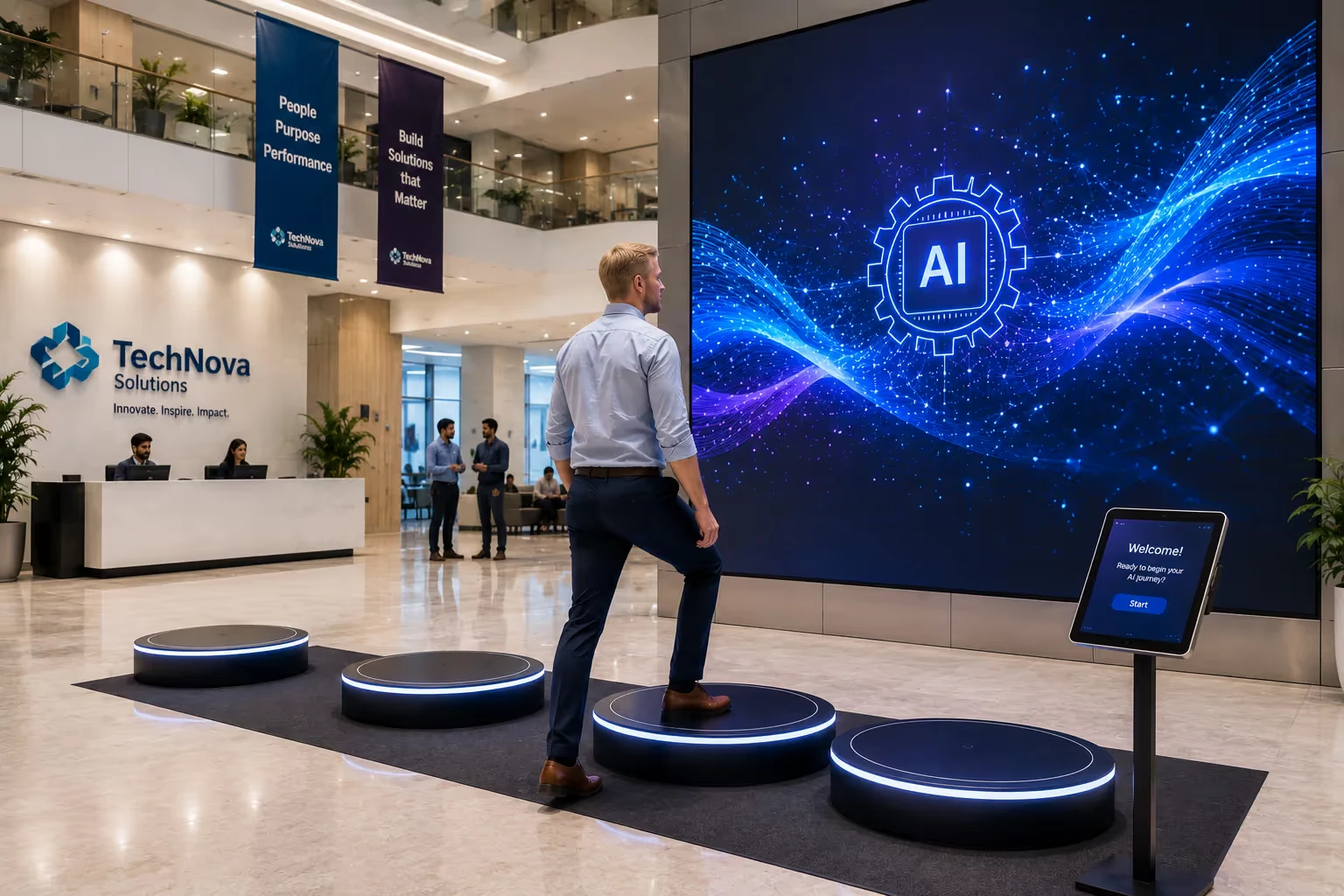
How a Big-4 consulting firm assessed AI maturity for 10,000+ employees with gamified podiums
How a Big-4 consulting firm assessed the AI maturity of over 10,000 employees with floor podium quizzes in its offices, sorting staff into four maturity bands.
Read the article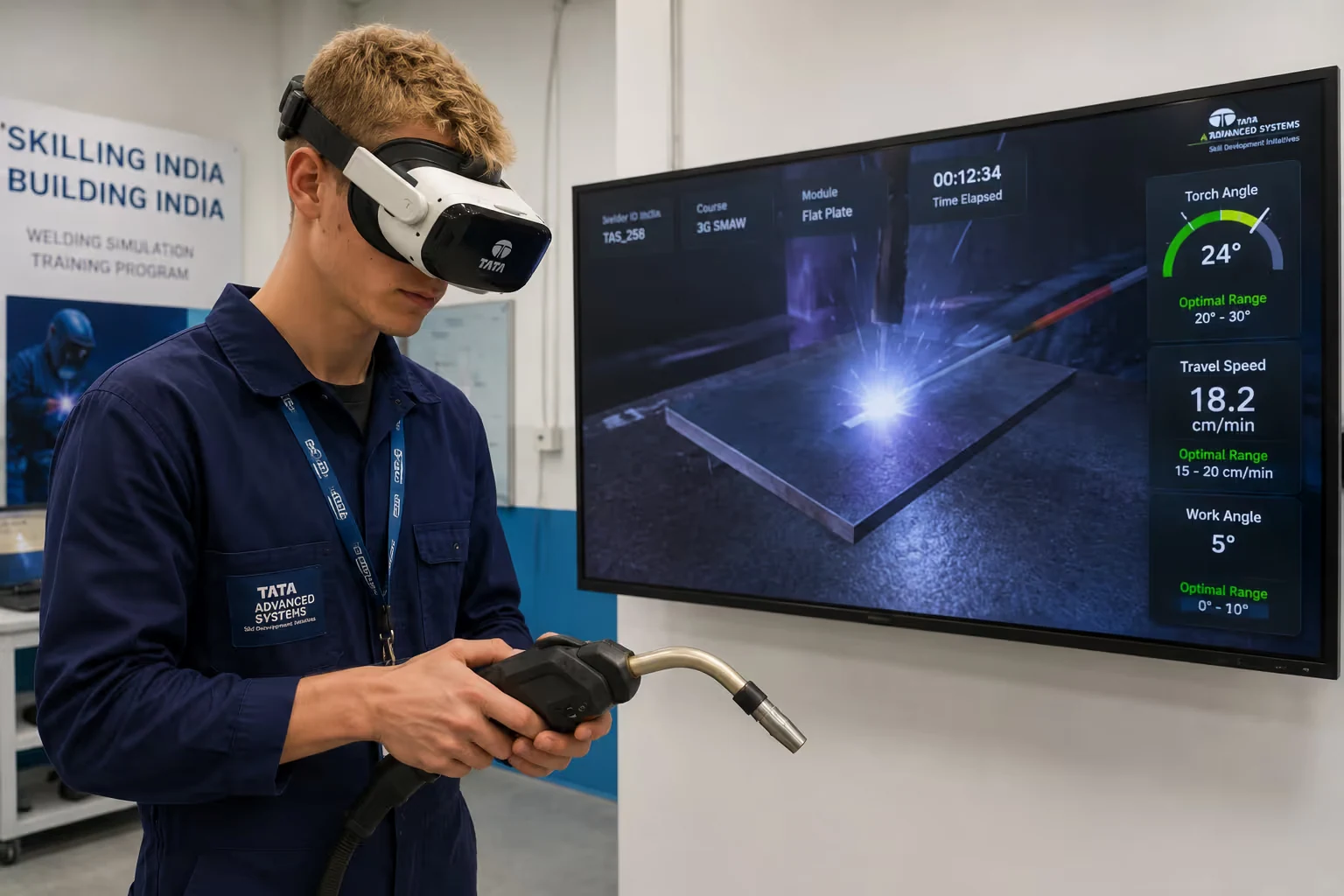 Insight · VR training
How phygital welding and painting simulators train skilled workers in India
How phygital welding and painting simulators, pairing XR headsets with real-feel torches and spray guns, cut training material costs by up to 70% in India.
Read the article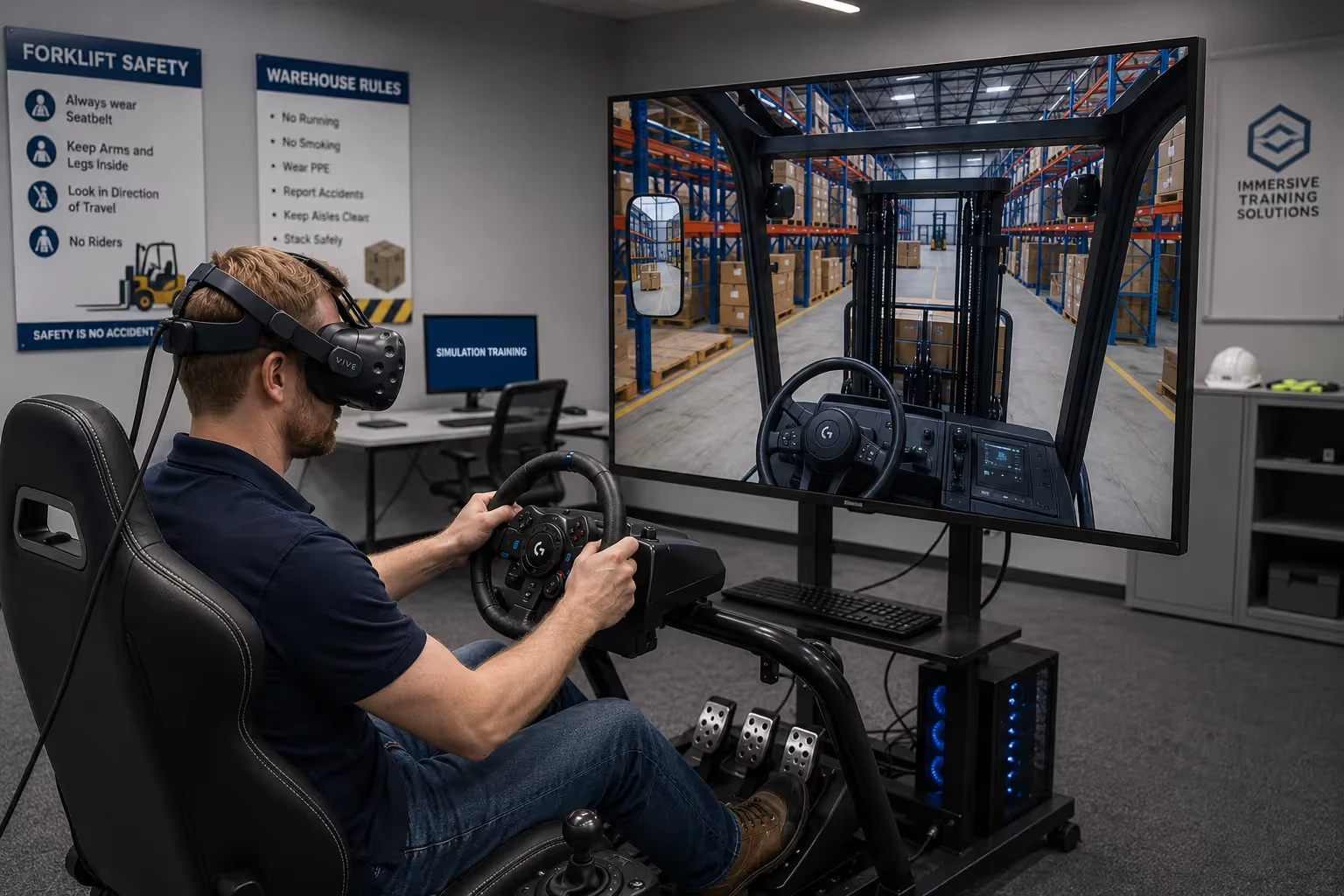 Insight · VR training
How a training institution uses high-fidelity VR for forklift operator training
How an OSHA-certified training institution built a PC-tethered VR forklift simulator with real steering and pedals, an instructor panel and 360-degree replay.
Read the article