


Industry insight: this article describes how the technology is used in the industry. It is not a Metaverse911 client project. See our case studies for our own work.
The situation: patrol inspections on paper
In this manufacturer's power plants, technicians carry out daily patrol inspections of turbines, pumps and valves. For decades they worked from paper: a stack of checklists and manuals nearly an inch thick, listing the acceptable vibration and temperature ranges for every piece of equipment.
A single round could take hours. Technicians read gauges by torchlight, wrote readings by hand and checked them against the manuals. A misread gauge or a misplaced decimal point could lead to equipment failure, downtime or a safety hazard.
Three pressures made change urgent: the need for greater efficiency, increasingly complex facilities, and the retirement of a generation of experienced technicians who held much of the plants' know-how. Leadership, including the Chief Operating Officer and the head of Plant Operations, saw the paper-based system as a real risk.
What they did: a Smart Patrol Inspection System
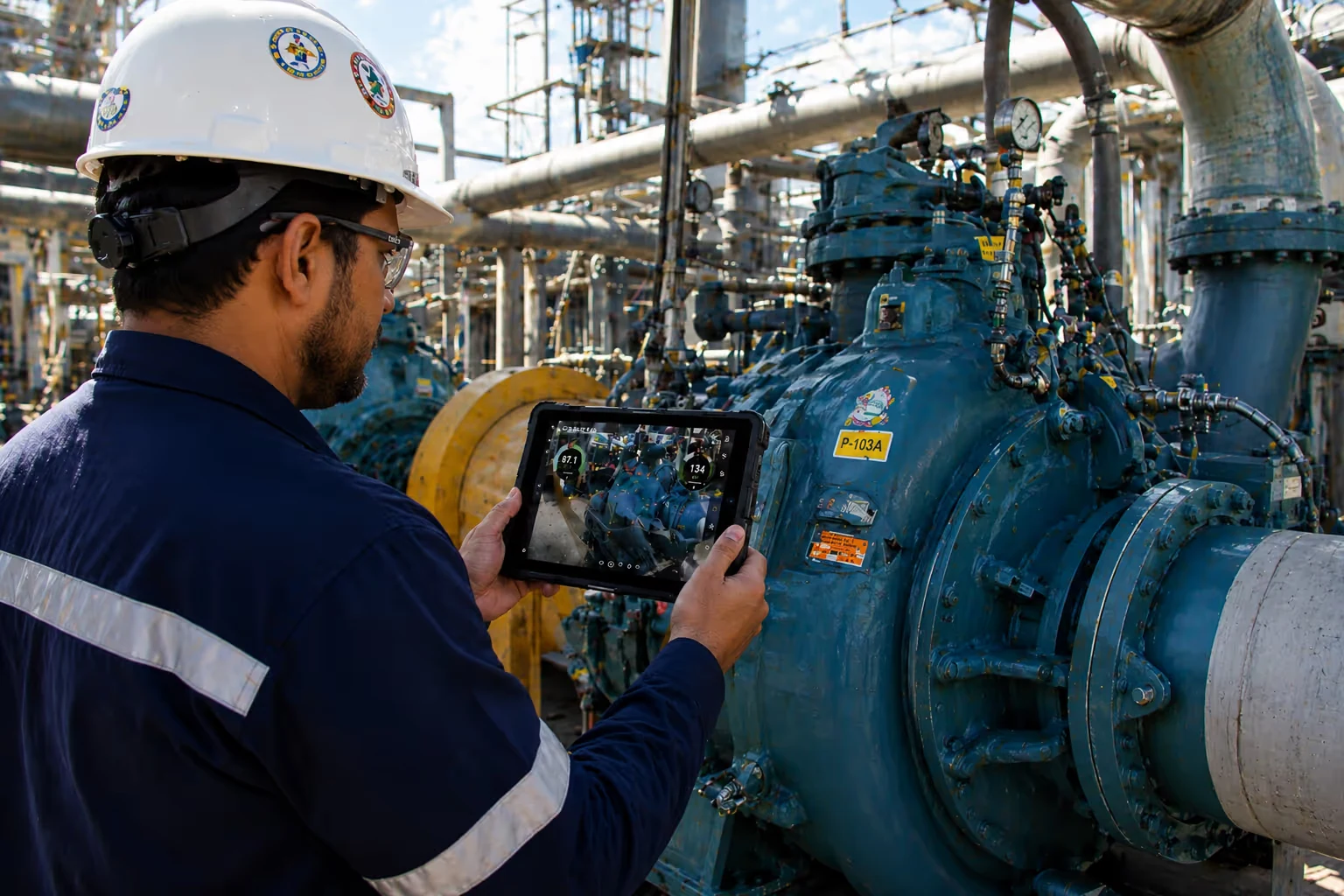
The company built a "Smart Patrol Inspection System" delivered on ruggedised tablets. It combines computer vision, live sensor data and digital documents in one AR view.
It was rolled out in phases, starting with a pilot at one plant. A small group of technicians were trained as super-users and helped bring their colleagues on board. Training combined self-paced e-learning with hands-on training on the job. Technicians soon saw the system as a tool that made their work easier and safer, not a threat to their jobs.
How it works
- Recognise the asset: the technician points the tablet at a piece of equipment. Image recognition identifies it by its shape, size and features, without a QR code.
- Pull live data: sensors and data logging boxes retrofitted to critical machinery send temperature, pressure, vibration and flow data to the plant's central control system using MQTT, a lightweight industrial IoT protocol. The tablet pulls the data for that asset over secure plant-wide Wi-Fi.
- Show it in context: readings appear as digital gauges next to the live camera view of the machine.
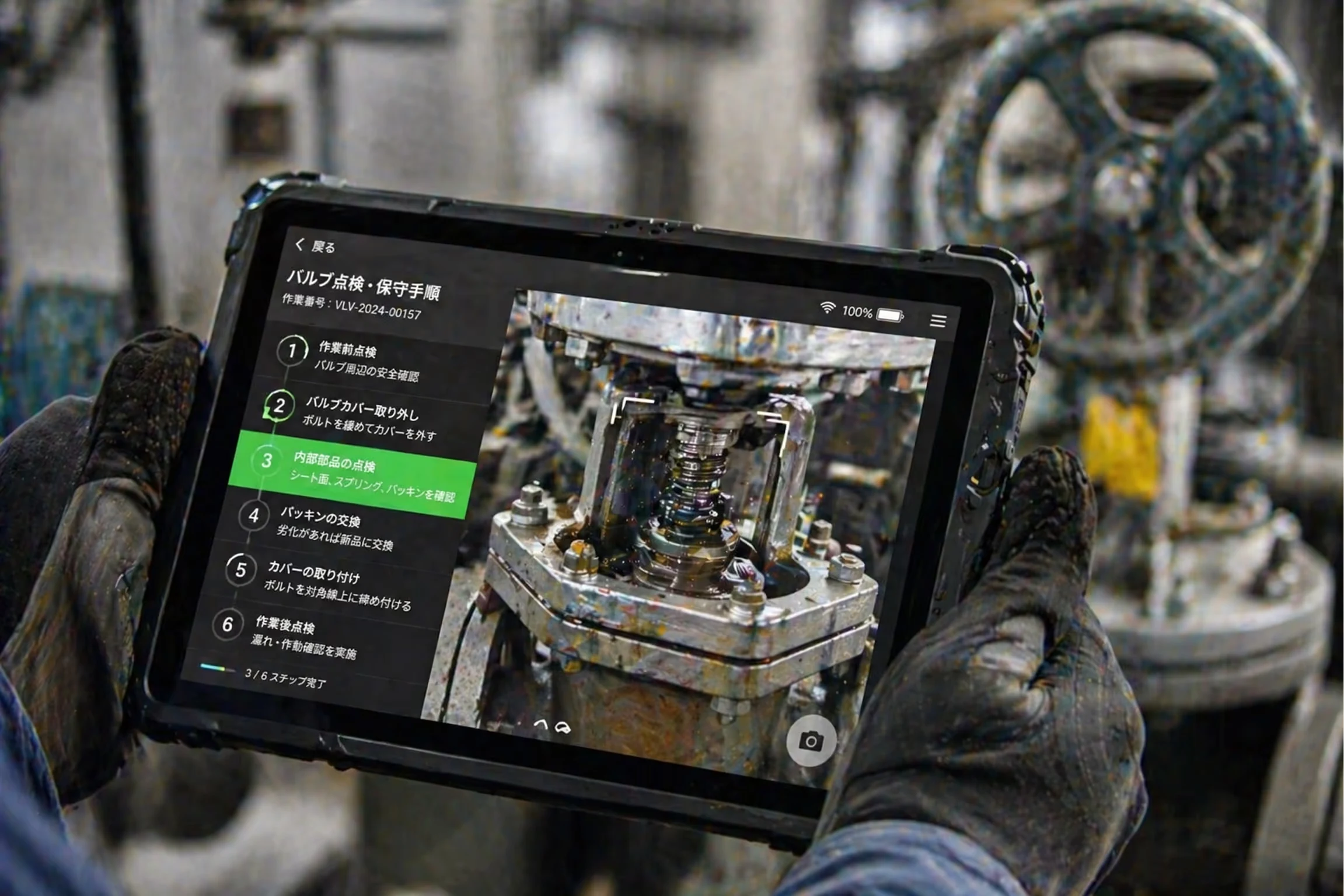
- Open documents: procedures, engineering drawings and maintenance history are one tap away.
- Raise a work order: if there is an anomaly, the work order is filled in automatically with the asset ID, the readings that triggered the alert and the technician's notes.
The system also shows safety alerts in the workflow, such as a warning when a technician approaches a known hazard. Technicians can scan a part's barcode or serial number to create a purchase requisition for a replacement. The IT team integrated the system with the company's ERP and computerised maintenance management system (CMMS), and manages the network, the tablets and data governance.
Results
The manufacturer reported:
- A 90% reduction in the time needed for patrol inspections of water supply facilities, freeing thousands of hours for preventive maintenance.
- No more manual data entry, and a 15% reduction in maintenance department administrative costs.
- Deployment across more than 30 plants in Japan.
- The pilot investment recouped in less than six months, with the full rollout projected to return several million dollars over three years.
- A 25% reduction in technician turnover at plants using the system.
- A 10% increase in customer satisfaction scores for those plants.
- A 30% improvement in first-time fix rate.
Because inspection data is digital from the start, engineers can track trends across the plant, spot problems before they become failures and plan maintenance on real data. Safety teams have a complete, time-stamped record of every inspection.

What it means for manufacturers
Any plant with daily rounds, such as utilities, compressors, boilers or production equipment, can apply the same idea. Show each machine's live readings and documents on a tablet pointed at it, and inspections become faster and more accurate.
It also helps with an ageing workforce. Putting procedures, history and live data in one place keeps knowledge in the system rather than in the heads of retiring technicians. And it does not require headsets: rugged tablets with the right software were enough.
Frequently asked questions
Can tablet AR inspection work in automotive, pharmaceutical or energy plants?
Yes. Any industry with routine checks, manual data collection and set procedures can benefit, for example quality checks in automotive, equipment calibration and line changeovers in pharmaceuticals, and remote site inspections in energy.
How long does a pilot take?
A typical pilot can be deployed in 4–6 weeks, covering one or two key inspection routines, software configuration and training for a small group. A multi-site rollout takes 3–6 months, depending on integration with ERP or CMMS systems.
What reduction in inspection time is realistic?
Typically between 50% and 90%. Results show within the first few weeks of a pilot, as technicians complete rounds faster and with fewer errors.
How does the tablet get live machine data?
Sensors on the equipment send data to the central control system using the MQTT protocol. The tablet queries that system over plant Wi-Fi and shows the readings for the asset in view.
How did the heavy industries manufacturer roll out its Smart Patrol Inspection System?
The heavy industries manufacturer rolled out its Smart Patrol Inspection System in phases, starting with a pilot at one plant. A small group of technicians were trained as super-users and helped bring colleagues on board, using self-paced e-learning plus hands-on training on the job. The system was later deployed across more than 30 plants in Japan.
More on augmented reality on the shop floor
 Insight · Tablet AR
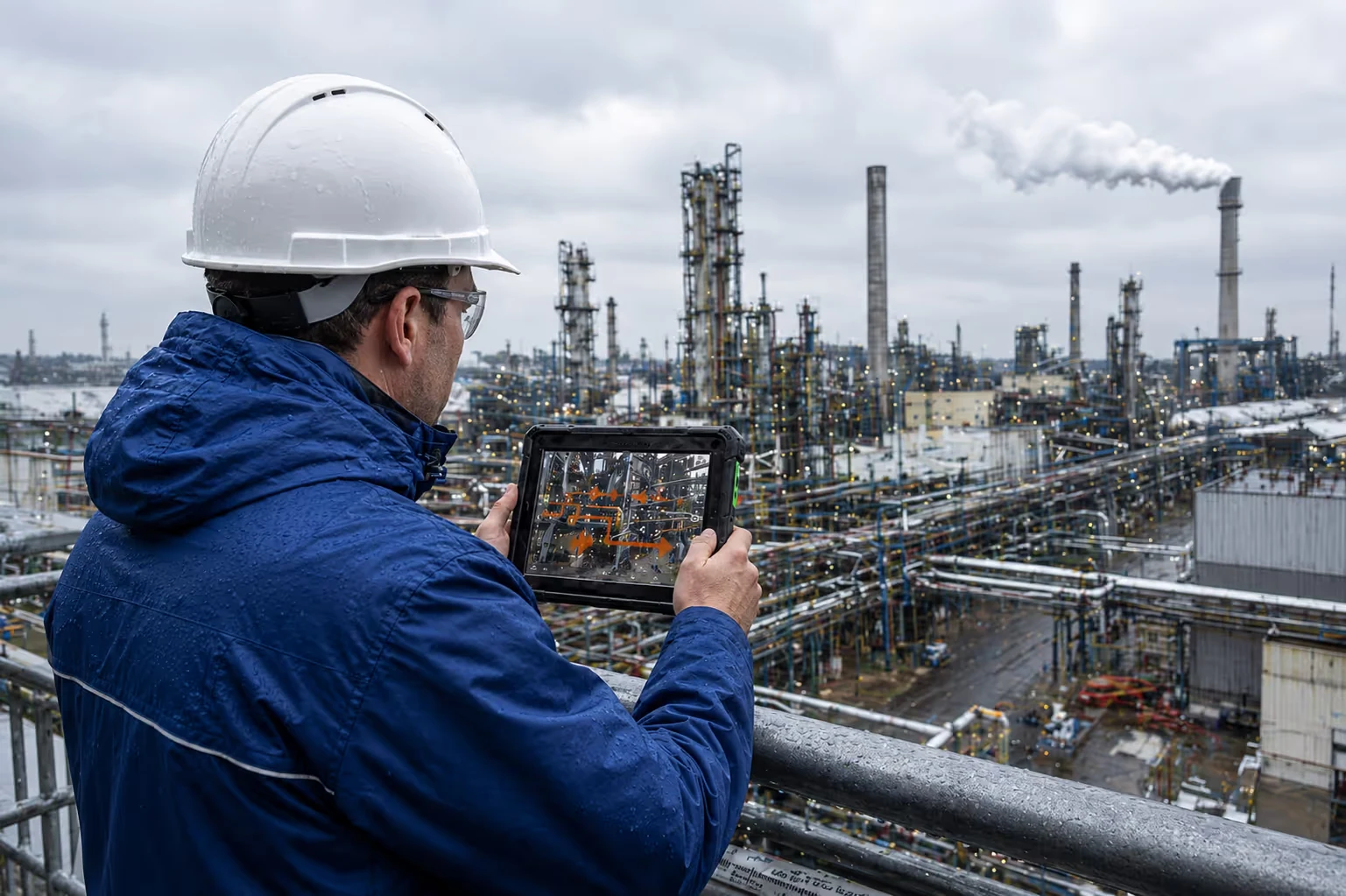
How a chemical producer uses AR tablets in explosion-proof zones
How a chemical producer put intrinsically safe AR tablets in ATEX zones, linked them to DCS and SAP, and cut time-to-information from 15 minutes to under one.
Read the article Insight · Tablet AR
How a premium automaker uses tablet AR for quality checks on the assembly line
How a premium automaker in Leipzig used tablet AR, built with the Fraunhofer Society, to check parts on the line and halve supplier issue resolution time.
Read the article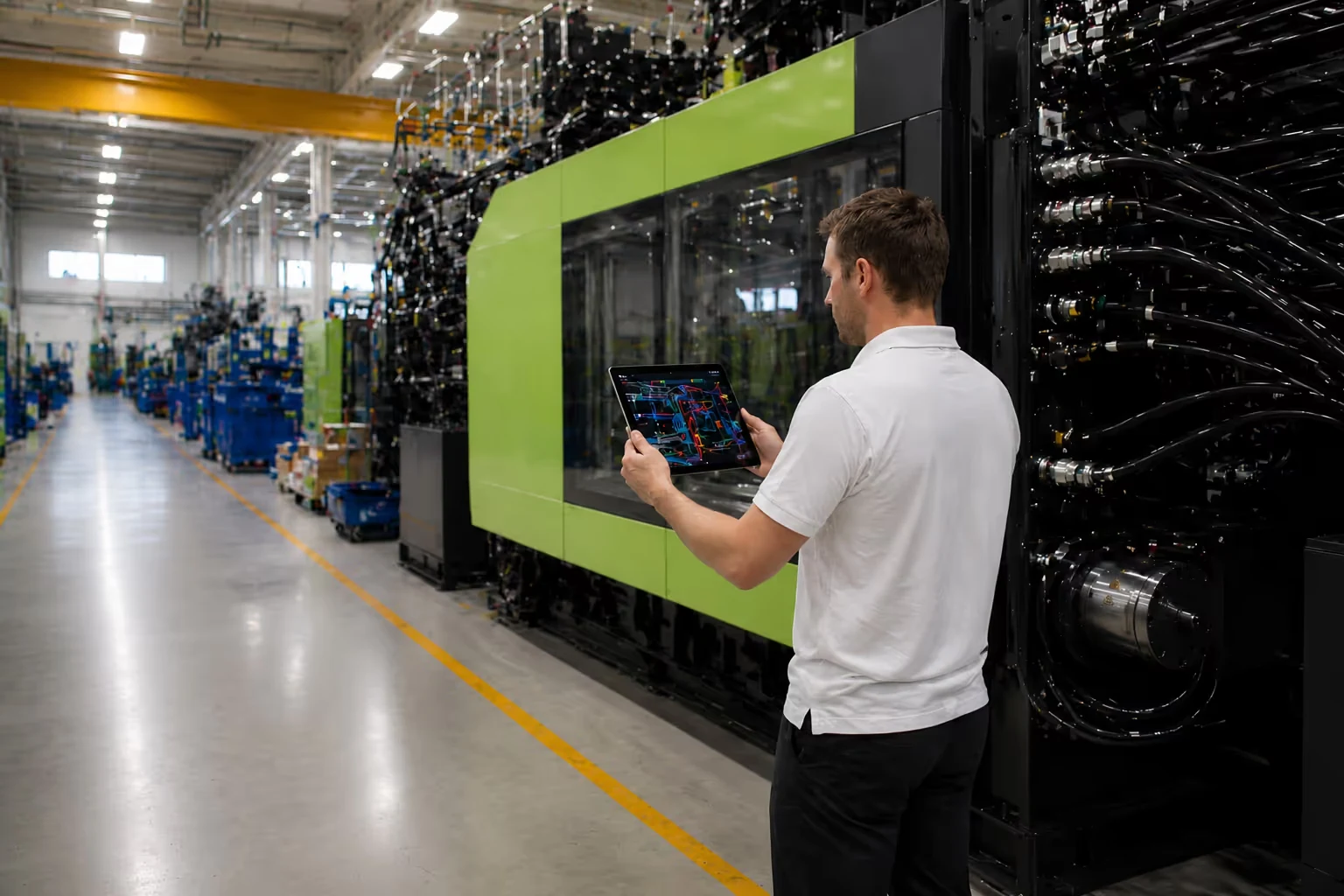 Insight · Tablet AR
How an injection moulding machinery maker uses tablet AR for final quality checks
How an injection moulding machinery maker used tablet AR and digital twins for final inspection, cutting inspection time by 75% and post-shipment errors by 90%.
Read the article