

Industry insight: this article describes how the technology is used in the industry. It is not a Metaverse911 client project. See our case studies for our own work.
The situation: safety training that did not land
In Indian manufacturing, safety and efficiency are closely linked. One accident can hurt people, stop a line, bring regulatory fines and damage a company's reputation. Yet classroom lectures, generic videos and paper manuals often fail to connect with a diverse, multilingual workforce.
A leading Indian manufacturing conglomerate with facilities across the country found its training slow, expensive and not reducing its baseline incident rate. Taking workers off the floor for days of classroom sessions hurt production targets and created tension between the HSE team and plant managers.
Language was a major barrier. Manuals in English or Hindi were often poorly understood by migrant workers whose first language was Marathi, Gujarati or Tamil, so important safety details were lost. The company needed training that worked better, cost less and could scale across all its plants without a large increase in the L&D budget.
What they did: standalone VR in workers' own languages
The conglomerate worked with a global VR safety software developer to run a standalone VR training programme. The investment had to pass a rigorous financial review by the board, so cost was central to every decision.
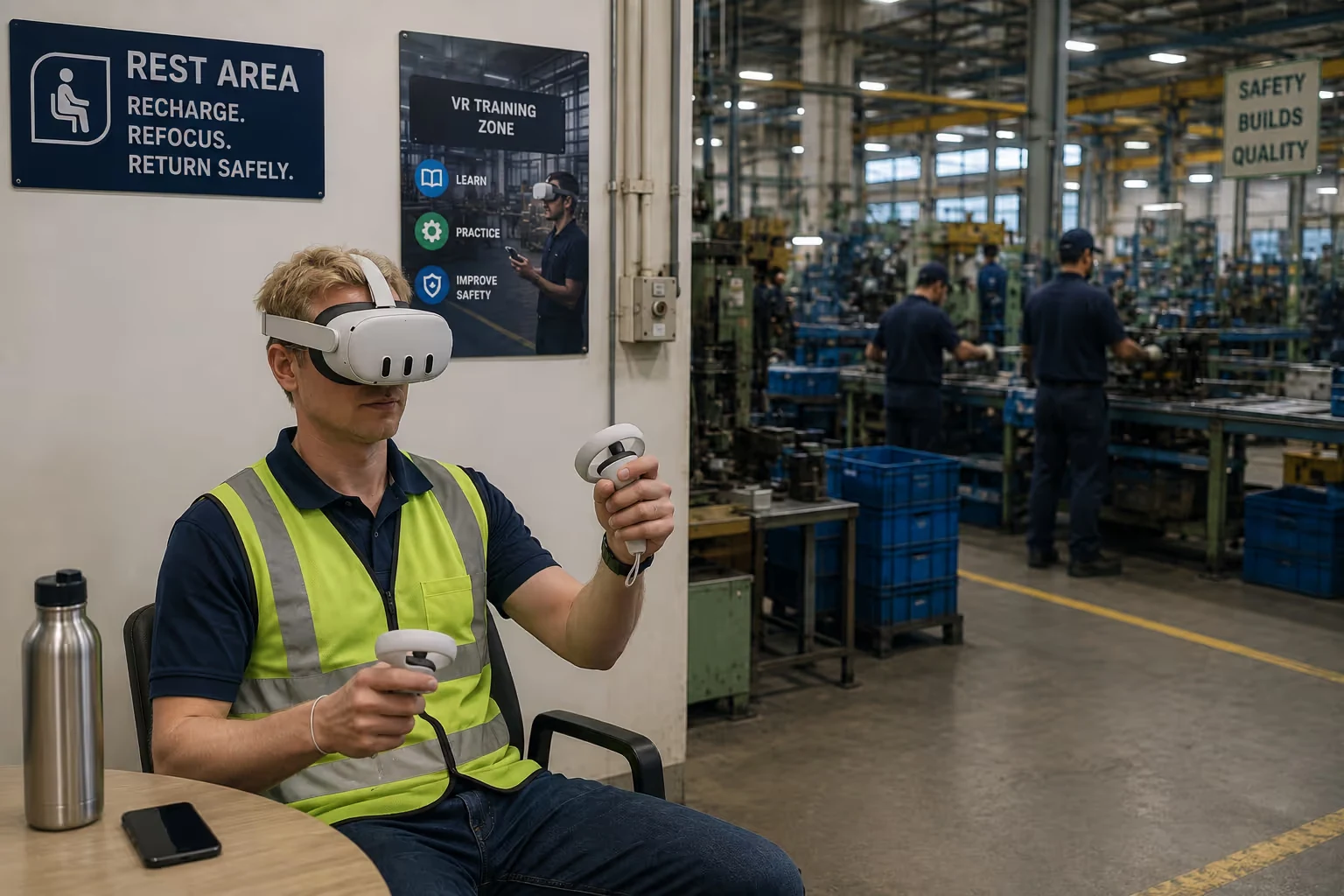
It chose standalone headsets only. A PC-tethered system needs a high-end computer for each headset, often costing upwards of INR 1.5 Lakhs per station on top of the headset. Standalone headsets need no PC, tracking cameras, cables or dedicated IT setup. A kit can be kept in a secure locker on the factory floor and set up by a shift supervisor in minutes, so no dedicated training room is needed. One headset can be shared across shifts.
How it works
The modules follow a "Learn, Train, Assess" method:
- Learn: trainees are guided step by step through a hazardous scenario, such as a chemical spill or an electrical fire.
- Train: they repeat the procedure from memory without prompts.
- Assess: they are tested under time pressure with random variables.
Workers choose their language, including Hindi, Marathi, Gujarati or Tamil, from a simple menu. No translators are needed, and every site gets the same standard of instruction.
Trainees physically close virtual valves, choose the right fire extinguisher and apply a LOTO padlock, which builds muscle memory for high-stress moments. Seeing the simulated result of a mistake, such as an explosion or a gas release, makes the lesson stick.
Sessions are short. Workers can complete a focused 15-minute module during a shift change or break without leaving the floor. A backend dashboard tracks each trainee's progress, scores and time in VR, so HSE teams can see where people struggle, such as a particular LOTO step, and act before a real accident.
Results
The conglomerate reported:
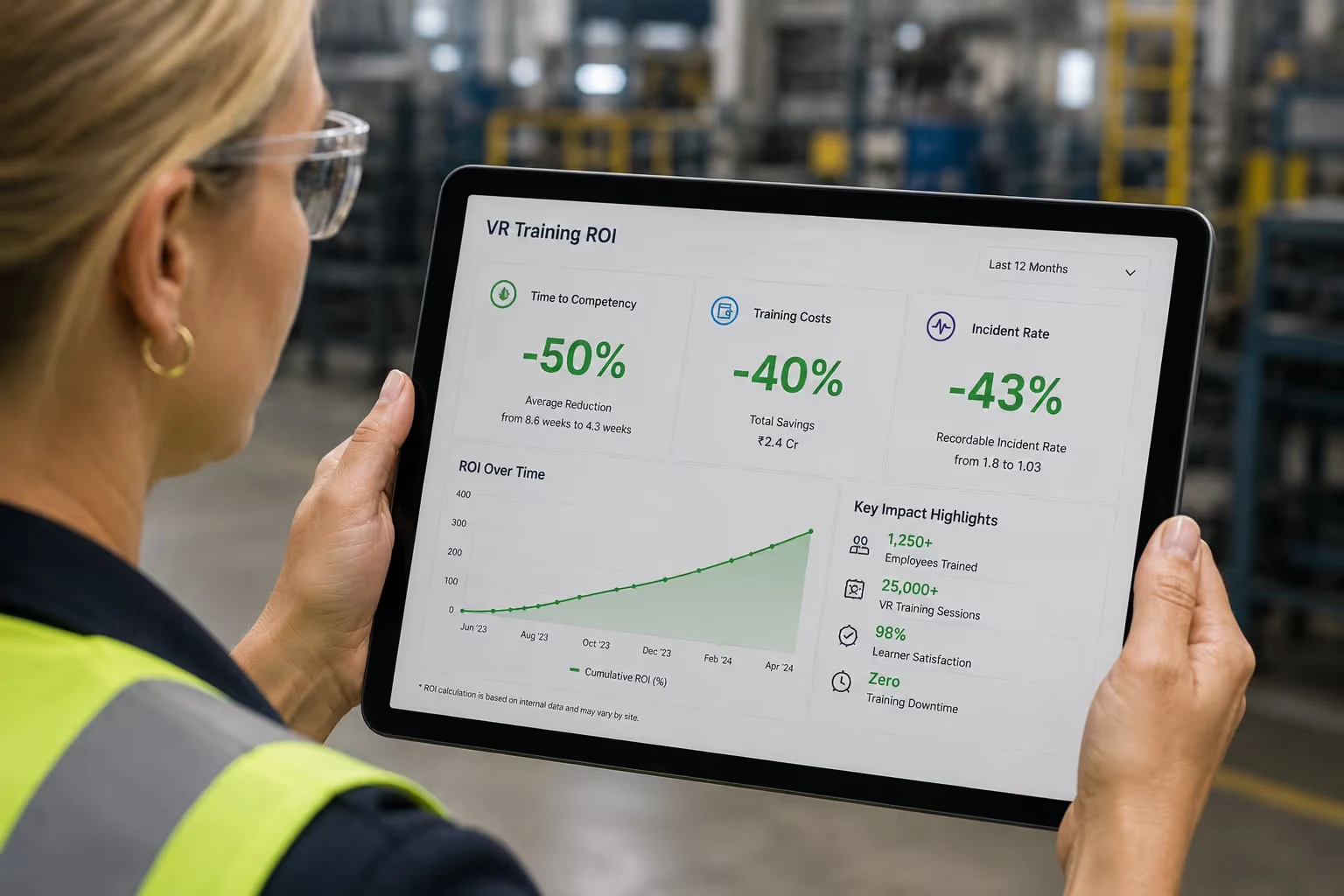
- A 40% reduction in training time for mandatory safety certifications, returning thousands of hours to production.
- New hires reaching full operational competency 50–70% faster.
- A 16× improvement in protocol recall during high-stress simulations, compared with classroom-only learning.
- A 43% reduction in recordable safety incidents within the first year.
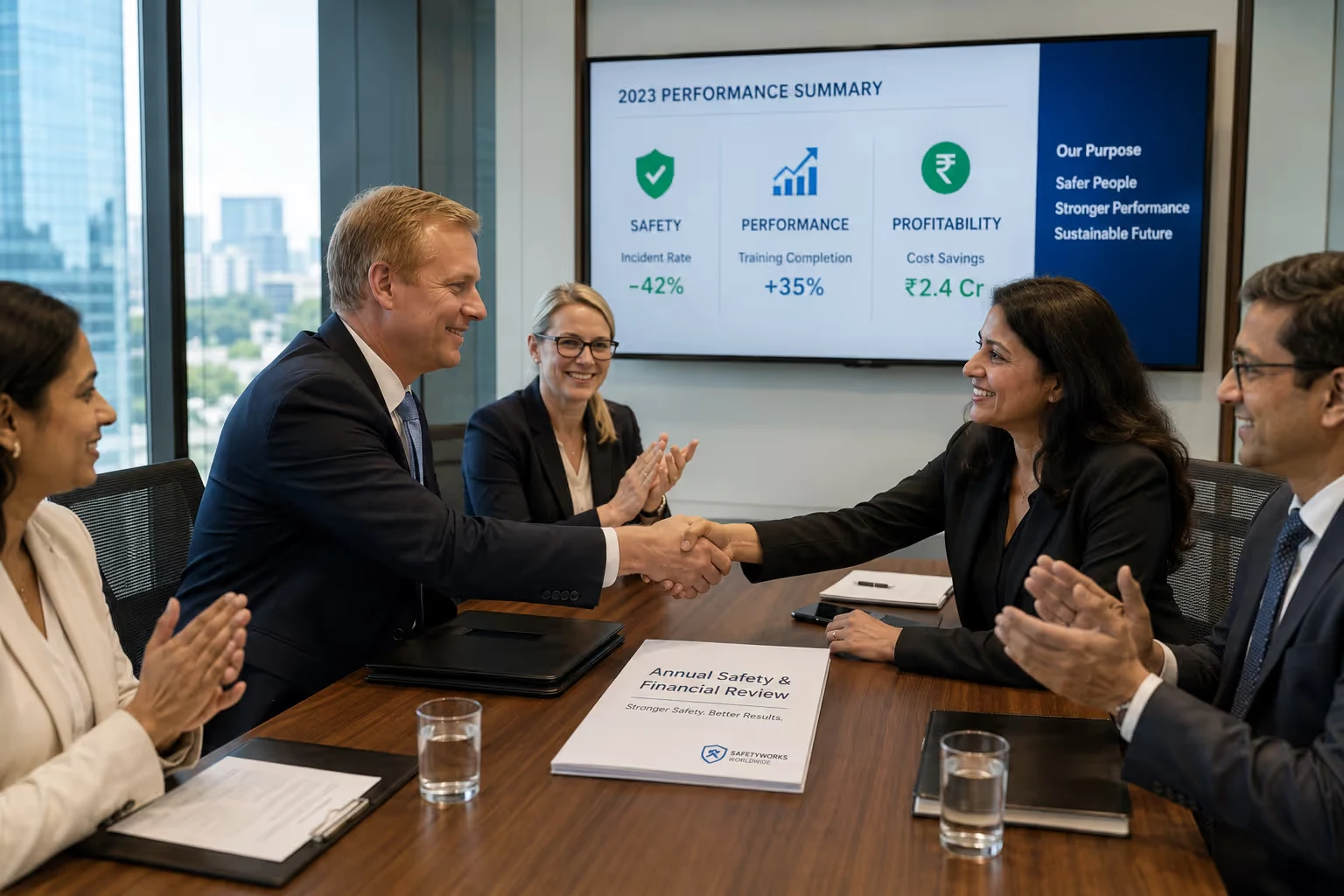
The return was visible on the balance sheet within the first two quarters. Removing PC hardware turned a large capital request into a manageable operating cost. The company no longer paid for instructor travel, accommodation and printed materials, or lost whole shifts to classroom days. Fewer incidents meant savings on insurance premiums, compensation claims and production stoppages. The licence model also made budgets for later years more predictable.
What it means for manufacturers
For Indian manufacturers with plants in several states, two choices made this programme pay: standalone headsets instead of PC rigs, and training in each worker's own language. Together they kept costs low and made sure the safety message was understood.
The short-module format also matters. Training that fits into a shift change does not compete with production targets, so plant managers support it instead of resisting it.
Frequently asked questions
Why is standalone VR cheaper than PC-tethered VR?
Standalone headsets such as the Meta Quest 3 do not need a high-end PC, which often saves over INR 1 Lakh per station. They also need no dedicated IT infrastructure or cable management.
How does VR cut training time by 40%?
VR holds the trainee's full attention and lets them learn by doing, which builds understanding and muscle memory faster than watching a video or reading a manual.
Why does multilingual support matter for ROI?
Language barriers are a major cause of training failure and accidents in Indian plants. Training in each worker's own language removes the need for translators and reduces errors caused by misunderstanding.
What is time-to-proficiency?
The time it takes a new hire to become a safe, productive worker. VR shortens it by letting trainees practise procedures and face simulated hazards repeatedly until they master them.
Can the financial impact be tracked?
Yes. The analytics dashboard records each trainee's progress, scores and time in VR. Comparing this with incident rates, training spend and uptime shows the ongoing return.
Are headsets durable enough for a factory?
Modern standalone headsets are robust but still electronic devices. Protective silicone covers, easy-clean face pads and secure charging lockers on the floor help them last.
More on vr training & events
 Insight · VR training
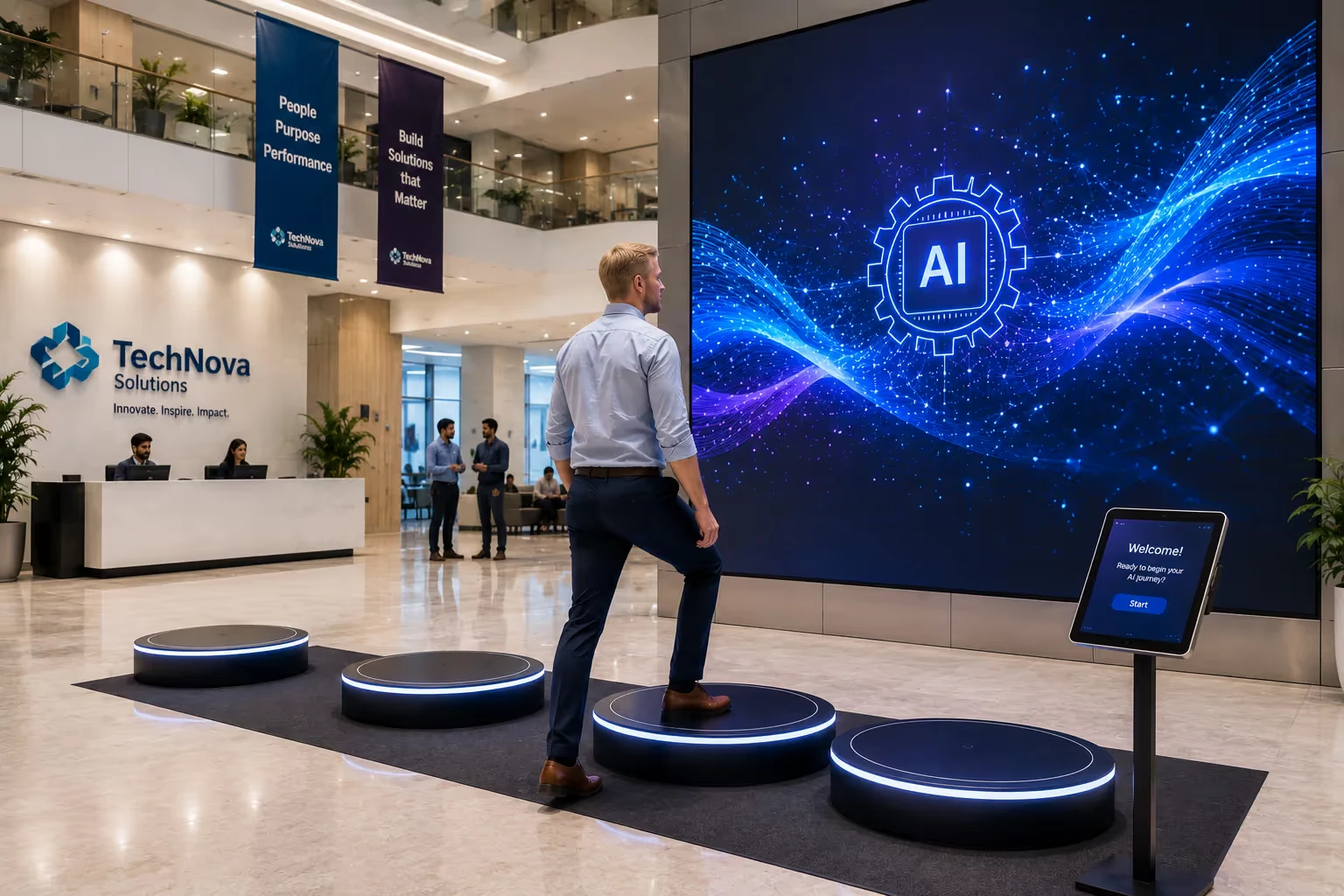
How a Big-4 consulting firm assessed AI maturity for 10,000+ employees with gamified podiums
How a Big-4 consulting firm assessed the AI maturity of over 10,000 employees with floor podium quizzes in its offices, sorting staff into four maturity bands.
Read the article Insight · VR training
The 3-minute rule: running high-throughput VR and hologram displays at corporate events
How a professional services firm ran VR and hologram fans at an internal summit, using 3-minute experiences to serve about 15 people per headset an hour.
Read the article Insight · VR training
How phygital welding and painting simulators train skilled workers in India
How phygital welding and painting simulators, pairing XR headsets with real-feel torches and spray guns, cut training material costs by up to 70% in India.
Read the article