


Industry insight: this article describes how the technology is used in the industry. It is not a Metaverse911 client project. See our case studies for our own work.
The situation: a large producer in a carbon-intensive industry
Cement is the second most-consumed substance on Earth after water, and making it is a significant source of global CO2 emissions. This company is one of India's largest cement manufacturers, part of a leading Indian industrial group, with capacity of over 130 million tonnes per annum.
At that scale, reducing environmental impact is a business necessity as well as a responsibility. The company has long worked on sustainability, and digital technologies have given it new ways to measure and improve its performance, from the mines to the plant.
What they did: several connected initiatives
The company's programme is not one project but a set of linked initiatives across its value chain:
- Smart mining using IoT sensors and AI at an integrated unit in northern India.
- Co-processing, which replaces part of the fossil fuel in its kilns with fuel made from waste.
- A growing share of solar and wind power at its plants.
- An internal carbon price.
- Drones for stockpile management and remote monitoring.
How it works
Smart mining with IoT and AI
At the northern India unit, a fleet of 60 pieces of material handling equipment, such as trucks and excavators, carries wireless sensors and GPS trackers. The system works in four steps:
- Collect: sensors record each vehicle's location, speed, fuel use and engine performance in real time.
- Transmit: the data goes wirelessly to a central platform.
- Analyse: an AI platform spots patterns and anomalies, such as long idling, inefficient routes or upcoming maintenance.
- Act: the operations team reroutes vehicles to avoid congestion, schedules preventive maintenance and gives drivers targeted fuel-efficiency training.
Co-processing waste as fuel
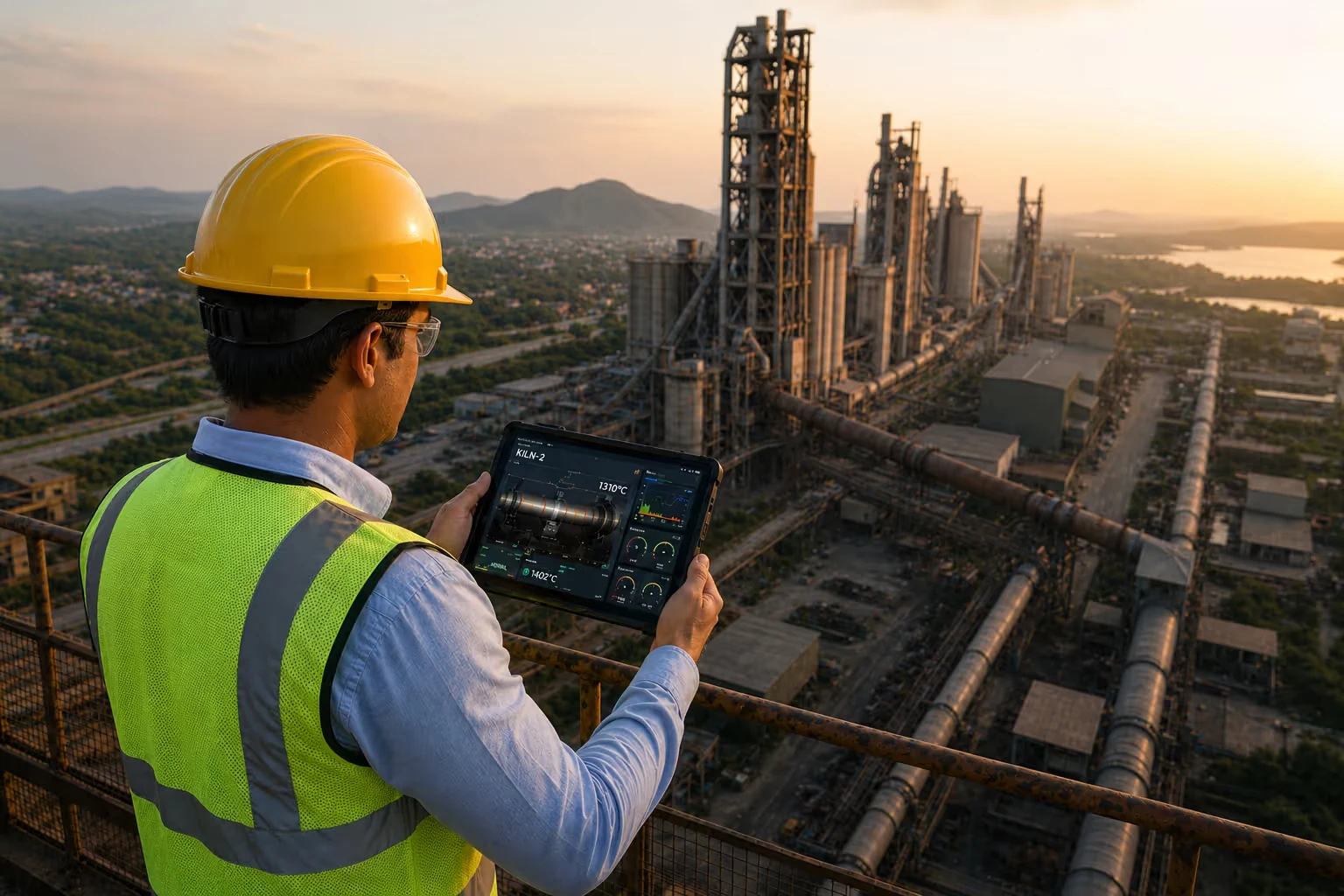
The company sources plastics, agricultural waste and industrial by-products from municipalities and local industries. The waste is sorted, shredded and blended into a fuel with a consistent calorific value, then fed into the kiln at over 1,400 degrees Celsius. At that temperature the organic parts are destroyed and the inorganic parts become part of the clinker. The process is monitored against strict environmental standards, and the clinker is the same quality as with conventional fuel.
Renewable energy
Solar and wind power are reducing the company's reliance on the grid. Two of its grinding units in southern India have run entirely on renewable energy for extended periods.
Results
The company reported:
- A fuel saving of 190,000 litres of diesel per year from the smart mining system.
- 25% of the heat requirement at a cement works in southern India met from waste, making the unit 16.25 times plastic positive and cutting CO2 by 2,250 tonnes per annum.
- Support for 80 municipal corporations across India in reducing waste sent to landfill.
- A combined reduction of over 39,500 tons of carbon emissions from the two renewable-powered grinding units.
- A target of 85% green energy in its total energy mix by 2030.
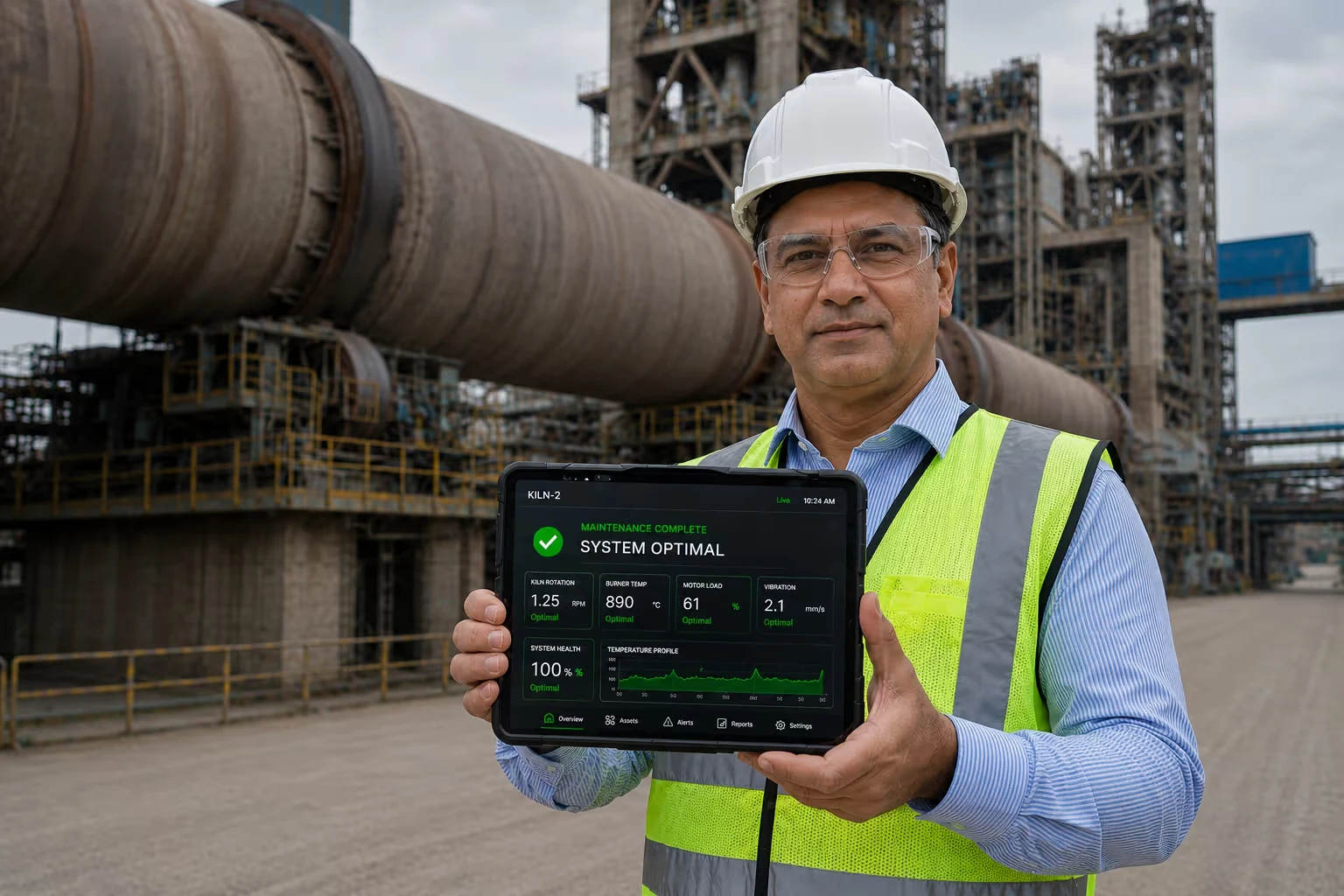
Operations teams use real-time data for predictive maintenance, better routing and more consistent output. Sustainability teams can measure and report environmental performance accurately. Drones reduce the need for staff to work in hazardous areas, and the company is training its workforce in the new tools.
What it means for manufacturers
The main lesson is that sustainability gains often come from operational data. Sensors on a vehicle fleet, linked to an analytics platform, cut fuel use and emissions at the same time as they cut cost. The same approach works for forklifts, internal logistics fleets and plant equipment.
The example also shows the value of treating sustainability as a set of measurable projects, each with its own figures, rather than one large programme. That makes progress easier to track, report and fund.
Frequently asked questions
How does IoT and AI reduce fuel use in mining?
Sensors and GPS trackers on each vehicle send data on location, speed, fuel use and engine performance to an AI platform. It flags idling, inefficient routes and maintenance needs, so the team can reroute vehicles, service them on time and train drivers.
What is co-processing?
Replacing part of a cement kiln's fossil fuel with fuel made from waste such as plastics, agricultural waste and industrial by-products. The kiln's temperature of over 1,400 degrees Celsius destroys the organic material, and the inorganic material becomes part of the clinker.
Does co-processing affect cement quality?
No. The process is monitored closely, and the clinker is of the same quality as clinker made with traditional fuels.
Can similar digital tools work in other plants?
Yes. Real-time data, analytics and guided workflows can reduce downtime, improve training and raise overall equipment effectiveness (OEE) in automotive, pharmaceutical, consumer goods and other plants. A pilot on a single line can be running in as little as 4–6 weeks, with a multi-plant rollout taking 6–12 months.
What renewable energy results has the cement manufacturer reported?
The cement manufacturer reported that two of its grinding units in southern India have run entirely on renewable energy for extended periods, with a combined reduction of over 39,500 tons of carbon emissions. It has set a target of 85% green energy in its total energy mix by 2030. This is an industry example, not a Metaverse911 client project.
More on augmented reality on the shop floor
 Insight · Tablet AR
How a chemical producer uses AR tablets in explosion-proof zones
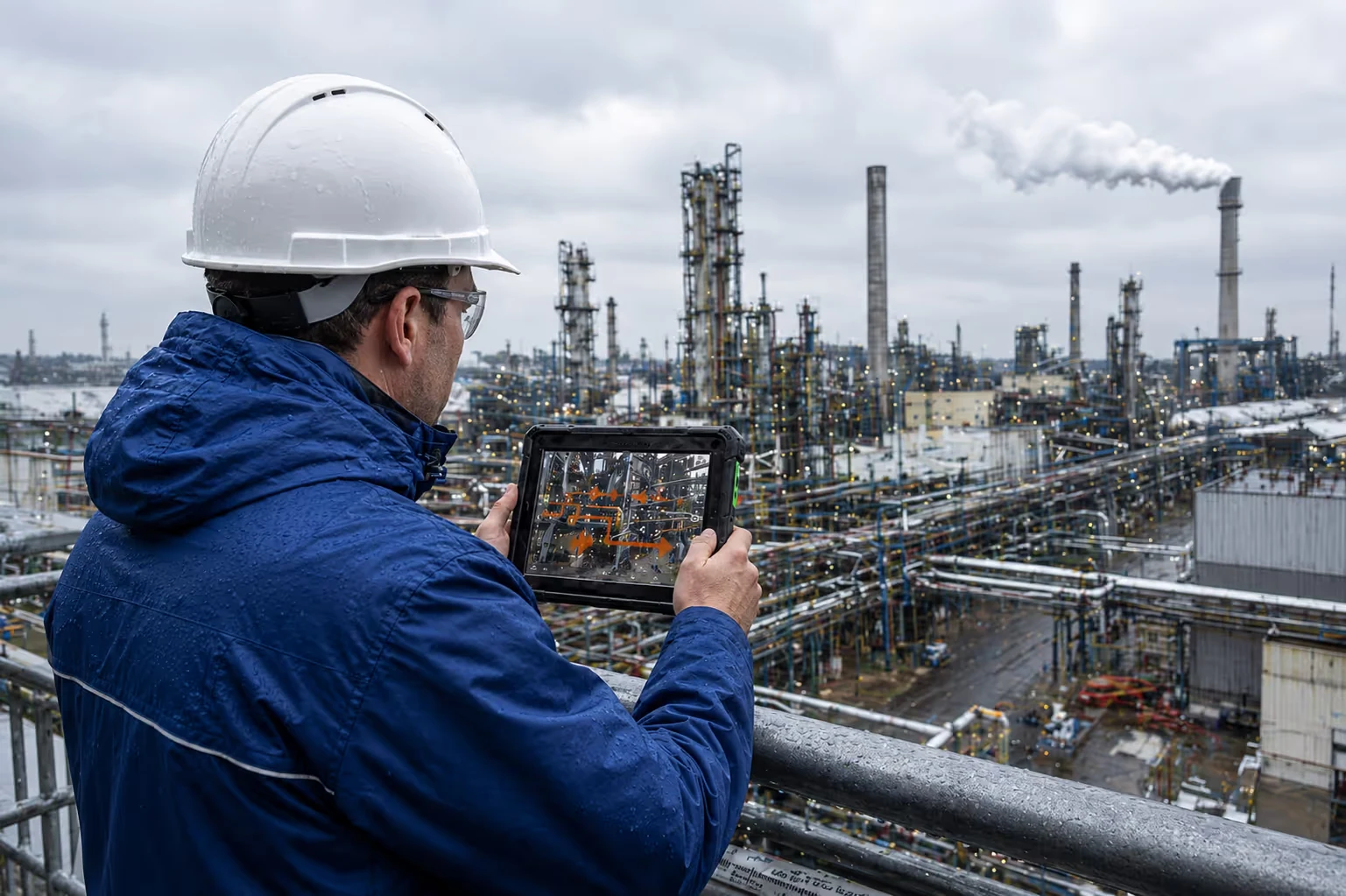
How a chemical producer put intrinsically safe AR tablets in ATEX zones, linked them to DCS and SAP, and cut time-to-information from 15 minutes to under one.
Read the article Insight · Tablet AR
How a premium automaker uses tablet AR for quality checks on the assembly line
How a premium automaker in Leipzig used tablet AR, built with the Fraunhofer Society, to check parts on the line and halve supplier issue resolution time.
Read the article Insight · Tablet AR
How an injection moulding machinery maker uses tablet AR for final quality checks
How an injection moulding machinery maker used tablet AR and digital twins for final inspection, cutting inspection time by 75% and post-shipment errors by 90%.
Read the article