

Industry insight: this article describes how the technology is used in the industry. It is not a Metaverse911 client project. See our case studies for our own work.
The situation: 13,000 engine variants and a paper checklist
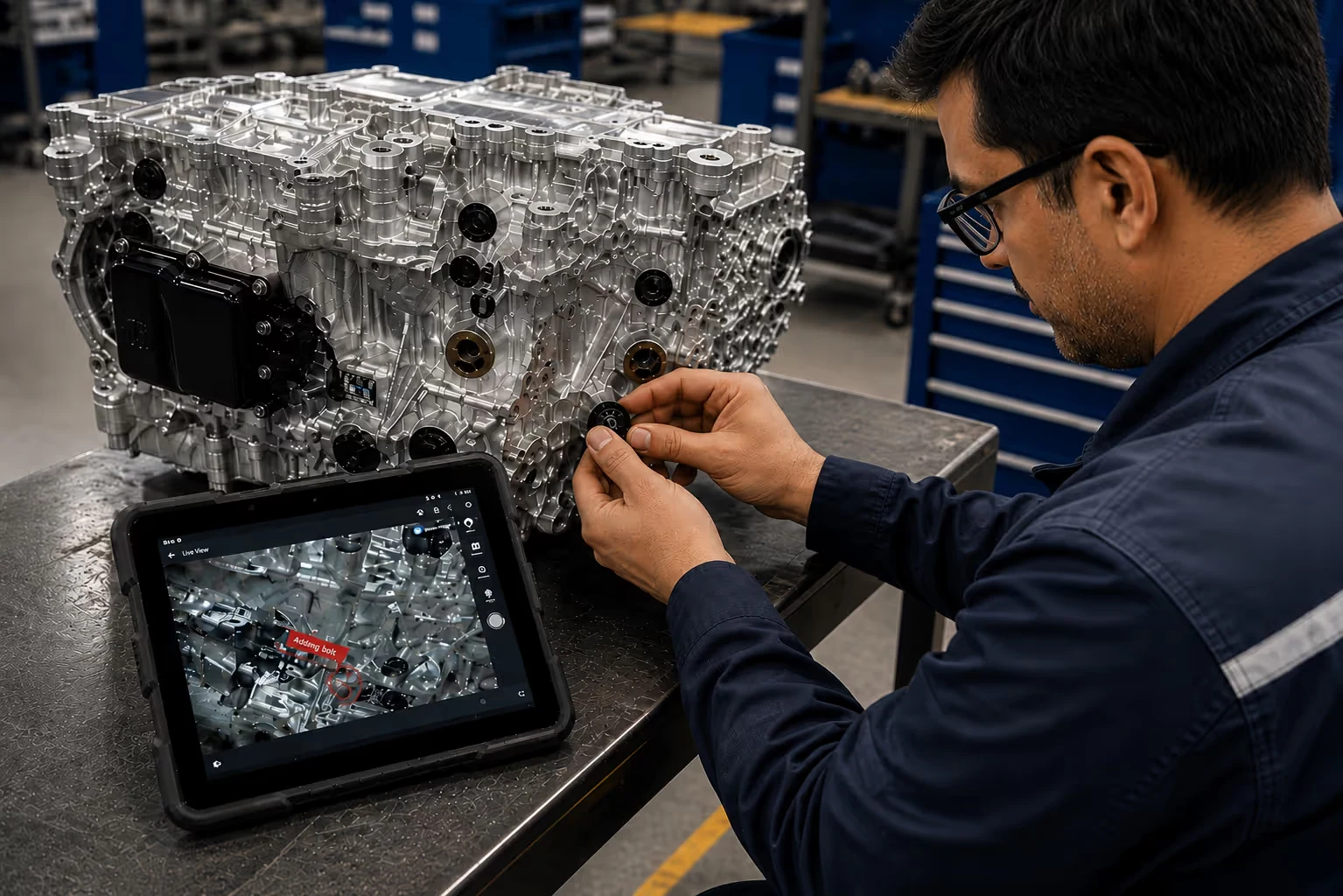
The manufacturer's Gothenburg facility handles 13,000 engine variants. For the quality assurance (QA) teams, that variety made consistent inspection very hard.
New operators went through a five-week training programme to learn 40 specific quality checks, and even that covered only the 200 most common variants. The thousands of less common configurations depended on the knowledge of a few experienced inspectors. Inspectors worried about missing a check, and new hires felt their inexperience put the line at risk.
Demand for more customisation, shorter product cycles and a tight labour market made things worse. Every time the line switched to a new engine model, updating, printing and distributing the paper checklists took over a full day. During that time, the plant risked quality escapes.
What they did: AR guidance on rugged tablets
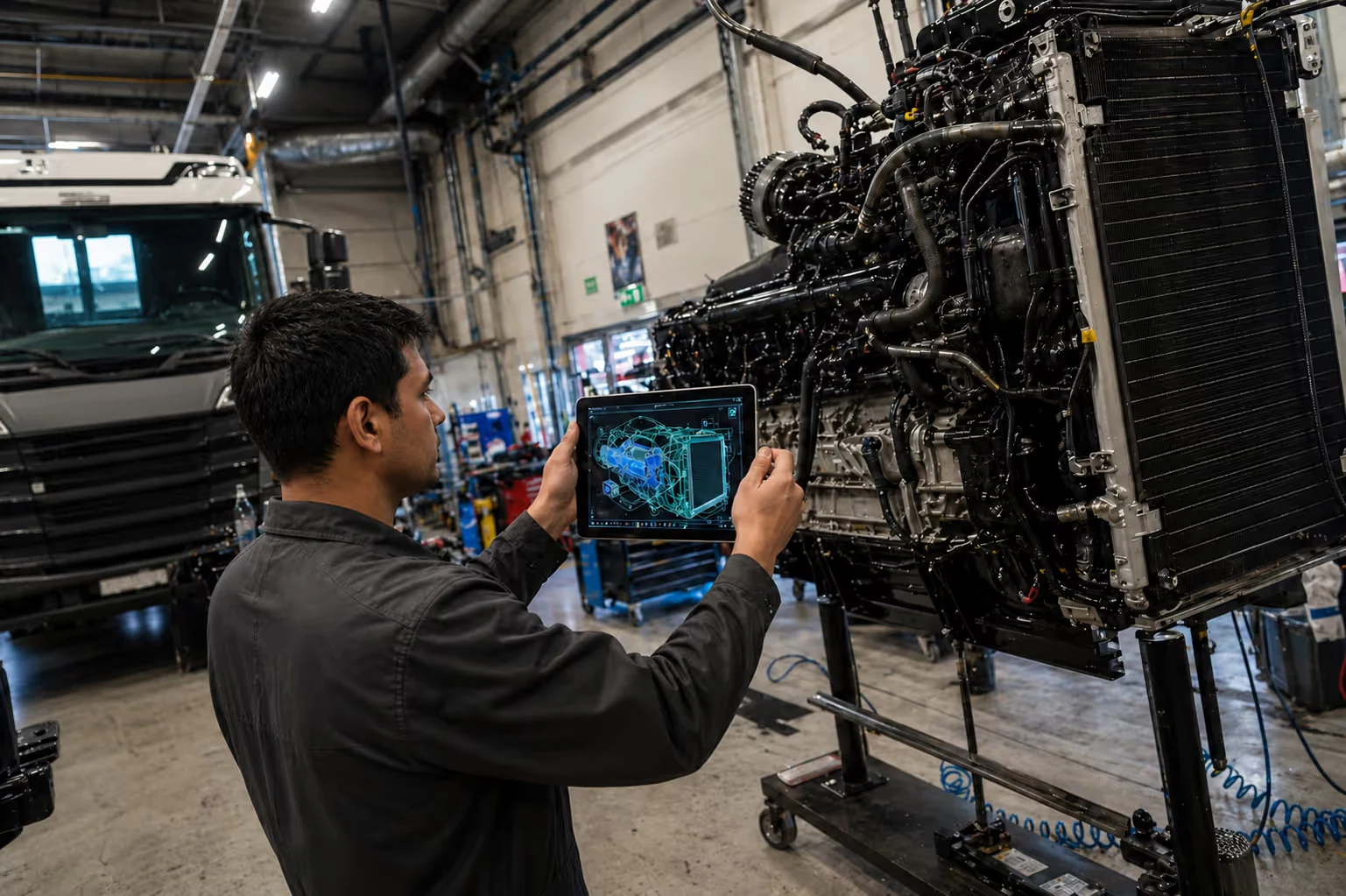
The manufacturer chose a tablet-based AR solution rather than headsets or glasses. Operators use ruggedised industrial Android tablets and iPads, with computer vision tracking that recognises each engine.
The rollout included hands-on workshops where operators saw the benefits for themselves and understood that the tablet supports their expertise rather than replacing it. Because the app is simple, little training was needed on the tool itself, so training could focus on quality standards.
How it works
- The operator points the tablet at a newly assembled engine, and the system identifies the exact variant.
- The 3D CAD data and a step-by-step list of quality checkpoints appear over the live view of the engine.
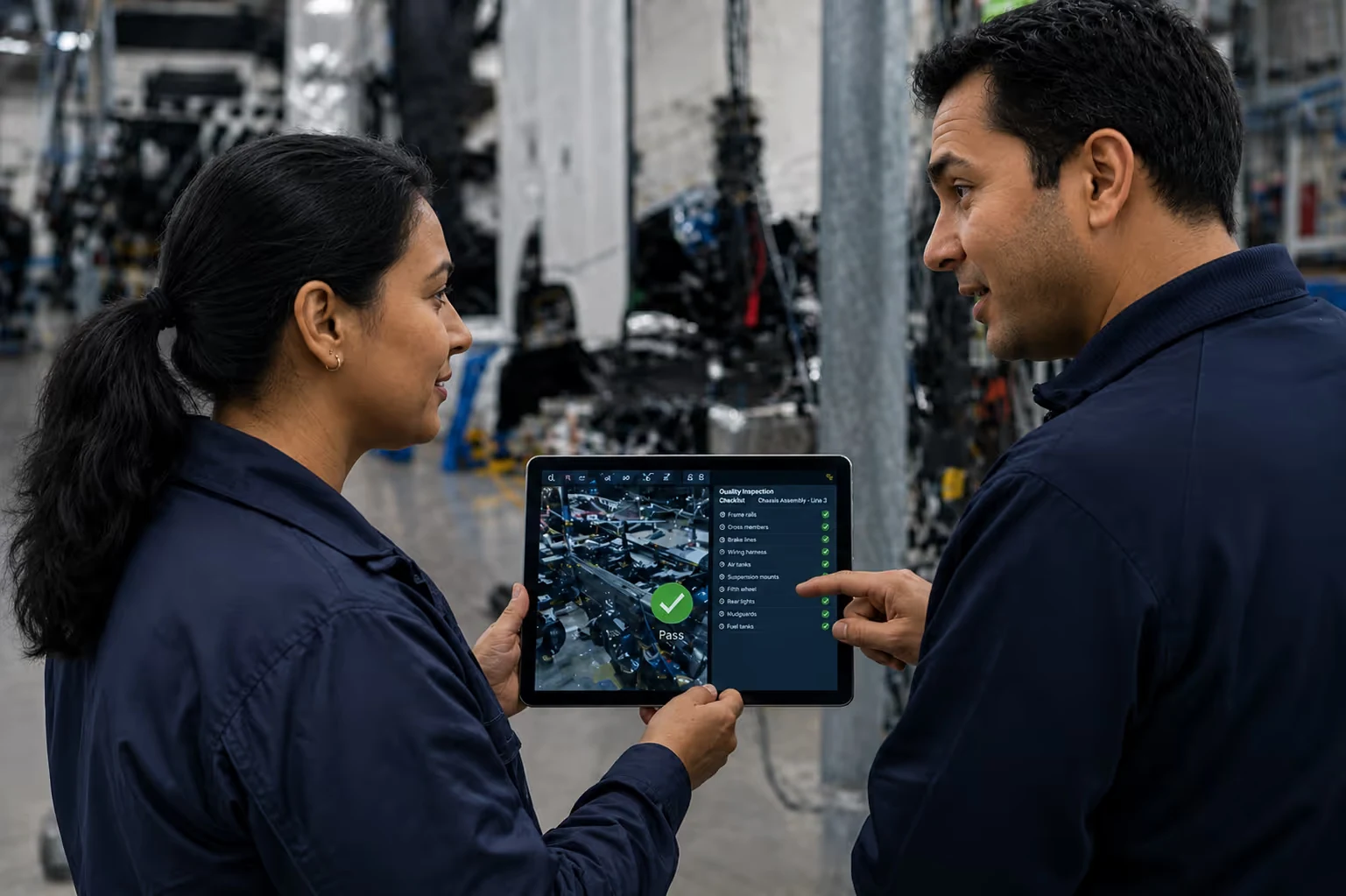
- The app guides the operator through the 40 checks for that configuration, which takes about 8 minutes.
- The operator confirms each check on the tablet. Results go automatically to the plant's Manufacturing Execution System (MES), creating an auditable record of every inspection.
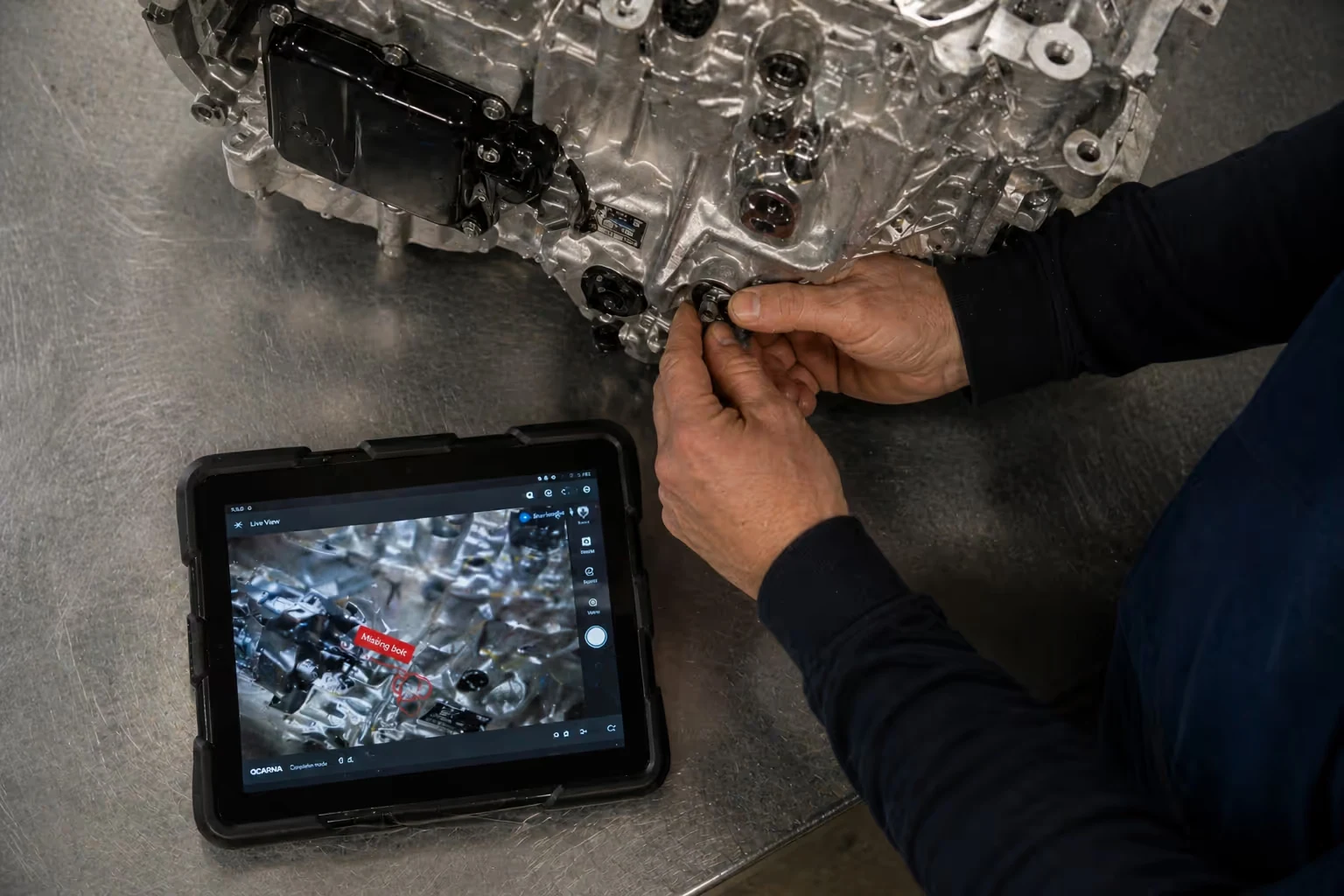
- If there is a problem, the operator takes a photo, annotates it and sends it straight to engineering or maintenance.
Manufacturing engineers update checklists digitally and push them to the whole plant in under an hour, so the line always matches the latest engineering changes. The IT team built the integration between the AR platform and the MES.
Results
The manufacturer reported:
- A 60% reduction in training time: onboarding for new QA operators cut from five weeks to two.
- Checklist updates across the facility reduced from over a day to less than one hour, a 90% reduction.
- Savings of thousands of euros per station each year, across an initial deployment of 5 quality stations per plant in 20 plants worldwide.
- Full return on investment within 14 months at most plants.
- A 15% reduction in design-related quality issues in the next engine generation, using inspection data.
Retention of new employees improved in their first year, as new hires felt confident sooner. Production supervisors gained real-time visibility of quality checks, which reduced bottlenecks and downtime. Better quality and faster delivery also coincided with higher customer satisfaction scores for trucks using these engines.
What it means for manufacturers
High-mix production is where paper checklists and memory fail first. When each product can be configured differently, the inspector needs the right checks for the exact unit in front of them. Tablet AR that recognises the variant and shows its checklist on the product solves that.
The faster training is just as important. A new inspector who can work accurately from day ten rather than week five makes the whole plant more flexible when demand or staffing changes.
Frequently asked questions
Does this work in aerospace, medical devices or heavy machinery?
Yes. It applies to any industry with high-mix, complex products and strict quality assurance, from jet engines to medical implants to construction equipment.
How long does a pilot take?
A pilot for one well-defined use case, such as inspection at a single station, can typically be deployed in 8–12 weeks.
What are the main costs?
Software platform licensing, the one-time work to convert 3D CAD models into AR-ready content, and integration with MES or PLM. Hardware costs are often small because it runs on standard industrial tablets.
What returns come beyond faster training?
Most companies see full return in 12–18 months. Other gains typically include fewer defects and less rework (often a 20–30% improvement), higher operator productivity and no more printing and distributing paper instructions.
How does tablet AR identify the engine variant and guide quality checks at the truck manufacturer?
At the truck manufacturer's Gothenburg facility, the operator points a rugged tablet at a newly assembled engine and computer vision identifies the exact variant among 13,000. The 3D CAD data and a step-by-step checklist appear over the live view, guiding the 40 checks in about 8 minutes, with results sent to the MES. This is an industry example, not a Metaverse911 project.
More on augmented reality on the shop floor
 Insight · Tablet AR
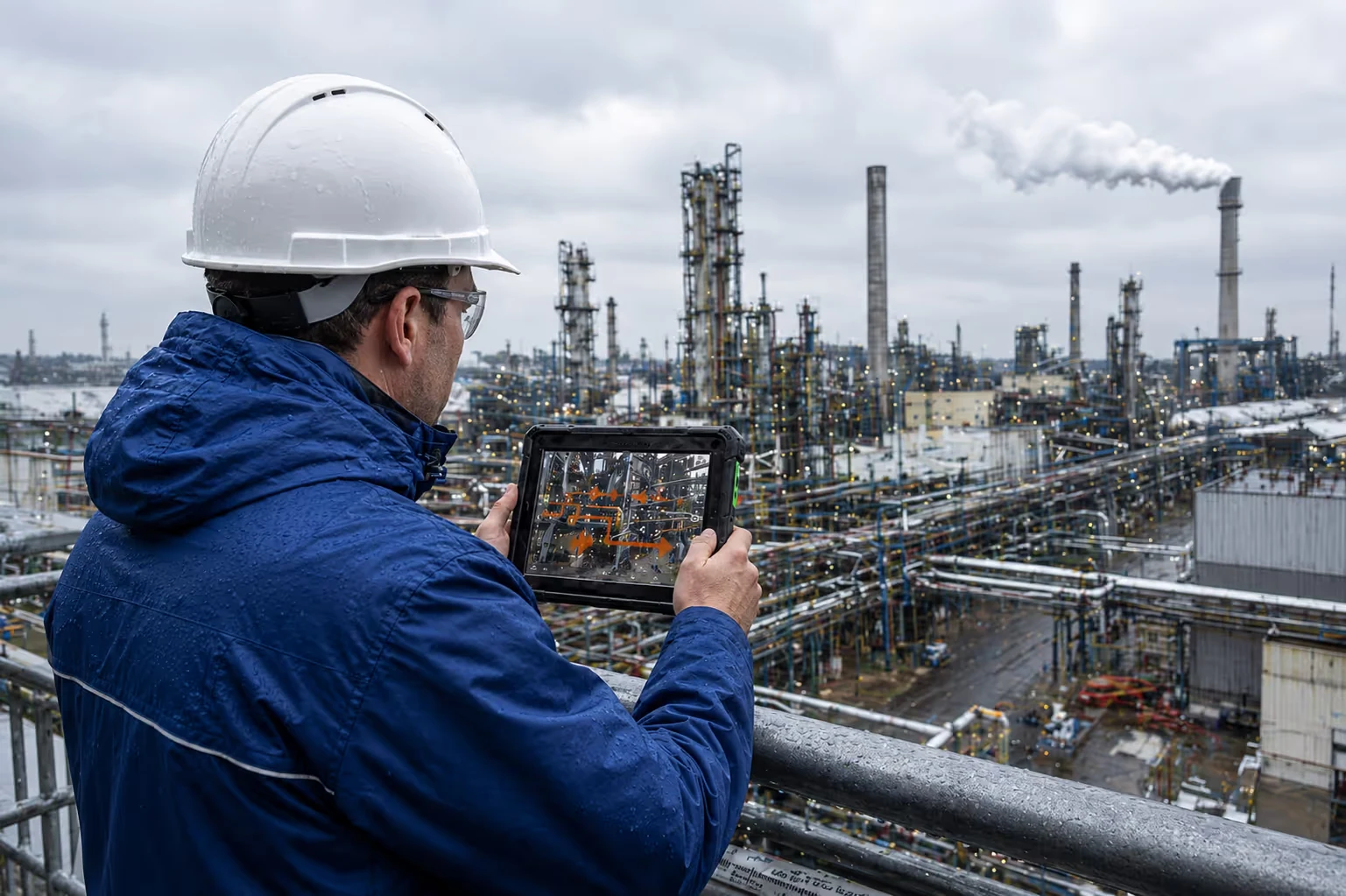
How a chemical producer uses AR tablets in explosion-proof zones
How a chemical producer put intrinsically safe AR tablets in ATEX zones, linked them to DCS and SAP, and cut time-to-information from 15 minutes to under one.
Read the article Insight · Tablet AR
How a premium automaker uses tablet AR for quality checks on the assembly line
How a premium automaker in Leipzig used tablet AR, built with the Fraunhofer Society, to check parts on the line and halve supplier issue resolution time.
Read the article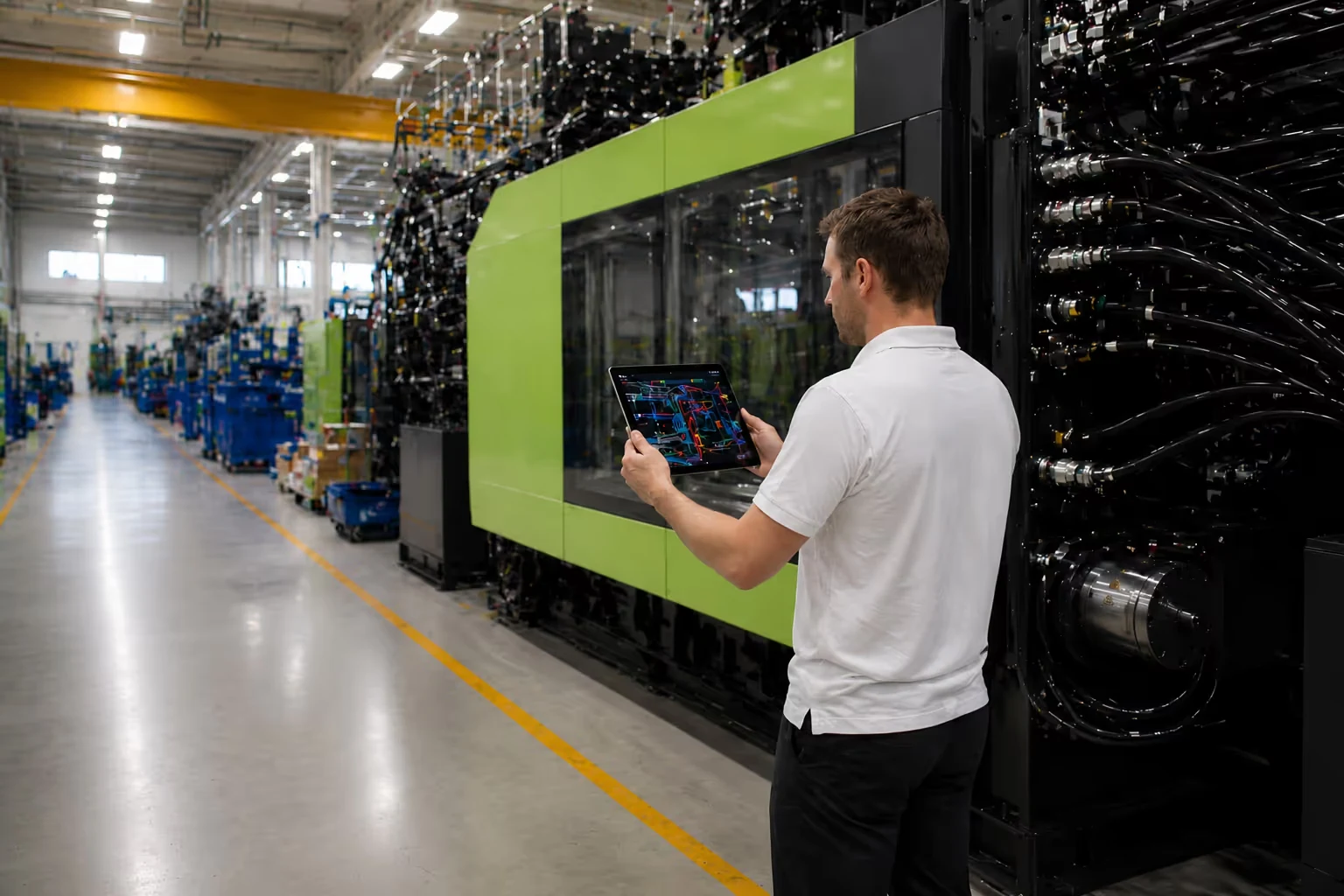 Insight · Tablet AR
How an injection moulding machinery maker uses tablet AR for final quality checks
How an injection moulding machinery maker used tablet AR and digital twins for final inspection, cutting inspection time by 75% and post-shipment errors by 90%.
Read the article